










 Robot Lawn Mowers
















 Smart Door Lock


 Australia
 中国大陆
中国大陆 日本
日本


 Türkiye


 Italia
 Netherlands
 Belgium
 Greece
 Polska
 Norway
 Sweden
 Finland
 Denmark
 Hungary
 Czechia
 Slovenia
 Croatia
 Switzerland
 United
Kingdom
United
Kingdom
 Canada

 Colombia


Gone are the days of pushing a heavy upright vacuum back and forth across the carpet. Early robot vacuums struggled on carpet too: weak suction left crumbs buried in the pile, brush rolls tangled with pet hair within a week, and thicker carpet often left them stuck mid-clean. This is no longer the case. Today's robot vacuums clean carpets well, though performance comes down to the carpet type and the model you pick.
This guide breaks down what to expect on each carpet type, covers the features that make a difference, and tells you where a robot vacuum still falls short. By the end you'll know if one fits your floors, or if you need a separate vacuum in the closet for carpeted rooms.

Do Robot Vacuums Actually Work on Carpets?
Yes, they handle low and medium pile carpets (under 0.5in / 13mm) well, picking up daily debris, pet hair, and surface dust without trouble.
On thick or shaggy carpets, the suction has to work harder. Some models manage with a carpet boost mode and 15,000+ Pa of suction. Dark-colored carpets can trigger cliff sensors, which disrupts cleaning.
A robot vacuum is faster and more hands-off than getting the upright out yourself. How well it works depends on your carpet type:
- Thin carpet (under 0.25in / 6mm) is the easiest. Berber, commercial-grade, and many builder-grade carpets fall here. Robot vacuums glide over the surface, suction reaches the fibers, and the brush roll does its job without snagging. Almost any robot vacuum at 5,000+ Pa handles thin carpet well.
- Medium-thickness carpet (0.25 to 0.5in / 6 to 13mm) is the most common in homes, including loop and cut-pile styles. You want at least 10,000 Pa of suction and an automatic carpet boost that ramps power up when the robot vacuum detects carpet. Anti-tangle brush design is another must-have feature, especially if you have pets.
- Thick or high-pile carpet (over 0.5in / 13mm) includes plush, shag, and frieze carpets. Wheels can sink, suction drops as fibers crowd the brush, and the robot vacuum may turn around. Look for 15,000 Pa or higher, raised wheel clearance, and a rubber-fin brush design.
- Dark-colored carpets can confuse cliff sensors on most robot vacuums. Near-black carpet absorbs the infrared light the sensors use to gauge distance, so the robot vacuum reads it as a stair and stops. Check user reviews for very dark colors before you buy as sensor sensitivity varies a lot by model.
Robot Vacuums on Rugs
Rugs slide when a robot vacuum bumps the edge, fringe can wrap around the brush, and the mop can soak through the fabric if it isn't lifted in time.
Here's what you need to know about how a robot vacuum handles each type of rug.
- Area rugs, runners, and throw rugs: Larger area rugs (over 4×6ft) usually stay in place under most robot vacuums, especially with a rug pad underneath. Runners in hallways get dragged out of position because the robot vacuum crosses at speed. Throw rugs under 3×5ft usually need to be moved or weighted down before each run.
- Persian and Oriental rugs: Long fringe can wrap around the brush. Anti-tangle brushes help but aren't a complete fix. If the fringe is long, fold it under, tape it down, or set the rug as a no-go zone in the app.
- Lightweight rugs slide when the robot vacuum bumps the edge: A non-slip pad keeps lightweight rugs from sliding when the robot bumps the edge.
- Mopping on rugs: Auto mop lift keeps rugs dry. Flagship Dreame models with auto mop lift raise the mop pads when carpet is detected, and the Dreame Aqua10 Ultra Roller adds AutoSeal™ carpet protection on top of that. Combined with app-set no-mop zones, you have two layers of dry-rug protection.
This guide on "Are Mopping Robot Vacuums Worth It" can help you decide whether you want a robot vacuum that mops at all.
Performance on High-Pile and Thick Carpets
Thick and high-pile carpet (over 0.5in / 13mm) is the hardest test for any robot vacuum. Its wheels can sink into the pile, the suction has to fight harder to pull debris out of dense fibers, and bristle brushes can drag long fibers backward instead of lifting them. On deep shag, some robot vacuums register the height as a cliff and refuse to drive forward at all.
Look for these features if you want a robot vacuum that can handle thick or high-pile carpet.
- Automatic carpet boost ramps suction up the moment the robot vacuum detects carpet.
- High peak suction. For high-pile capability, look for 15,000 Pa or higher. Dreame's flagship models reach 35,000 Pa, putting them among the highest-suction robot vacuums on the market.
- Raised wheel clearance lets the robot vacuum move across pile without bogging down.
- Anti-tangle rubber-fin brushes snag less on long fibers than traditional bristle rolls.
- CarpetForce™ Vacuuming System on the Dreame X60 Max Ultra Complete uses a retractable pressure plate and semi-sealed chamber to deliver 2.4× more cleaning power on carpet.
Even the best robot vacuum for thick carpet doesn't replace a deep clean. For embedded grime on a high-pile rug or heavily soiled carpet, you'll want a professional carpet cleaning service or a rented carpet shampooer.
Where Robot Vacuums Still Struggle on Carpet
Even top-rated robot vacuums have their limits on carpet. Sometimes, cliff sensors can misread certain textures, or the vacuum's shape and design can't match the deep-cleaning power of a traditional upright. These aren't deal-breakers, but it's helpful to know what to expect so you can choose the right model for your needs.
Deep-pile shag can trigger cliff sensors
When the pile is deep enough, downward-facing sensors mistake the height drop for a stair. The robot vacuum stops, backs up, and refuses to clean that area.
Very dark carpets can confuse the same sensors
Near-black carpet absorbs the infrared light cliff sensors use to gauge distance. Some models handle this better than others, but check reviews if your carpet is very dark.
Edges and corners stay imperfect
Round and D-shaped robots can't reach into a 90-degree corner. Side brushes help, but a quick pass with a stick vacuum once or twice a month picks up what the robot misses.
Smart Features on Robot Vacuums That Changed Carpet Cleaning
Five smart features are doing the heavy lifting. Auto carpet boost ramps suction up the moment the robot vacuum lands on carpet. CarpetForce™ and AutoSeal™ solve specific carpet and rug problems. Auto mop lift keeps the mop pads off your fibers. AI carpet detection remembers where the carpet is from one run to the next.
Here's how each of these features cleans your carpet better.
- Auto carpet boost. The vacuum detects when it transitions from hard floor to carpet, then ramps suction up automatically. No app toggle, no manual override. This single feature did more for daily carpet performance than any single suction-number increase.
- CarpetForce™ Vacuuming System. Exclusive to the Dreame X60 Max Ultra Complete. It combines a retractable pressure plate with a semi-sealed chamber for 2.4× more cleaning power on carpet. The pressure plate pushes down to create a tighter seal so suction doesn't bleed off through the gap between robot and floor.
- AutoSeal™ carpet protection. On the Dreame Aqua10 Ultra Roller, this feature stops the continuous-spray roller mop from dispensing water when carpet is detected. It's useful if you have a vacuum-mop combo and a lot of rugs.
- Auto mop lift. Dreame Flagship L Series and X Series models can automatically raise mop pads when carpet is detected, so they don't soak into the fibers. Combined with no-mop zones, this feature makes a vacuum-mop combo actually work in a mixed-flooring home.
- AI carpet detection via LiDAR mapping. LiDAR is the laser-based scanner on top of the robot vacuum that builds a map of your home on the first run. A LiDAR robot vacuum remembers where carpet is, not just reacts to it in real time. The robot vacuum then behaves consistently across runs.

For households with mostly carpet or a lot of rugs, the Dreame L60 Pro Ultra is the model we'd recommend. It runs 35,000 Pa of suction, clears thresholds up to 3.47in (8.8cm), washes its mop pads with 212°F (100°C) hot water between rooms, and identifies 270 types of objects with AI to avoid pet bowls, cords, and toys on the floor.
At the time of writing, the L60 Pro Ultra ranks second in the Vacuum Wars 2026 Top 20 Robot Vacuums list, just behind Dreame's own flagship, the X60 Max Ultra Complete.
[product handle="l60-pro-ultra-robot-vacuum" rating="5"]
Can Robot Vacuums Go Over Carpet in Mixed-Flooring Homes?
Yes, and you don't have to do anything to make it work. Most models handle every step on their own.
Picture a home with hardwood in the living room, tile in the kitchen, and carpet in the bedrooms. A robot vacuum runs through all areas in one cleaning cycle, with two or three threshold transitions along the way.
- It knows what surface it's on. LiDAR mapping plus a downward-facing carpet sensor read the floor type in real time. Suction and brush speed adjust automatically, and if the robot vacuum is mopping, the pads either keep going (hard floor) or lift up (carpet).
- The mop pads lift before they hit the carpet. On flagship Dreame models, auto mop lift kicks in fast enough that the carpet edge stays dry. No wet patch where hardwood meets carpet, no soaked rug corner.
- Thresholds and rug edges stop being obstacles. The Dreame X60 Ultra and L60 Pro Ultra both clear up to 3.47in (8.8cm). For comparison, standard interior door thresholds in most homes sit under 1in (25mm), so a flagship Dreame robot vacuum has plenty of room to spare.
Auto floor detection, auto mop lift, and threshold-crossing capability are what separate a robot vacuum that runs the whole house in one cycle from one that gets stuck at the bedroom door. If your home has hardwood, tile, and carpet in different rooms, these features are non-negotiable.
The Dreame L60 Pro Ultra and X60 Max Ultra Complete have all three features built in. For mixed-flooring homes specifically, either model is the right starting point.
[product handle="x60-max-ultra-complete-robot-vacuum" rating="4.6"]
Can a Robot Vacuum Replace Your Carpet Cleaner?
The robot vacuum should complement your carpet cleaner rather than replace it.
A carpet cleaner (the upright machine that sprays hot water and cleaning solution into the carpet, then pulls the dirty water back out) does the deep cleaning. This process lifts embedded dirt, pet stains, and allergens out of the deep fibers. A robot vacuum can't do that.
It's a dry vacuum (or a dry vacuum plus a surface mop), and it only works on the surface for:
- Daily debris and pet hair pickup
- Surface dust before it embeds
- Edge and corner vacuuming on a regular schedule
Best Robot Vacuums for Carpet (See Our Picks)
Choosing the best robot vacuum for your home depends on the type of carpet and your household's needs. Here's a quick guide to help you match your situation with the right Dreame model:
- Mostly carpet and pets that shed daily? The Dreame L60 Pro Ultra is a versatile choice, with 35,000 Pa of suction for thick carpet, an anti-tangle DuoBrush for long pet hair, and the ability to clear thresholds up to 3.47in (8.8cm).
- Dealing with thick or high-pile carpet? The Dreame X60 Max Ultra Complete features the CarpetForce™ system, boosting cleaning power by 2.4× on dense carpet compared to suction alone.
- Have lots of area rugs and runners? The Dreame Aqua10 Ultra Roller is the only model in the Dreame collection with AutoSeal™ carpet protection, keeping your rugs dry by preventing the roller mop from wetting them.
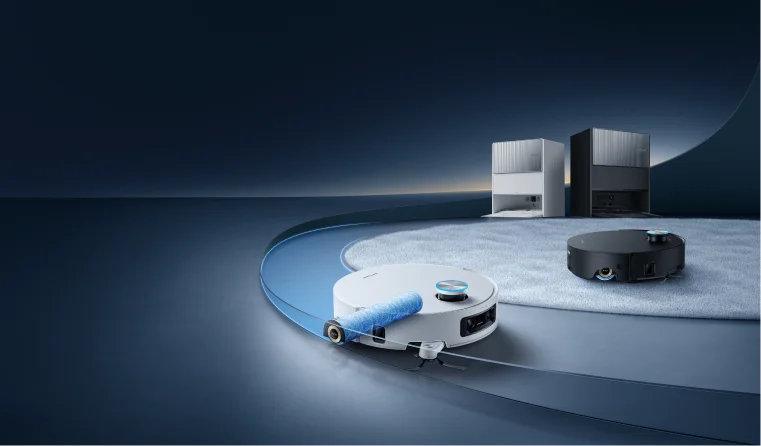
- Need to tackle multiple floor types in different rooms? The Dreame Matrix10 Ultra features a multi-mop switching dock that automatically swaps between pads, so kitchen mop water never ends up on the bedroom floor.
Check out our guide to choosing a carpet vacuum. You'll find an honest look at the trade-offs based on the carpet surface type. For broader advice, our complete robot vacuum buying guide covers what features to prioritize and how to avoid common buyer mistakes.
Choosing the Right Robot Vacuum for Your Carpets
Robot vacuums do work on carpets, but how well they perform depends on both the vacuum model and the type of carpet you have. Most newer models can easily clean low and medium-pile carpets. For area rugs, look for features like auto mop lift and no-mop zones to keep them dry. High-pile and shag carpets require strong suction (15,000 Pa or more), accurate sensor calibration, and realistic expectations about what a robot vacuum can and can't deep-clean.
For most carpeted homes, the Dreame L60 Pro Ultra is a great starting point. Its 35,000 Pa suction power is designed for thick carpets, and it can cross over rug edges and doorways thanks to its 3.47-inch (8.8 cm) threshold clearance. The 212°F hot water mop wash keeps pads fresh between rooms. If you want top-tier carpet cleaning, the Dreame X60 Max Ultra Complete takes things further with its advanced CarpetForce™ system.
Browse Dreame's full range of robot vacuums for carpet to find the model that fits your floors and budget.
FAQs
Is a robot vacuum good on carpet?
For low and medium pile carpet, yes. Modern robot vacuums with 5,000+ Pa of suction handle daily debris, pet hair, and surface dust without issue. For high pile or shag carpet, you need higher suction (15,000+ Pa) and realistic expectations. A robot vacuum maintains a carpet between deep cleans; it doesn't replace a deep extractor.
Do robot vacuums work on thick carpet?
Better than they used to, but it's still the toughest test. Look for at least 15,000 Pa of suction, automatic carpet boost, and a rubber-fin brush design that doesn't drag long fibers. Even with those features, a robot on thick carpet is a maintenance tool, not a deep-clean replacement.
Will a robot vacuum mop wet my carpet or rug?
Flagship Dreame models lift their mop pads automatically when they detect carpet, and the Aqua10 Ultra Roller has AutoSeal™ carpet protection on top of that. For extra safety, set no-mop zones in the app around any rug or carpeted area you want kept dry.
How often should I run a robot vacuum on carpet?
Daily is ideal in pet households and homes with kids. Every other day is fine in lower-traffic homes. Running daily means less debris embeds in the carpet over time, which makes deep cleans easier.
Can robot vacuums replace a regular vacuum on carpet?
Not if you want to deep clean embedded dirt and allergens out of carpet fibers. Most carpeted homes still benefit from a professional carpet cleaning or a rented shampooer, even with a daily robot vacuum run.
