
















 Robot Lawn Mowers











 Humidifiers















 Smart Door Lock


 Australia
 中国大陆
中国大陆 日本
日本


 Türkiye


 Italia
 Netherlands
 Belgium
 Greece
 Polska
 Norway
 Sweden
 Finland
 Denmark
 Hungary
 Czechia
 Slovenia
 Croatia
 Switzerland
 United
Kingdom
United
Kingdom
 Canada


 Colombia

In this article
Most of the time, your dog is licking the floor because they have found a taste or smell you cannot detect.
The American Kennel Club notes that surface licking is mostly about scent and residue and is usually not a medical problem. Boredom and the occasional health issue can play a part as well, and this guide covers what is normal, what warrants a closer look, and when to call your vet.

5 Common Reasons Dogs Lick the Floor
While a taste or smell is the usual answer, it is not the only one. Boredom and the odd health issue can cause excessive licking as well.
The five reasons below outline the common causes of your dog licking the floor.
They smell or taste something
Dropped food or spilled drinks leave a scent your dog can smell long after you have wiped up. That's why you see your dog licking the kitchen and dining area floors the most.
Boredom or anxiety
Some dogs lick the floor simply because they are under-stimulated, or as a self-soothing behavior when they feel tense. Giving them more to do during the day, such as a puzzle feeder or a longer walk, keeps their minds occupied, which usually helps reduce excessive licking.
Nausea or an upset stomach
Licking surfaces is a classic sign of queasiness and often appears right before a dog gets sick. A new food or a recent treat can be enough to unsettle their stomach.
A compulsive habit
When licking becomes repetitive and hard to interrupt, it can tip into a compulsive pattern known as excessive licking of surfaces. This one is worth raising with your vet.
An underlying health issue
Dental pain and stomach trouble can both show up as floor licking. If the habit sticks around without a clear trigger, a checkup helps rule out these possibilities.
Why Is My Dog Suddenly Licking the Floor?
When floor licking starts out of nowhere, it usually points more toward nausea or pain than a pre-existing habit. If your dog has suddenly picked this up, the timing itself is your biggest clue. Something that changed recently is often behind it, like a new food or a shift in routine.
If the licking comes with drooling or a heaving belly, your dog may be about to throw up, so it helps to know how to clean up vomit from the carpet before it sets.
Why Does My Dog Lick the Carpet Specifically?
Carpet traps food smells and residue that you can usually wipe right off a hard floor, making it a magnet for licking. The fibers hold onto scent, so your dog can still smell a spill days after it happened.
If your dog keeps going back to the same patch, something has likely soaked in and left a smell worth chasing, and a proper clean of that spot usually stops it.
It's also not always food, since an old accident leaves a scent your dog can still pick up, so knowing how to get the smell of dog pee out of carpet helps clear the odor that keeps pulling your dog back.
When to Call the Vet
Call your vet if licking doesn't stop, is accompanied by vomiting, or occurs alongside changes such as weight loss or a reduced appetite. Those are the signs that push licking from a harmless habit into something a professional should see.
Here's a recap of what to look out for:
- Licking paired with repeated vomiting or dry heaving
- A sudden, constant urge you cannot interrupt
- Weight loss or a drop in appetite
- Low energy, hiding, or other shifts in normal behavior
- Signs of mouth pain, such as pawing at the face or dropping food
Excessive drooling can also happen with nausea, and VCA Animal Hospitals explains how it relates to upset stomachs.
If you can, note when the licking happens and anything else that's out of the ordinary before your appointment, since that gives your vet a clearer picture to work from.
How to Get Your Dog to Stop Licking the Floor
Start by ruling out a medical cause, then work on habit and environment once your vet gives the all-clear. There is no point trying to train away a behavior that's actually being caused by a sore tooth or an upset stomach. Boredom and anxiety are the next things to look at. More walks, a puzzle feeder, and steady attention give a restless dog a better outlet than the floor.
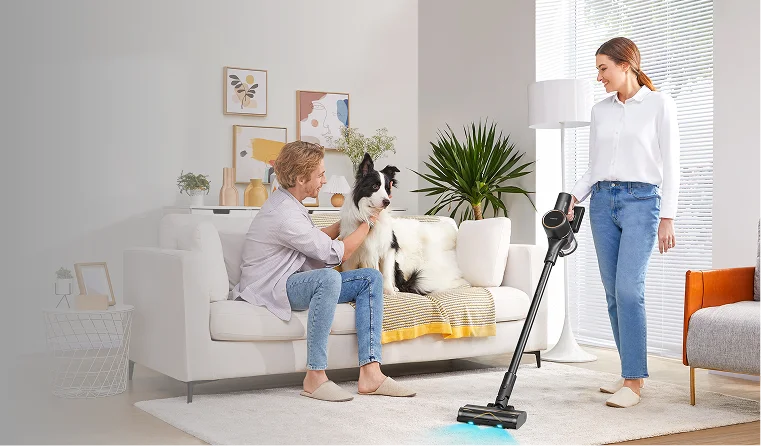
The part you can control most easily is what is actually on the floor. Food residue and small spills are the most common causes, so quickly wiping up messes and keeping floors clean gives your dog less reason to lick. Consider robot vacuums for pet hair, which take daily upkeep off your plate, so you have more time to spend with your dog.
Keeping an Eye on Your Dog's Floor Licking
For most dogs, floor licking is usually caused by something ordinary, like a particularly tasty sauce stain or a bit of boredom. It becomes a cause for worry when something changes out of nowhere, or the licking is followed by vomiting, which is your signal to schedule a vet visit.
If shedding is influencing your cleaning routine, begin by consulting our guide to dog breeds that don't shed. This guide explains why no breed is completely shed-free and clarifies what "low-shedding" really means in terms of the hair you'll still find on your floors and furniture.
Frequently Asked Questions
Should I let my dog lick the floor?
Occasional licking is fine and rarely a problem. Step in if it becomes constant or compulsive, or if it shows up with other symptoms like vomiting or low energy.
Do dogs lick the floor when their stomach is upset?
Yes. Nausea is one of the most common triggers, and floor licking often appears right before a dog is sick. A new food or treat can be enough to unsettle the stomach.
What deficiencies cause dogs to lick floors?
It's rarely a specific deficiency causing it. The more likely culprits range from nausea to anxiety, so rather than guessing at diet, let a vet test and tell you what is really going on.
Why does my dog lick the floor after eating?
Usually, it is a leftover taste or smell near the feeding area. This is only worth noting if the licking is accompanied by other signs.
Why is my dog licking the floor at night?
Licking the floor at night can be caused by boredom or mild anxiety once the house goes quiet. It can also signal nausea, so make a note if it is a new habit rather than something they have always done.
When should I worry about floor licking?
It's time to worry when it becomes sudden and constant, happens together with vomiting, or occurs with other changes in behavior or appetite. Any of those together is your cue to call the vet.
