Fur, Floors, and Feelings: A Smarter Cleaning System for Pet Homes

Fur, Floors, and Feelings: A Smarter Cleaning System for Pet Homes

Dreame Editorial Team |
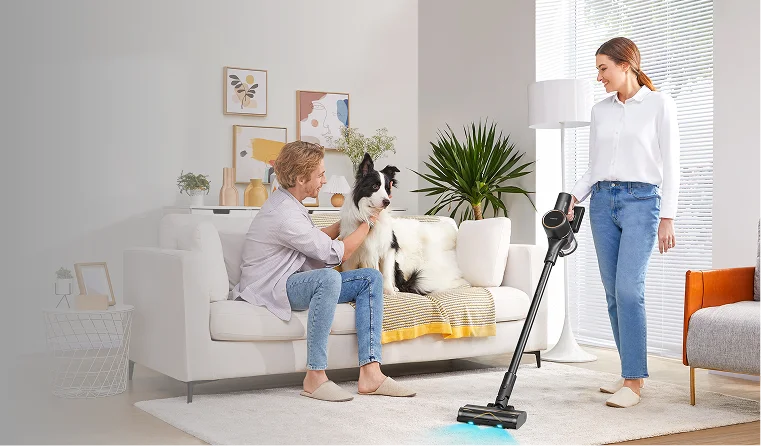
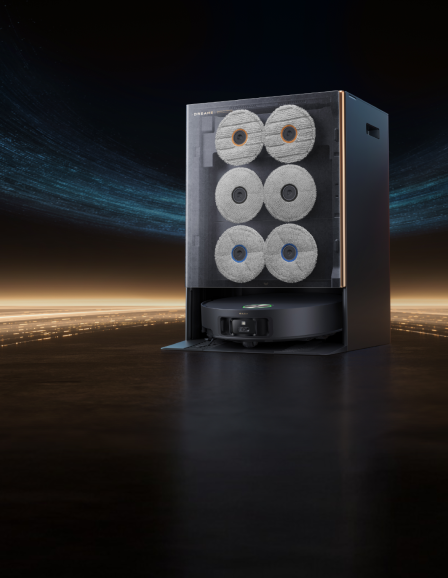
Pets make a home feel alive. But the mess they create can make you feel like you’re always falling behind. At Dreame, we believe you shouldn't have to choose between a happy pet and a clean home. This guide is about building a system that protects your time, your air, and your peace of mind. 1. The Joy and the Mess (Why it keeps coming back) Every pet owner knows the "morning scan." You walk out before coffee and spot it: a tumbleweed of fur drifting across the hardwood, litter grit near the box, or paw-tracked dust you swear wasn’t there last night. You’re not failing. You’re just living in a house where the mess is continuous. Pet ownership is now the norm—roughly 66% of U.S. households have at least one pet [1]. And many aren't just "one pet" homes anymore. Multi-cat and large-dog households are trending upward, which means more shedding, more tracking, and more "why is this everywhere?" moments [2]. Here’s the real mismatch: The Reality: Pets shed, track, and tumble crumbs 24/7. The Habit: Most humans clean in episodes (weekends, guest visits, panic bursts). That’s why frequency beats raw power in a pet home. A system that shows up daily will always outperform a "strong" tool you only have time to use once a week. 2. The Invisible Layer: Why Dander and Odor Feel Stressful A lot of owners treat pet hair like a visual problem—until allergies flare up or anxiety kicks in. Dander is the hidden workload. Pet dander comes from tiny shed skin cells and can trigger allergy symptoms [3]. What makes it stressful is that allergen-carrying particles are small enough (often 2-10 microns [4]) to hang in the air and settle deep into soft surfaces, not just sit on top where you can see them [5]. Then there’s the emotional side: The "Guest Panic" (Do my rugs smell? Is the couch covered in hair?) The low-level worry that your home isn’t "clean enough," even when you’re trying hard. Pet-home cleaning isn’t cosmetic. It’s environment control—for comfort, health, and confidence. 3. A Week in a Pet Home (Time Audit): Why You Can’t "Out-Work" a Shedding Dog If it feels like you’re always cleaning, it’s because pet mess creates repeat chores, not one-time chores. You can't "out-work" a shedding cycle manually. Here is a realistic "Manual Loop" vs. an "Automated System." Task (Weekly) The Manual Loop(Your Time) With a Robot Vacuum System(Your Time) Quick Fur Sweep 10–15 min × 7 days 0 min (automated) Litter / Food Pickup 5–10 min × 7 days 0 min (automated) Full Vacuum Pass 30–45 min × 2 times 0 min (automated) Mopping (Mud / Paws) 15–25 min × 3 times 0 min (automated) Maintenance Cleaning brushes / bins 10–25 min (weekly check) Total Weekly Time ~3–6+ hours ~10–25 minutes Manual tools charge you time for every mess. A robot vacuum system trades hours of labor for minutes of management. In a pet home, that trade is essential because daily cleaning is the only way to stay ahead. 4. Emotions on the Floor: Why Mess Turns into Guilt A messy floor doesn’t just look bad—it can feel like you’ve lost control of your space. Research has linked "stressful" home environments with negative mood patterns [6]. "Pet owner guilt" is a real experience; when we see fur piling up, we often feel like we aren't taking good enough care of our pets or our home [7]. That’s why our goal isn’t perfection. It’s reliability: Walking into a home that feels "reset." Turning off the part of your brain that constantly scans for grit and smell. Feeling comfortable inviting people inside. A pet-home system is a mental load reducer. 5. What Pet Owners Actually Want Most pet owners don’t want "a stronger vacuum." They want five specific outcomes that manual tools struggle to deliver: Consistent hair pickup (without constant "brush surgery"). Edge control (where fur drifts collect). Odor control (removing the smell, not just moving debris). Pet-safe navigation (avoiding bowls, toys, and accidents). Minimal maintenance (less daily cleaning of the cleaner). 6. Inside a Pet-Ready System: Our Solutions This is where "robot vacuum" becomes the right category—because it enables a loop you can actually sustain. At Dreame, we engineer our best robot vacuums for pet hair as complete systems designed to close this gap.[12] Anti-Tangle by Design Reliability beats peak performance if you have to spend 20 minutes cutting hair off a roller. Everyday Maintenance: We use a Detangling DuoBrush on many models, designed to channel hair into the bin to reduce wrapping during daily runs [8]. The "Zero-Scissors" Solution: For households with long hair (human or pet), we offer the TriCut Brush (compatible with select models). It uses a built-in safe blade to automatically trim wrapped hair as it cleans, removing the need for manual maintenance. Odor Control (The Hygiene Loop) We built a full hygiene loop into our stations: Better Chemistry: We offer a specialized Pet Odor Solution intended to neutralize organic smells at the source, rather than just masking them [9]. Self-Cleaning: Our stations wash mops with fresh water and dry them with hot air. This prevents the "wet mop smell" and ensures we aren't cleaning today's floor with yesterday's mess. Sealed Disposal: Our auto-empty stations trap dust and dander in a sealed bag for weeks, keeping allergens contained [10]. Navigation That Respects the Pet Non-camera sensors can avoid walls, but they can't reliably tell the difference between a toy, a tail, and a water bowl. AI Recognition: We use AI-powered RGB cameras to identify pets and common obstacles. Accident Avoidance: Our system is trained to identify and navigate around "pet accidents," saving you from the catastrophic mess that blind robots create. Reach Where Fur Hides Pet hair migrates under beds, along baseboards, and into corners. We emphasize ultra-slim designs to slip under furniture and MopExtend™ technology to physically reach out and clean edges where fur drifts gather. 7. Real Pet Homes (Three Scenes, Three Needs) Scenario A: The Multi-Cat Apartment The problem isn’t just litter—it’s tracking, especially around cat trees, bowls, and tight pathways. A system helps when it can run often, clean edges, and avoid pet items without constant babysitting. (Camera-based recognition helps here.) Scenario B: The Suburban Dog Home This is where frequency becomes everything: daily passes keep hair from building into rugs, while mopping workflows handle paw prints without turning into a second job. Scenario C: The Allergy-Sensitive Home When dander is a trigger, the goal is reducing allergen load in the environment. Allergy authorities commonly recommend steps like frequent vacuuming (often with HEPA-grade approaches) and broader indoor allergen control [11]. A robot vacuum system helps mainly by making consistency realistic. 8. A Smarter Routine for Pet Homes A pet-home routine shouldn’t be complicated. The system should do the repeating work. A Sustainable Loop: Daily: Run the robot once (or every other day) to stay ahead of shedding. Weekly: A quick 5-minute check—wipe sensors and check the brush. Occasionally: Replace the dust bag and refill the water. The point isn’t just cleaner floors. It’s fewer guilt spirals, fewer guest-panic cleanups, and a home that supports the joy your pets bring. References: https://www.iii.org/fact-statistic/facts-statistics-pet-ownership-and-insurance https://www.petworldwide.net/content-1/news/2025/06/24/appa-releases-dog-and-cat-report-2025.html https://www.lung.org/clean-air/indoor-air/indoor-air-pollutants/pet-dander https://pubmed.ncbi.nlm.nih.gov/1744363/ https://pmc.ncbi.nlm.nih.gov/articles/PMC5763515/ https://pubmed.ncbi.nlm.nih.gov/19934011/ https://pmc.ncbi.nlm.nih.gov/articles/PMC9264879/ https://ca.dreametech.com/products/anti-tangle-roller-brush https://ca.dreametech.com/products/dreame-robot-vacuums-pet-odor-solution-1l https://ca.dreametech.com/pages/robot-vacuum-for-pet-hair https://aafa.org/allergies/types-of-allergies/pet-dog-cat-allergies/ https://vacuumwars.com/best-robot-vacuum-for-pet-hair/
Continue reading
Robot Vacuum with Camera: Do You Need Eyes on Your Floors?

Robot Vacuum with Camera: Do You Need Eyes on Your Floors?

Dreame Editorial Team |
Remember the early days of robot vacuums? They were essentially blind bumper cars. They would ram into walls, get tangled in shoelaces, and—if you were really unlucky—drag a "pet accident" across the entire living room. Thankfully, those days are mostly behind us. The newest generation of cleaners has graduated from bumping around to actually seeing where they are going. This is the era of robot vacuums with cameras. But is it worth the extra cash? Does a camera actually make the cleaning better, or is it just a gimmick? And let's be real—is it safe to have a camera roaming your house? Let’s dig into why giving your robot vacuum "eyes" might be the upgrade you didn't know you needed. Why Do Robot Vacuums Have Cameras? It isn't just about showing off cool tech. It’s about context. Old-school sensors (like lasers or physical bumpers) can feel that something is in the way, but they have no idea what it is. A robot vacuum with AI technology and RGB cameras processes the world a lot like we do. The device doesn't just sense an obstacle, it recognizes it. The robot vacuum sees a cable and thinks, "Don't eat that." It sees a sock and thinks, "Go around." Below are the three biggest advantages of having a camera on your robot vacuum: 1. Superior AI Obstacle Avoidance The biggest headache with older robot vacuums was the "pre-clean." You had to run around picking up every little thing before you turned the vacuum on. That defeats the whole purpose, right? Cameras change the game. By using AI trained on millions of images, these robot vacuums can: Identify over 240+ types of objects, spotting things as small as a charging cable (down to 0.04 inches / 1 mm). Tell the difference between obstacles, eg. the robot vacuum knows to clean tight against a table leg and avoids a pet mess. Navigate cluttered rooms autonomously, making them truly “set-and-forget.” This is what makes modern AI vacuums far more “hands-off” than their older counterparts. 2. Remote Home Monitoring (A Bonus Security Feature) For a lot of people, this is the standout feature. A camera-equipped robot vacuum isn't just for cleaning; it’s a security camera on wheels. Here’s what you can do: Patrol Mode: You can send the robot vacuum to specific rooms. Did you leave the oven on? Is the back window open? Just drive the robot vacuum over and check. Two-way audio: Talk to our family at home while you're away Pet Check-ins: See what your pets are doing while you're out 3. More Smarter Features for Pet Owners Cameras unlock some of the most creative and genuinely useful features for people with pets. Advanced robot vacuum models offer: Pet-Finding Mode: The robot looks for your pet and snaps a photo or a short video when it finds them. Remote Voice Calls: You can talk to your pet through the app - great for anxious animals. Pet Voice Interaction: Trigger friendly sounds (meows, barks, etc.) to comfort or calm pets. Automatic Pet Vlogs: The robot vacuum generates clips of your pet’s daily adventures as it travels around the home. These features turn your robot vacuum into a little companion for your pet, making solo days at home less lonely. If you are already setting up a connected home, adding this to your list of smart home ideas makes a lot of sense for that extra layer of peace of mind. Camera vs. LiDAR: Which Navigation is Better? For a long time, you had to pick a side. You could have Cameras (great for seeing objects) or LiDAR (great for mapping and working in the dark). In 2025, you don't have to choose. Leading manufacturers have adopted Hybrid Navigation systems for their robotic vacuums. They use LiDAR to quickly map room shapes, complemented by cameras for navigating uneven floors. Some models include retractable LiDAR towers, allowing the vacuums to slide under low furniture without getting stuck.  How Hybrid Navigation Works: Lifted DToF (Direct Time-of-Flight) LiDAR scans your home in a full 360° sweep without the robot needing to rotate, generating fast, highly accurate maps. When approaching low furniture, the robot vacuum retracts the DToF tower, lowering its body so it can slide underneath. Once underneath, it switches to its dual AI cameras, using LED illumination to capture RGB images and build a 3D understanding of the low-clearance space, allowing the vacuum to clean areas most robots can’t reach. A Real Example:The Dreame Matrix10 Ultra uses this exact system: Liftable DToF sensor for rapid, precise 360° mapping. Automatic sensor retraction makes the vacuum's height just 3.5 inches to clear low sofas and cabinets. Dual AI cameras + LED lights for advanced obstacle recognition in dark or tight spaces 3D low-area perception so it can navigate places traditional LiDAR towers cannot.  If you want to nerd out on the tech, it is worth reading up on how robot vacuums navigate so you know exactly what you are paying for. Is a Robot Vacuum with a Camera Safe? Let’s address the obvious fear: "I don't want a spy in my house." That is a totally valid concern. If you bring a camera inside, you need to know where that footage is going. Here is your checklist for a secure robot vacuum: It Stays Local: The safest robot vacuums process images right there on the machine using powerful chips. They don't need to send video to the cloud just to figure out what a shoe looks like. Look for the Badge: Check for third-party security certifications like TÜV Rheinland or UL. For instance, the Dreame X50 Ultra is UL Solutions Diamond-Level Certified, ensuring top-tier cybersecurity to keep your home data fully protected. These aren't just stickers; they mean the brand has been audited for data privacy. Off by Default: A trustworthy robot vacuum won't start recording the second you plug it in. You should have to go into the settings and actively turn on any camera streaming features. Pro-tip If you are worried about privacy, check the app settings. Reputable brands allow you to disable image upload entirely, relying solely on local AI processing for obstacle avoidance. Top Picks: Which Camera Robot Vacuum Fits Your Home? All Dreame flagship models use advanced RGB AI to see the world, but they pair that vision with different mechanical superpowers. Here is how to pick the right one for your specific needs. Feature X50 Ultra Aqua10 Ultra Roller Matrix10 Ultra L50 Ultra Vision System AI RGB + Dual-Laser 3D OmniSight™ 2.0 (AI RGB x 2) OmniSight™ (AI RGB x 2) RGB AI + Dual-Line Laser Key Innovation VersaLift (Lowers Height) Fresh Water Roller Wash Multi-Mop™ Switching ProLeap™ System Suction Power 20,000Pa 30,000Pa 30,000Pa 19,500Pa Obstacle Climb 2.36 inches 3.15 inches 3.15 inches ProLeap™ Enabled Best For Low Profile & Privacy Hygiene & Pets Heavy Duty & Mop Swap Agile Climbing 1. The "Go-Anywhere" Flagship: Dreame X50 Ultra Best For: Homes with low furniture, high thresholds, and privacy-conscious owners. The Visual Edge: It uses AI RGB combined with Dual-Laser 3D Structured Light. Why It Wins: It is the ultimate shape-shifter. It features VersaLift, which lowers the robot vacuum to just 3.5 inches to see and clean under low sofas. Conversely, its retractable legs allow it to climb obstacles up to 2.36 inches. Plus, it holds the UL Solutions Diamond-Level Certification for cybersecurity. [product handle="x50-ultra-robot-vacuum" rating="4.8"] 2. The Hygiene Specialist: Dreame Aqua10 Ultra Roller Best For: Pet owners and households that demand the cleanest floors possible. Refer to our guide on robot vacuums and pets to pick a model that can handle the fur (and the accidents). The Visual Edge: It features OmniSight™ 2.0 powered by AI RGB x 2 (Dual Cameras). This provides a wider field of view for spotting pet messes and toys. Why It Wins: It pairs superior vision with the FluffRoll™ system, which continuously rinses the roller with fresh water. The auto-retracting LDS ensures it avoids 240+ objects while the ProLeap™ legs help it climb over door strips. [product handle="aqua10-ultra-roller-robot-vacuum" rating="4.8"] 3. The Heavy-Duty Deep Cleaner: Dreame Matrix10 Ultra Best For: Mixed flooring and large homes requiring varied cleaning strategies. The Visual Edge: Like the Aqua10, it utilizes OmniSight™ Navigation with AI RGBx2 for precise dual-camera recognition. Why It Wins: It is built for power. With 30,000Pa Vormax™ Suction, it picks up everything. Its standout feature is the Multi-Mop™ Switching Dock, allowing the robot vacuum to automatically swap mops tailored to specific messes it identifies on your floor. [product handle="matrix10-ultra-robot-vacuum" rating="5"] 4. The Agile Climber: Dreame L50 Ultra Best For: Homes with sunken living rooms or many thresholds. The Visual Edge: It uses a robust combination of Dual-Line Laser + RGB AI + LED to map complex layouts. Why It Wins: It features the Innovative ProLeap™ System and Dual Flex Arm Technology, making it an expert at conquering steps and cleaning into hard-to-reach corners without getting stuck. [product handle="l50-ultra-robot-vacuum" rating="4.8"] Final Thoughts Giving your robot vacuum "eyes" isn't about making it complicated. It’s about making it independent. It stops the robot vacuum from getting stuck, keeps it away from cords, and gives you a little window into your home when you aren't there. If your floors are usually covered in life’s daily mess—toys, shoes, pets—this tech is the difference between a robot vacuum that works and a robot vacuum that gets stuck.  Ready to choose? Check out the full lineup of Dreame robot vacuums. For a full breakdown of specs and budgets, take a look at our complete robot vacuum buying guide to get the perfect match. FAQ About Robot Vacuums with Cameras Do all robot vacuums have cameras?  No, not all of them. Most standard models rely solely on LiDAR (laser lasers) or infrared sensors to detect walls and furniture. Cameras are typically found on 2025 top-rated models (like the Dreame L50 Ultra) because they allow the robot vacuum to recognize specific objects—like distinguishing between a shoe and a pet mess—rather than just bumping into them. Can a robot vacuum with a camera work in the dark?  Yes, but it depends on the model. Standard cameras struggle in low light, which is why top-tier models like the Dreame X50 Ultra use a Hybrid System. They combine cameras with LiDAR (which sees in the dark using lasers) and built-in LED headlights that automatically turn on when the robot enters a dark room or goes under a bed. Does the robot vacuum record everything it sees?  No. By default, the robot vacuum uses its camera solely for "live" navigation—processing images instantly to avoid obstacles and then discarding them. Any recording or live-view feature (like Pet Vlogs) requires explicit user permission and activation in the app.  Can I watch the camera feed on my phone?  Yes. If you enable the Real-Time Camera feature in the Dreamehome App, you can see what the robot sees. This is protected by an additional layer of security (often a PIN code) to ensure only you can access the feed. Do I need Wi-Fi for the camera to work?  You need to connect Wi-Fi to use the remote features (like viewing the live feed or receiving pet alerts). However, the robot vacuum’s AI Obstacle Avoidance processes locally on the device, meaning it can still dodge shoes and cables perfectly fine even if your Wi-Fi goes down.
Continue reading
Robot Vacuum Roller Mop vs. Mop Pad: Which One’s Right for Your Home?

Robot Vacuum Roller Mop vs. Mop Pad: Which One’s Right for Your Home?

Dreame Editorial Team |
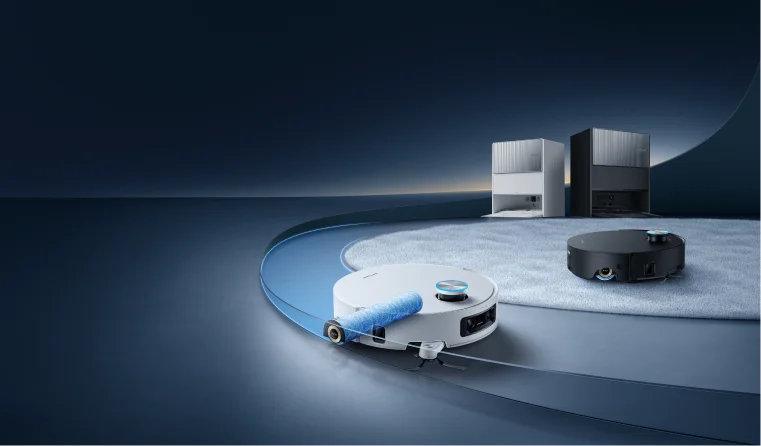
Getting a robot vacuum that also mops can feel like a game-changer until you realize there are two very different systems out there: roller mops and mop pads. Both promise sparkling floors, but they work in unique ways. Choosing the wrong one could leave you with streaks on tile, damp carpets, or extra upkeep you weren’t expecting. In this guide, we’ll break down exactly how each system works, their strengths and trade-offs, and which Dreame models use them best. By the end, you’ll know whether a roller mop or a mop pad robot vacuum is the smarter fit for your home, lifestyle, and floors.   Roller Mop or Mop Pad? The Basics Before diving deep, let’s clear up what these terms mean. Roller Mop Robot Vacuum: Uses a continuous roller that spins against the floor. It sprays fresh water, scrubs, squeezes out dirty water, and refreshes as it goes. Think of it as a mini floor-washing machine. Advanced models like the Dreame Aqua10 Ultra Roller use AquaRoll™ mopping—a fresh-water system that sprays, scrubs, squeezes out dirty water, and refreshes the roller in real time, preventing you from mopping with dirty water. Mop Pad Robot Vacuum: Uses flat pads that wipe the floor. Depending on the model, these pads either vibrate for scrubbing or spin to add pressure. Models like the Dreame X50 Ultra feature dual rotary mops with MopExtend™ RoboSwing Technology to reach tight edges with focused scrubbing power. Many modern pad systems also include smart features like auto-lift to keep carpets dry and edge-extending technology for better coverage. Both can handle everyday dust and spills. But the differences show up when you look at deep stains, edges, maintenance, and carpets. How Each Mop System Works (Mechanics 101) Understanding the mechanics behind each system helps explain their performance differences. Robot Vacuum with Roller Mop A roller mop robot vacuum operates like a mini car wash for your floors. The process is continuous and self-cleaning: Spray: Fresh water mists onto the roller right before it touches the floor. Scrub: The roller spins at high speed (e.g., 100 RPM on the Dreame Aqua10 Ultra Roller), applying significant pressure (9-11 N) to agitate and loosen stuck-on grime. Squeeze: A built-in scraper squeegees dirty water out of the roller into a dedicated waste tank. Refresh: The system immediately soaks the roller with fresh, clean water for the next pass. This closed-loop system ensures you're never just pushing dirty water around.   Dreame Take We built the Aqua10 Ultra Roller to answer one simple question: why settle for cleaning with dirty water? The world’s first AquaRoll™ mopping system uses a continuous cycle of fresh water. Every inch of your floor is cleaned with pure water, not residue from the last swipe, so you can trust that what feels clean, truly is.   Robot Vacuum Mop Pad Types Pad systems use a different approach, with two common subtypes: Vibrating Plate Single Pad: A single, wide pad vibrates at high frequency. This offers broad coverage and is excellent for daily dust and light spills, but it provides less aggressive scrubbing power. Dual Spinning Pads: Two circular pads rotate rapidly, often in opposite directions. This creates higher local pressure, making them better at tackling scuffs and dried-on spots. How Well Do They Clean? A Performance Showdown The real test is on your floors. Here’s how the two systems compare in common scenarios. Cleaning Scenario Robot Vacuum with Roller Mop Robot Vacuum with Mop Pads Stuck-On, Greasy Messes Excel. The combination of high-pressure scrubbing, continuous fresh water, and hot-water wash cycles makes rollers unmatched for tackling kitchen grease, dried syrup, or tracked-in mud. Good. Dual spinning pads can handle many messes but may require multiple passes or more manual pre-soaking for the toughest, dried-on stains. Edge & Corner Reach Varies. The cylindrical shape can leave a small, uncleaned gap against the walls. However, many models, like the Aqua10 Ultra Roller, feature Detangling SideReach™ & MopExtend™ Tech for getting exceptionally close (~0.2in (5mm)) to edges. Excellent (with the right features). Models with advanced software can twist and extend pads into corners. The Dreame X50 Ultra's MopExtend™ RoboSwing Technology allows it to clean up to 1.6in (4cm) into edges and nooks. Water Control & Floor Safety Precise. Advanced systems control water spray precisely, and features like Dreame’s AutoSeal™ Roller Guard automatically close over carpets to prevent any moisture transfer. Generally Safe. Pads are typically damp, not wet. Automatic mop lifting (e.g., ~0.4in (10.5mm on the X50 Ultra) instantly raises the pads when a carpet is detected, ensuring absolute dryness. Hard Floor Daily Maintenance Superior. The roller system is designed for a deeper, wash-like clean every time, effectively replacing your traditional mopping routine. Excellent. Perfect for daily dusting, light spills, and maintaining already-clean floors with quiet efficiency. Carpet & Rug Safety Excellent. Features like Dreame’s automatic AutoSeal™ Roller Guard and roller lifting ensure carpets stay completely dry and protected. Excellent. Automatic mop lifting is a standard and highly reliable feature on most premium pad-based models.   Which Is Easier to Maintain? Long-term upkeep is a crucial factor in your decision. Roller Mop Systems Daily Effort: Low. The dock's hot-wash and hot-air drying cycle does the heavy lifting, sanitizing the roller and preventing mildew and odors automatically. You rarely need to touch the roller itself. Long-Term Care: The roller is a durable component but may need replacement after extensive use. Dock filters and water lines require occasional rinsing to prevent mineral buildup, especially if you use the optional auto-drain water hookup kit. Mop Pad Systems Daily Effort: Moderate. Reusable mop pads need to be rinsed after runs or swapped out for a fresh one. However, docks with 176°F (80°C) hot water washing and drying (like on the Dreame X50 Ultra) keep them fresher longer. Long-Term Care: Very simple. Pads are machine-washable and typically need replacing every 3–6 months. The overall system has fewer mechanical parts involved in the mopping process. Docking & Self-Cleaning: The Command Center The dock is the brain of the operation, and both systems offer impressive automation. Roller Docks (e.g., Aqua10 Ultra Roller): These are comprehensive cleaning stations. They often feature 212°F (100°C) ThermoHub™ Mop Self-Cleaning for a deep, sanitary scrub; 158°F (70°C) hot air drying; and advanced options like auto-refill, auto-drain, and even dual-solution dosing (e.g., a dedicated pet odor solution). Pad Docks (e.g., Matrix10 Ultra): Modern pad docks are highly capable. They include hot water washing, hot air drying, auto water refilling, and sometimes even several types of mops being changed automatically based on the type of floor to clean. Features like Dreame’s AceClean™ DryBoard ensure the washboard itself stays clean and dry after every cycle. Which One Should You Choose? Your Decision Guide Stop thinking in terms of features and start thinking in terms of your lifestyle. Here’s how to choose. Choose a Robot Vacuum with Roller Mop If: Your floors deal with regular, tough messes from kids, pets, or cooking. You want to replace your traditional mopping fully. You prefer maximum automation and the lowest daily manual effort. Your Priority: Deep cleaning power over everything else. Our Recommendation: The Dreame Aqua10 Ultra Roller is the pinnacle of this technology, designed for whole-home adaptive cleaning. Read our review of Aqua10 Ultra Roller to find out pros and cons of this model.  Choose a Robot Vacuum with Mop Pads If: You need excellent daily maintenance for dust, light spills, and footprints. Quiet operation and lower consumable costs are important to you. Your home has many complex edges, corners, and low-profile furniture to clean under. Your Priority: Versatility, precision, and value. Our Recommendation: The Dreame X50 Ultra offers incredible intelligence and cleaning prowess with its dual spinning pads and industry-leading obstacle avoidance. For more on the value of mopping robots, check out our blog: Are Mopping Robot Vacuums Worth It? FAQs Is a robot vacuum with a roller mop better than pads? It depends. Roller mops are best for grease and heavy messes, while mop pads are great for daily light cleaning. Should a robot vacuum have a big roller (main brush)? Yes, a larger roller helps with suction and debris pickup, but for mopping, the cleaning mechanism matters more. Are reusable mop pads worth it? Yes, reusable pads save money in the long run, especially if you don’t mind rinsing or machine washing them. Which is easier to maintain? Roller mops automate more cleaning but need dock care. Pads are cheaper but require more hands-on washing. Can either type keep carpets safe automatically? Yes, roller systems use carpet guards, while mop pads rely on mop-lift tech.
Continue reading
How Many Watts Does a Vacuum Use? Energy Usage & Cost Guide

How Many Watts Does a Vacuum Use? Energy Usage & Cost Guide

Dreame Editorial Team |
You just got your electricity bill, and it's higher than you expected. Or maybe you've been running a new vacuum on an older circuit and noticed the breaker tripping. Whatever got you wondering, you're asking the right question. Understanding vacuum wattage isn't just trivia. It affects your monthly costs, your home's electrical load, and whether you're getting the most out of your cleaning routine. Here’s the short answer: most corded household vacuums run roughly 600–1,440 watts, while robot vacuums are often around 60–100 watts while cleaning. But that range hides a lot of nuance, and the surprising truth is that higher wattage doesn't always mean better cleaning. In this guide, we'll break down energy usage by vacuum type, bust the "more watts = cleaner floors" myth, and show you exactly what your vacuum costs to run each year. Let's get into it. Average Wattage by Vacuum Type Different vacuum categories are designed for different cleaning needs, which affects their power consumption. Before diving into the details, here's a quick reference table to orient you: Vacuum Type Typical Wattage Amps (120V) Annual Energy Use* Upright Vacuum (corded) 600–1,440 W 5–12 A 52–75 kWh Canister Vacuum (corded) 600–1,440 W 5–12 A 52–75 kWh Wet/Dry Shop Vac 800–1,500 W 7–13 A 6–15 kWh Cordless Floor Washer 60–200 W (battery) N/A 4–10 kWh Cordless Stick Vacuum 200–500 W (battery motor power varies) N/A 6–15 kWh Handheld Vacuum 15–100 W (battery) N/A 1–5 kWh Robot Vacuum 60–100 W (cleaning) + dock standby (~few watts) N/A 15–45 kWh (*Based on average usage patterns across a household year: corded upright/canister ~1 hour/week (52 h/yr); shop vac ~0.5–2 hours/month (6–24 h/yr); cordless floor washer ~30 minutes/week (26 h/yr); cordless stick ~30–60 minutes/week equivalent charging energy; handheld ~10–30 minutes/week; robot vacuum ~30–60 minutes/day (180–365 h/yr) and dock standby can add ~20+ kWh/year depending on the dock.) In the US and Canada, standard household outlets run at 120V. So if your vacuum is rated at 1,200 watts, it draws 10 amps (Watts ÷ Volts = Amps). Standard circuits are 15 or 20 amps — meaning a 1,400W vacuum is pulling close to the limit of a shared circuit. Upright and Canister Vacuums These are the workhorses most of us grew up with, the upright ones you push through carpet or the canister you drag from room to room. They're powerful, reliable, and still the go-to choice for larger homes with a mix of carpet and hard floors. Typical wattage: ~600W to ~1,440W Best for: Deep carpet cleaning, larger homes, pet hair, whole-home vacuuming sessions Pros: Strong suction for embedded dirt and allergens Wide range of attachments and tools No charging required, consistent power throughout use Cons: High wattage means a higher electricity draw per session Heavier and less maneuverable than newer form factors Can be cumbersome for quick cleanups At 1,200 watts, running a traditional upright for one hour a week costs roughly $7–$10 per year (at average US electricity rates). That's not alarming on its own, but if you're vacuuming daily or running multiple appliances on the same circuit, it adds up. Wet/Dry Vacuums & Floor Washers This category covers two very different types of machines that often get lumped together. Wet/Dry shop vacs (garage/worksite) Industrial/garage wet-dry shop vacs are built to tackle sawdust, water, debris, and anything else a job site or workshop throws at them. Many common 120V models land around ~800–1,500W (higher-power models exist but are less typical on standard household circuits). They're not built for daily household cleaning; they're built for heavy-duty situations where you need serious suction fast. Best for: Garages, workshops, water extraction, construction cleanup Cordless floor washers Modern cordless floor washers, like the Dreame H-series, are a completely different story. These combine vacuuming and mopping in one pass and run on battery power, typically consuming just 60 to 200 watts during operation. They're designed for hard floors and light wet messes, offering the convenience of a two-in-one device without the energy penalty of a traditional shop vac. If you're looking for a wet dry vacuum cleaner that handles both spills and dry debris without spiking your energy bill, modern cordless floor washers are worth a serious look. Best for: Kitchen floors, bathrooms, quick daily refreshes on hard surfaces Pros: Extremely energy efficient Washes and vacuums simultaneously Lightweight  Cons Not ideal for carpet Limited battery runtime Needs water tank refills Cordless Stick Vacuums & Handheld Vacuums Battery-powered vacuums have come a long way. Early versions were underpowered novelties; today's models, especially those with brushless motors, deliver impressive suction in a lightweight, cable-free package. Typical wattage: cordless vacuums don’t “pull watts from the wall” while cleaning; they draw power from the battery. Many cordless stick vacuums list hundreds of watts of rated power depending on model and mode (for example, Dreame Z30 stick vacuum lists 855W rated power). Best for: Apartments, quick daily pickups, stairs, car interiors Pros: Often efficient per cleaning session Highly maneuverable and convenient No tripping over cords Cons: Runtime limitations (varies widely by mode and model) May not match corded vacuums for deep carpet cleaning Battery degrades over time Battery vacuums use energy differently: they charge from the wall, then clean using stored power. Over a year, many households still end up in the single-digit to low double-digit kWh range for typical cordless use—small compared with HVAC or electric drying.  To understand more about why these motors perform so well at lower wattage, check out this breakdown of brushed vs. brushless vacuum motors. Robot Vacuums If energy efficiency is your top priority, robot vacuums are hard to beat. Robot vacuums are generally energy efficient while cleaning. Many estimates put robots around ~60–100W during cleaning, though it varies by model, suction mode, and floor type. Typical wattage: ~60–100W Best for: Daily maintenance cleaning, allergy sufferers, busy households, hard floors and low-pile carpet Pros: Extremely low energy consumption Can run on a schedule, maintaining clean floors without effort Modern models include mopping, obstacle avoidance, and self-emptying features Cons: Not ideal for deep-pile carpet pile or heavy debris Require occasional maintenance (emptying bins, cleaning brushes) Dock standby and dock “high power” features can raise annual kWh When you combine low wattage with smart scheduling by running during off-peak electricity hours, a robot vacuum becomes one of the most cost-effective appliances in your home. For a full breakdown of how robot vacuums stack up energetically, see this energy and water audit of robot vacuums. Does Higher Wattage in Vacuum Cleaners Mean Better Cleaning? This is one of the most persistent myths in the appliance world, and it's worth addressing head-on: wattage measures energy input, not cleaning performance. Think of it this way. A gas-guzzling car isn't automatically faster than a fuel-efficient one. What matters is how efficiently that energy is converted into useful work. The same principle applies to vacuums. Vacuum performance is better measured by: Air Watts (AW): The actual suction power delivered at the cleaning head, accounting for airflow and pressure together Pascal (Pa): Measures suction pressure, particularly useful for robot vacuums CFM (Cubic Feet per Minute): Measures airflow volume A vacuum rated at 1,400 input watts might deliver only 250 air watts of usable suction if its motor or airflow design is inefficient. Meanwhile, a modern vacuum with a high-efficiency brushless motor might achieve the same or better suction at 800 watts input. Dreame Take Modern brushless motors convert electrical energy into suction far more efficiently than older brushed motor designs. They run cooler, last longer, and deliver more air watts per input watt. That's why a Dreame stick vacuum drawing 60–80 watts during operation can outperform a decade-old corded vacuum drawing 1,200 watts on certain surfaces. For anyone comparing vacuums, don't let wattage be your primary criterion. Look at air watts, Pa ratings, and filtration quality. To go deeper on what suction numbers actually mean, this guide on what is a good suction power for a vacuum cleaner is worth a read. How Much Does It Cost to Run a Vacuum Cleaner? Let’s get into the math. The formula for electricity cost is simple: (Watts × Hours Used) ÷ 1,000 = kWh consumed kWh × your electricity rate = cost The average US electricity rate in 2024 is about $0.16 per kWh, though it varies widely by state: California can reach $0.25–$0.30, while some Southern states are closer to $0.10. Example 1: Traditional Corded Upright (1,200W) Vacuuming time: 1 hour per week Annual hours: 52 Energy used: (1,200 × 52) ÷ 1,000 = 62.4 kWh Annual cost at $0.16/kWh: ~$10 Example 2: Robot Vacuum (40W) Running Daily Run time: 1 hour per day Annual hours: 365 Energy used: (40 × 365) ÷ 1,000 = 14.6 kWh Annual cost at $0.16/kWh: ~$2.34 Note: If you include dock standby (often a few watts), robot annual kWh can be meaningfully higher than “cleaning-only” math. The Comparison Even though the robot runs daily and the corded vacuum only weekly, the robot costs roughly $7–$8 less per year. Plus, daily maintenance cleaning usually reduces how often you use your corded vacuum, lowering energy use further. Scenario Annual kWh Annual Cost Corded Upright (1 hr/week) 62.4 kWh ~$10 Robot Vacuum (1 hr/day) 14.6 kWh ~$2.34 Cordless Stick (3×/week, 30 min each) 6–8 kWh ~$1–$1.30 The takeaway: even high-watt vacuums aren’t major electricity expenses. Still, shifting toward battery-powered or autonomous cleaning can reduce costs further. Do Vacuums Use a Lot of Electricity? Short answer: compared to most appliances, no. A central AC uses 3,000–5,000 watts and runs for hours. Electric water heaters and dryers also draw 4,000–5,000 watts per cycle. Vacuums may peak high in wattage, but they run briefly — often just 30–60 minutes per week — making their yearly energy use tiny compared to HVAC or water heating. What actually wastes the most electricity at home? The biggest energy users in US homes are: Heating and cooling (HVAC): ~50% of home energy use Water heaters: ~18% Washers and dryers Refrigerators running 24/7 Lighting in non-LED homes By comparison, vacuums are energy sippers. Even running a 1,400W upright two hours daily (which is rare) would use about 1,022 kWh per year, similar to a refrigerator. Under normal use, vacuums account for well under 1% of a household’s electricity bill. Small habits still help. Using a robot vacuum, keeping filters clean, and using eco mode all improve efficiency. For more ideas, check out these green home tips and this energy and water audit guide. Watts vs. Amps vs. Volts: Decoding the Vacuum Label Every vacuum has a rating plate, usually on the base or back. Here’s how to read it. Volts (V): Electrical pressure from your outlet. Standard North American outlets provide 120V, while heavy-duty shop vacs may require 240V. Amps (A): Current flowing to the motor. Household circuits are usually 15A or 20A. A vacuum drawing 12A uses most of a 15A circuit, which is why breakers sometimes trip when other appliances share the line. Watts (W): Total power use. This equals amps × volts and is the most useful number for estimating energy cost. Quick formulas: Watts = Volts × Amps Amps = Watts ÷ Volts A 1,200W vacuum on 120V draws about 10 amps. If you’re checking circuit capacity, add up all devices on that circuit and keep the total below the breaker rating. Tips to Lower Your Vacuuming Energy Bill You won't transform your electricity bill by optimizing your vacuuming habits, but these small adjustments do make your vacuum work more efficiently, which saves energy and extends the life of the motor. Keep filters clean. Clogged filters restrict airflow, forcing the motor to work harder and draw more power. Clean or replace them every 1–3 months as recommended. Use the right suction mode. Turbo can draw two to three times the power of eco mode. For daily cleaning, standard mode is usually enough. Match the vacuum to the job. Using a 1,400W upright for small messes wastes energy. A handheld or robot vacuum handles quick jobs more efficiently. Understanding the different types of vacuums and their ideal use cases helps you reach for the right tool every time. Switch to smart cleaning. Scheduling daily runs with a robot vacuum keeps floors consistently clean, reducing the need for energy-intensive deep cleaning sessions. Empty the dustbin often. A full bin reduces airflow and forces the motor to compensate, increasing energy use. Consider upgrading older vacuums. Motors from a decade ago are far less efficient than modern brushless designs. When comparing a shop vac versus a modern vacuum cleaner, newer models often deliver better cleaning with less power. How Many Watts Does a Dreame Vacuum Use? Dreame vacuums are built around motor efficiency, which means they deliver strong cleaning performance at relatively low energy consumption. Here's a general overview by category: Dreame Robot Vacuums: Typically 25–65W during operation, depending on the model and suction mode. Even in max mode, they remain among the most energy-efficient floor-cleaning tools available. Dreame Cordless Stick Vacuums: Battery systems draw 40–90W during charging; actual motor output varies by model and mode. Dreame Wet & Dry Floor Washers: The H-series models typically operate around 60–200W — far below the 1,000W+ draw of traditional corded vacuums. The efficiency gains come primarily from Dreame's high-speed brushless motors, which minimize energy wasted as heat and convert more electrical energy into airflow and suction. For households looking to clean well without unnecessary energy expense, Dreame's lineup — from robot vacuums to wet and dry vacuum cleaners — is designed with that balance in mind. Conclusion Vacuum wattage matters, but higher watts don’t guarantee better cleaning, and even powerful vacuums use little electricity when used reasonably. What counts more is using the right vacuum for the job, keeping it maintained, and recognizing that modern low-wattage options like robot and cordless stick vacuums can match or outperform older corded models. To be a conscious cleaner, check your vacuum’s rating plate, note the wattage and amps, and make sure you’re using the right tool for each task. Your floors can be clean, and your electricity bill can stay predictable. You just need to know what you're working with. FAQs Will a robot vacuum increase my electric bill? Not significantly. Most use very little electricity and cost only a few dollars annually. Why do my lights flicker when I start the vacuum? This happens because motors briefly draw extra current when starting up. How many watts does a Dreame vacuum use? It depends on the model. Robot vacuums may use under 100W, while cordless sticks often range between 200–500W. Is 200 watts good for a vacuum cleaner? For cordless vacuums, yes. Efficient airflow design allows strong cleaning performance at that power level. Do vacuums use a lot of power? They draw high power briefly but contribute very little to yearly energy consumption. How many watts does the average vacuum use?  Corded uprights/canisters are commonly hundreds to ~1,440W; robot vacuums often ~60–100W while cleaning; cordless sticks vary widely and draw from the battery.
Continue reading
How to Clean Floor Without a Mop: 7 Ways to Ditch the Bucket

How to Clean Floor Without a Mop: 7 Ways to Ditch the Bucket

Dreame Editorial Team |
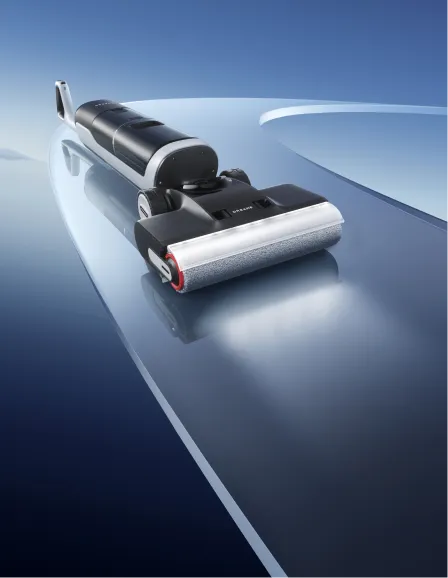
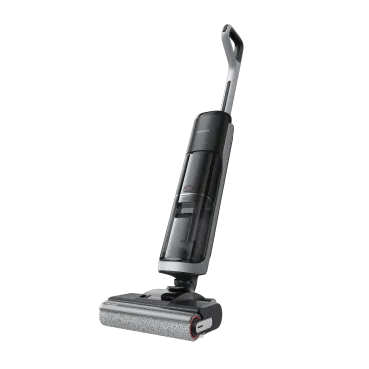
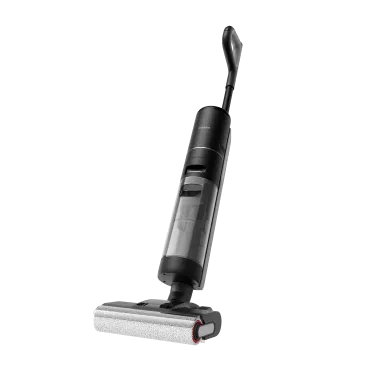
There's a particular kind of frustration that comes with mopping. You fill the bucket, wring out the mop, push gray water across the floor, and somehow end up with a surface that looks streakier than when you started. Then there's the storage problem: a damp mop head sitting in a corner, collecting bacteria between uses. And if you have a bad back, the whole ordeal becomes something you genuinely dread. Thankfully, you don't need a mop to keep your floors clean. Whether you're working around a back injury, living in a small apartment without storage space, or simply looking for a more hygienic routine, there are practical methods that get the job done just as well, or even better. This guide covers seven of them, from simple DIY techniques using things you already own, to smarter tools that take most of the effort out of the equation entirely. Manual Techniques to Clean Floors Without a Mop The methods mentioned below work well for most hard floor surfaces and require little to no special equipment. They're particularly useful for targeted cleaning, quick sessions, or situations where you simply don't have access to a mop. 1. Glide a Damp Towel with a Broom Wrap a damp microfiber towel around the head of a broom and secure it with clips or rubber bands. Lightly mist the towel with a cleaning solution, then sweep across the floor. Benefits Lets you clean while standing upright Covers large areas quickly Uses minimal water, reducing streaks Works well on tile, laminate, and vinyl This method mimics a flat mop but avoids the bucket and heavy wringing. 2. Spray and Wipe for Targeted Cleaning Fill a spray bottle with a floor-safe cleaner. Spray a small area and wipe immediately using a microfiber cloth or reusable pad. Benefits Ideal for sticky spots or spills Prevents excess moisture on sensitive floors Reduces water waste Gives better control over problem areas This approach works especially well for kitchens and entryways where dirt accumulates in patches rather than evenly. 3. Scrub on Hands and Knees for Precision  Sometimes the simplest method is still the most thorough. Using a soft brush or cloth, scrub the floor manually while inspecting problem spots closely. Benefits Deepest level of control over dirt and stains Allows close inspection of grout lines and corners Useful for neglected or heavily soiled floors It’s time-consuming and labor-intensive, but for bathrooms or high-traffic areas, it’s often the most effective manual solution. 4. Use a Squeegee for Fast Drying After spraying the floor lightly, use a floor squeegee to pull moisture toward a towel, drain, or absorbent mat. Benefits Prevents slippery residue Leaves floors streak-free Speeds up drying time Useful for tile and stone surfaces This technique is commonly used in commercial spaces because it keeps floors hygienic without oversaturating them. 5. Use Disposable Wipes for Quick Messes Pre-moistened floor wipes are a convenient solution for small spills or daily touch-ups. Benefits No setup required Hygienic, single-use option Great for pet accidents or food spills Easy to store While not ideal for large spaces, wipes are perfect for maintaining cleanliness between deeper cleans. Use Smart Technology to Clean Floors Without a Mop Manual methods work, but they still demand time and physical effort. For larger homes, mobility concerns, or consistently better hygiene, smart cleaning technology offers a more efficient solution. 6. Wash with a Wet/Dry Vacuum for Fresh Water Hygiene A wet and dry vacuum — sometimes called a wet dry vac or wet dry vacuum cleaner — solves one of the biggest hygiene problems with traditional mopping: dirty water. When you mop, bucket water gets dirtier with every pass, often spreading diluted grime across areas you’ve already cleaned. A wet dry vacuum separates the process. It removes dry debris first, then dispenses clean water from a fresh tank while suctioning dirty water into a separate compartment. The two never mix. This means the water touching your floor is always clean, which is something traditional mopping can’t guarantee. For homes with children or pets, or for anyone who values real cleanliness, that difference matters. These machines also handle dry messes and wet spills in one pass, eliminating the need to switch tools mid-clean. Benefits Uses fresh water continuously Removes liquid spills instantly Cuts cleaning time dramatically Leaves floors nearly dry The Dreame Aero Pro shows what this technology can do. It vacuums and washes simultaneously, keeps clean and dirty water separate, and uses a self-cleaning system to maintain the roller brush, addressing the hygiene limits of conventional mopping at its source. [product handle="aero-pro-wet-dry-vacuum" rating="4.5"] 7. Delegate to a Robot Vacuum for Zero Effort If your goal is minimal physical effort, a robot vacuum is the most complete solution here. Modern robot vacuums now use laser mapping to navigate accurately, detect surfaces, avoid obstacles, and return to their dock to empty dustbins, refill water, and clean mop pads automatically. For people with back pain, mobility limits, or busy schedules, this is a complete practical solution. Daily automated cleaning prevents dust and grit from building up, while controlled water use avoids damaging sensitive floors. Benefits Hands-free daily cleaning Maintains floors before grime builds up Ideal for busy households Reduces need for manual scrubbing Advanced models like the X60 Max Ultra demonstrate how automated cleaning can replace traditional mopping entirely. It includes AI obstacle avoidance, a self-cleaning base station, automatic pad lifting for carpets, and detailed home mapping with zone control through its app, making whole-home maintenance largely hands-off. [product handle="x60-max-ultra-complete-robot-vacuum" rating="4.7"] No-Mop Cleaning Tips for Specific Areas How to Clean Bathroom Floor Without Mop Bathrooms are tricky to clean: tight spaces, textured tiles, and fixtures that block access make mops impractical. In many cases, a mop simply isn’t the right tool. The hand-and-knee method offers the precision needed to scrub around the toilet base, behind doors, and into grout lines where moisture and soap build up. Use a small scrub brush with a suitable cleaner, work in sections, and dry with a towel as you go to avoid residue. The squeegee method works well for maintenance, especially if shower water regularly reaches the floor. A quick pass after bathing removes standing moisture and keeps grime from settling into grout. Benefits Reaches corners and grout more effectively than a mop Prevents moisture buildup and mildew growth Reduces the need for frequent deep scrubbing For a more detailed breakdown of bathroom floor care, the guide on how to clean bathroom floors covers surface-specific techniques in more depth. How to Clean Hardwood and Laminate Without Mop Water is the main risk for hardwood and laminate floors. Traditional mopping often leaves more moisture than these materials can tolerate, leading to swelling, warping, or finish damage over time. The safest manual method is spray-and-wipe. Lightly mist a small section, wipe immediately with a dry or barely damp microfiber cloth, and move on. Never allow liquid to pool. A robot cleaner with controlled moisture output is also well suited to these floors because it uses far less water than a traditional mop. Benefits Protects seams and finish from water damage Prevents warping and surface dullness Maintains appearance with minimal moisture exposure For more guidance on hardwood-specific care, the how to clean hardwood floors guide covers what to use, what to avoid, and how to address common issues like sticky floors. Tips for Maintaining Floors Between Deep Cleans Reducing how often you need to perform an intensive wet clean starts with limiting what reaches the floor in the first place. Stop Dirt at the Door: Place high-quality mats at every entrance and enforce a "no shoes indoors" rule. This simple step helps prevent dirt and debris from being tracked in, extending the life of your flooring finishes. Dry Sweep Daily: Vacuum frequently, especially in high-traffic areas, so abrasive grit doesn’t scratch your finishes or settle into your grout. Regular sweeping drastically reduces how often you need to deep clean and makes routine maintenance faster and easier. Tackle Spills Fast: Wipe up messes immediately. Fresh spills lift easily with a paper towel, while dried, sticky ones require serious scrubbing. Promptly addressing spills helps maintain your flooring's appearance and prevents long-term damage. Conclusion You don’t need a mop or a bucket of murky water to maintain clean, hygienic floors. Simple manual tricks like towel-broom cleaning or spray-and-wipe methods work in a pinch. For long-term convenience and hygiene, modern tools such as a wet and dry vacuum, or a robot vacuum and mop offer a more efficient solution. The best approach depends on your time, physical comfort, and cleaning standards, but every option above proves that ditching the mop is entirely possible. FAQs How to clean a dirty floor without mop? Start by vacuuming debris, then use a spray cleaner and microfiber cloth or a wet-and-dry vacuum to remove grime without spreading dirty water. How to keep floors clean without mopping? Vacuum daily, wipe spills immediately, and use automated cleaning tools to prevent dirt from accumulating. What can you use instead of a mop for floors? Microfiber cloths, towels on a broom, disposable wipes, squeegees, wet-dry vacuums, or robot cleaners all work effectively. How to clean the floor by hand? Use a microfiber cloth, warm cleaning solution, and gentle scrubbing motions. Work in small sections and dry immediately to avoid streaks.
Continue reading
What to Use to Mop Hardwood Floors: Safe Solutions & Best Tools

What to Use to Mop Hardwood Floors: Safe Solutions & Best Tools

Dreame Editorial Team |
Hardwood floors add warmth and value to a home, but they also require careful cleaning. Most people don’t realize that hardwood requires completely different care than tile or vinyl, as wood reacts quickly to moisture and harsh chemicals. Choosing what to use to mop hardwood floors safely can feel overwhelming, especially when one wrong decision can damage wood faster than years of foot traffic. When the wrong products or tools are used, the damage can show up as dullness, warping, or permanent staining. So, if you are used to traditional mopping methods, what to use to mop hardwood floors safely? The answer is not complicated, but it does require restraint. The safest approach combines the right cleaning solution with a mop that limits water exposure. This guide explains which cleaners are safe, which mops work best, and how to vacuum hardwood floors without damaging the finish. Safe Hardwood Cleaning Solutions When You Mop Choosing the right cleaning liquid is the most important step to keep your hardwood floors sparkly clean and safe from chemical or water damage. Even the best mop cannot protect wood if the solution is too harsh. pH-Neutral Commercial Cleaners pH-neutral cleaners designed for hardwood are the safest choice. These products are formulated specifically for sealed wood surfaces and are intended for regular use. They clean effectively without dulling the finish or leaving residue behind. Because they do not rely on strong acids or alkalines, they preserve the protective coating over time. This is why professional cleaners rely on them for routine maintenance. When shopping, it is important to check the label and confirm that the cleaner is approved for sealed hardwood floors. Vinegar and Water: A Common but Imperfect Option Vinegar and water are often recommended as a natural cleaning solution, as they do remove grime. However, vinegar is acidic. Repeated use can slowly dull the finish and weaken the seal on hardwood floors. If vinegar is used, it should be highly diluted and applied sparingly. It should never be part of a weekly cleaning routine. For long-term floor care, professionally formulated cleaners are a safer and more reliable option. Learn how to care for your hardwood floors naturally. Ingredients That Should Be Avoided Some cleaning products cause damage even if they appear effective at first. Hardwood floors should never be cleaned with bleach, ammonia, or oil-based soaps. These substances discolor wood, strip finishes, or leave sticky residues that attract dirt. Powdered cleaners and abrasive scrubs should also be avoided because they scratch the surface. Products that promise extra shine often create buildup rather than improving the floor’s condition. Dreame Take If you let your robot vacuum handle your hardwood mopping, using a compatible solution is key to preventing internal clogs and ensuring a streak-free shine. We recommend the Wood Floor Care Solution for a safe, clean on wood surfaces.  Choose the Right Mop for Your Hardwood Floors Different mop types control moisture differently. Since excess water is the primary threat to hardwood, your choice of mop matters as much as your cleaning solution. Below, we compare the most common types of mops you can consider.  Mop Comparison Matrix Mop Type Pros Cons Water Control Cost Best For Microfiber Flat Mop Affordable, easy to control moisture, machine-washable pads Requires manual wringing, labor-intensive Excellent (you control wetness) $15–40 Small spaces, tight budgets Spin Mop Removes more water than standard mops, bucket system contains mess Still leaves floors fairly wet, requires physical effort Moderate $30–60 Medium spaces, occasional deep cleaning Steam Mop Sanitizes without chemicals, kills bacteria Too much moisture for hardwood, heat can damage finish Poor (excessive moisture) $50–150 Tile and sealed surfaces only Vacuum Mop (Wet/Dry) Vacuums and mops simultaneously, removes dirty water instantly, leaves floors dry Higher upfront cost, requires charging Excellent (instant water recovery) $300–600 Active homes, pets, frequent cleaning Robot Vacuum & Mop Automated daily maintenance, precise water control settings, requires no physical effort Can't handle heavy messes, higher investment Excellent (controlled dampness) $400–1,500 Busy households, daily maintenance There is a distinct trade-off between effort and precision. Manual mops (flat/spin) are budget-friendly but rely entirely on human skill—one accidental soak can damage the wood. Automated tools (Vacuum Mops/Robots) require a higher initial investment but offer built-in "safety nets" through digital water control and immediate moisture suction. If you want to eliminate the risk of "user error" (over-wetting), smart technology is the superior choice for wood longevity. 3 Best Mop Materials for Hardwood Floors (And 3 to Avoid) The material of your mop matters just as much as the cleaner you use, because it’s the only thing making direct contact with your hardwood finish.  Microfiber (flat mop pads / most robot mop pads): The safest go-to for sealed hardwood. Microfiber lifts fine dust and residue without scraping, and it holds water evenly so you’re less likely to over-wet seams. Twisted microfiber / twisted fabric mop pads (common on higher-performance mop pads): Great when you want a bit more “grab” for sticky spots. The twisted loops increase surface contact and scrubbing ability, while still staying soft enough for sealed wood—just keep the pad only damp, not wet. Soft roller microfiber (wet/dry vac rollers): Ideal for active homes because the roller can scrub while suctioning dirty water back up, which helps floors dry faster and reduces streaking. What to avoid: Cotton string mops: They hold and dump water unpredictably, which increases the risk of leaving puddles and pushing grit around. Sponge mops: They can smear dirty water and leave moisture behind, especially along seams. Abrasive scrub pads / rough textures: Too aggressive for hardwood finishes and can cause hazing or micro-scratches over time. How to Mop Hardwood Floors Correctly Step-by-Step Step 1: Clear the Area Remove rugs, furniture, and any obstacles. This prevents you from mopping around items, which leaves dirty patches and creates uneven wear patterns on your floor. Step 2: Perform a Dry Pass  Sweep or dry vacuum before mopping. This step is critical and cannot be skipped. When you mop over dust and grit, the particles mix with water to create an abrasive paste. As you push the mop, this paste scratches your floor's finish. Over time, these microscopic scratches accumulate, making your floors look dull and worn. Vacuums are more effective than brooms because they actually remove debris rather than pushing it around. For optimal results, use a vacuum designed for hard floors with soft rollers that won't scratch. See this comprehensive guide on which cleans better: sweeping vs vacuuming? Step 3: Apply the Mopping Technique Mop with the grain of the wood, not against it. Wood planks have a natural directional pattern. Following this pattern hides minor streaks and prevents water from pooling in cracks between boards. Use back-and-forth motions in straight lines rather than circular patterns. Circles tend to push water into seams. Step 4: Dry Immediately Open windows or turn on fans to improve air circulation. If you notice any standing water or puddles, dry them immediately with a clean towel. Important Hardwood’s biggest enemy is standing water. No matter what tool you use, the floor should dry within 1-2 minutes of mopping. If water remains visible longer than that, your mop is too wet, and you are risking water damage. Match the Mop to Your Lifestyle: Which is Best? The best mop for hard floors depends on how the space is actually used. Homes with light foot traffic can get by with simple, low-moisture mops, while busy households with kids or pets need something that cleans more thoroughly without leaving water behind. Here are a few great options, depending on what your floors deal with on a day-to-day basis. Option 1: For Small Spaces & Strict Budgets For small homes or those on a budget, a microfiber flat mop is a great choice. It lets you control the moisture by applying it to the pad, not the floor, making cleaning safer for wood. Its lightweight design also makes it easy to use in tight spaces. Option 2: For Deep Cleaning & Active Homes (Pets/Kids) For homes with children or pets, wet and dry vacuum mops are one of the most effective cleaning tools. They work by applying clean water or cleaning solution to the floor while simultaneously suctioning up dirty water, preventing spills and messes from spreading. This helps keep hardwood floors cleaner, drier, and safer from water damage. Many models, like the Dreame H14 Pro or H15 Pro Heat, also feature adjustable water flow, powerful suction, and easy-to-use controls, making deep cleaning faster and more efficient. With these machines, you can remove pet hair, dirt, and sticky spills in a single pass, reducing the time and effort needed compared to traditional mopping methods. [product handle="h15-pro-heat-wet-dry-vacuum" rating="4.5"] Option 3: For Daily Maintenance & Convenience For daily maintenance, robot vacuum and mop systems offer unmatched convenience and consistency. They can vacuum and mop in a single pass, picking up dust, dirt, and pet hair while keeping mop pads lightly damp to protect hardwood floors. Products like the Dreame L40s Ultra or Matrix10 Ultra provide precise water control, ensuring floors are cleaned safely and efficiently with minimal effort. These systems reduce manual work, maintain a consistently clean surface, and are ideal for busy households that need reliable, everyday floor care. [product handle="matrix10-ultra-robot-vacuum" rating="4.7"] Check out the full Dreame Robot Vacuum and Mop Collection. Conclusion Hardwood floors stay in good condition when moisture is controlled and finishes are protected. Using a pH-neutral cleaner and a mop that limits water exposure is far more important than using strong products or excessive force. If your current method leaves water sitting on the floor, it is a sign that adjustments are needed. With the right tools and technique, hardwood floors can remain clean, durable, and visually appealing for years to come. Common Questions About Cleaning Wood Floors Is it better to vacuum or sweep before mopping? Vacuum. Brooms push fine dust around and miss particles that vacuums capture. Modern vacuums designed for hard floors use soft rollers that lift debris without scratching. This removes the abrasive grit that would otherwise scratch your finish when mopping. How do I remove sticky residue safely? Spot-clean with a pH-neutral hardwood cleaner on a slightly damp microfiber cloth. Rub gently with the grain. For stubborn residue, let the cleaner sit for 30 seconds before wiping. Never use scrapers or abrasive pads since they scratch the finish permanently. How often should I mop my hardwood floors? Light traffic areas: Once every 1-2 weeks High traffic areas: Once per week Daily maintenance (robot): Every day is safe with proper moisture control More frequent cleaning is only necessary if you see visible dirt. Over-mopping with even small amounts of water causes unnecessary moisture exposure. Daily dry vacuuming is safer and more effective than excessive wet mopping. Should you use a really wet mop on hardwood floors? Never. Wet mops deposit too much water, which seeps into seams and causes warping. Your mop should be damp enough to clean but dry enough that the floor dries within 1-2 minutes. If you can wring water out of your mop, it's too wet for hardwood. Is Dawn dish soap safe for wood floors? No. Dish soaps contain degreasers designed to break down cooking oil. These same chemicals attack the protective finish on hardwood floors, gradually stripping it away. Use only pH-neutral cleaners formulated specifically for sealed wood. What do professional cleaners use to mop floors? Professional services typically use commercial pH-neutral hardwood cleaners with microfiber flat mops or professional-grade wet/dry vacuum systems.
Continue reading