



















 Robot Lawn Mower


 Australia
 中国大陆
中国大陆 日本
日本


 Türkiye


 Italia
 Netherlands
 Belgium
 Greece
 Polska
 Norway
 Sweden
 Finland
 Denmark
 Hungary
 Czechia
 Slovenia
 Croatia
 Switzerland
 United
Kingdom
United
Kingdom
 Canada

 Colombia


You just got your electricity bill, and it's higher than you expected. Or maybe you've been running a new vacuum on an older circuit and noticed the breaker tripping. Whatever got you wondering, you're asking the right question. Understanding vacuum wattage isn't just trivia. It affects your monthly costs, your home's electrical load, and whether you're getting the most out of your cleaning routine.
Here’s the short answer: most corded household vacuums run roughly 600–1,440 watts, while robot vacuums are often around 60–100 watts while cleaning. But that range hides a lot of nuance, and the surprising truth is that higher wattage doesn't always mean better cleaning.
In this guide, we'll break down energy usage by vacuum type, bust the "more watts = cleaner floors" myth, and show you exactly what your vacuum costs to run each year. Let's get into it.

Average Wattage by Vacuum Type
Different vacuum categories are designed for different cleaning needs, which affects their power consumption.
Before diving into the details, here's a quick reference table to orient you:
| Vacuum Type | Typical Wattage | Amps (120V) | Annual Energy Use* |
|---|---|---|---|
| Upright Vacuum (corded) | 600–1,440 W | 5–12 A | 52–75 kWh |
| Canister Vacuum (corded) | 600–1,440 W | 5–12 A | 52–75 kWh |
| Wet/Dry Shop Vac | 800–1,500 W | 7–13 A | 6–15 kWh |
| Cordless Floor Washer | 60–200 W (battery) | N/A | 4–10 kWh |
| Cordless Stick Vacuum | 200–500 W (battery motor power varies) | N/A | 6–15 kWh |
| Handheld Vacuum | 15–100 W (battery) | N/A | 1–5 kWh |
| Robot Vacuum | 60–100 W (cleaning) + dock standby (~few watts) | N/A | 15–45 kWh |
(*Based on average usage patterns across a household year: corded upright/canister ~1 hour/week (52 h/yr); shop vac ~0.5–2 hours/month (6–24 h/yr); cordless floor washer ~30 minutes/week (26 h/yr); cordless stick ~30–60 minutes/week equivalent charging energy; handheld ~10–30 minutes/week; robot vacuum ~30–60 minutes/day (180–365 h/yr) and dock standby can add ~20+ kWh/year depending on the dock.)
In the US and Canada, standard household outlets run at 120V. So if your vacuum is rated at 1,200 watts, it draws 10 amps (Watts ÷ Volts = Amps). Standard circuits are 15 or 20 amps — meaning a 1,400W vacuum is pulling close to the limit of a shared circuit.
Upright and Canister Vacuums
These are the workhorses most of us grew up with, the upright ones you push through carpet or the canister you drag from room to room. They're powerful, reliable, and still the go-to choice for larger homes with a mix of carpet and hard floors.
Typical wattage: ~600W to ~1,440W
Best for: Deep carpet cleaning, larger homes, pet hair, whole-home vacuuming sessions
Pros:
- Strong suction for embedded dirt and allergens
- Wide range of attachments and tools
- No charging required, consistent power throughout use
Cons:
- High wattage means a higher electricity draw per session
- Heavier and less maneuverable than newer form factors
- Can be cumbersome for quick cleanups
At 1,200 watts, running a traditional upright for one hour a week costs roughly $7–$10 per year (at average US electricity rates). That's not alarming on its own, but if you're vacuuming daily or running multiple appliances on the same circuit, it adds up.
Wet/Dry Vacuums & Floor Washers
This category covers two very different types of machines that often get lumped together.
Wet/Dry shop vacs (garage/worksite)
Industrial/garage wet-dry shop vacs are built to tackle sawdust, water, debris, and anything else a job site or workshop throws at them. Many common 120V models land around ~800–1,500W (higher-power models exist but are less typical on standard household circuits). They're not built for daily household cleaning; they're built for heavy-duty situations where you need serious suction fast.
Best for: Garages, workshops, water extraction, construction cleanup
Cordless floor washers
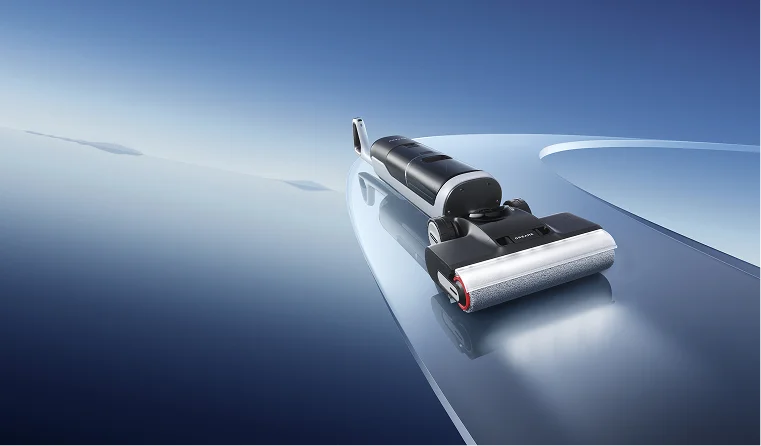
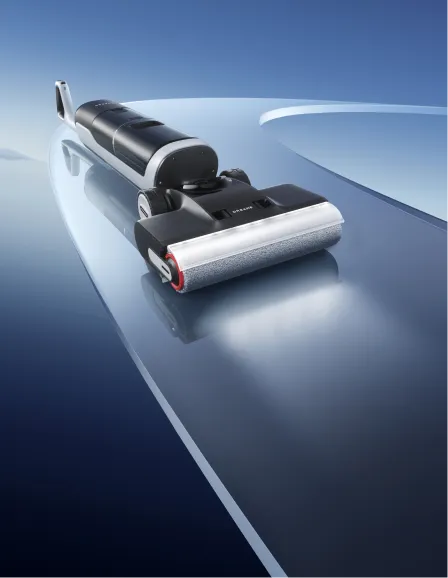
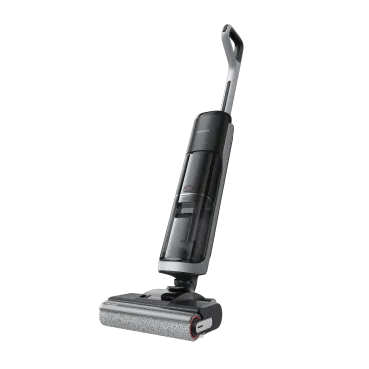
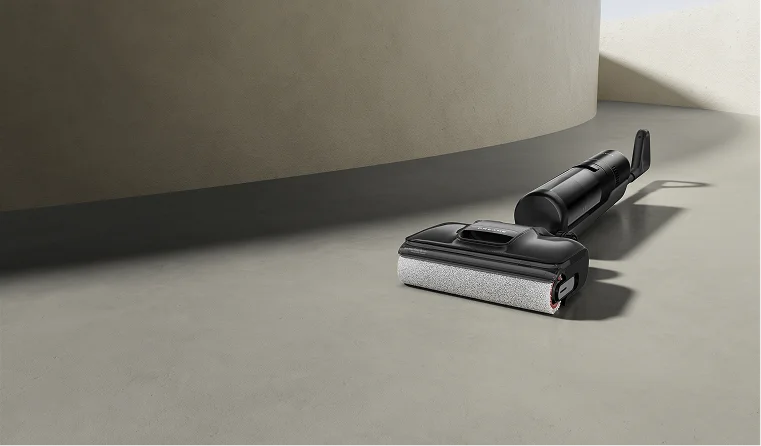
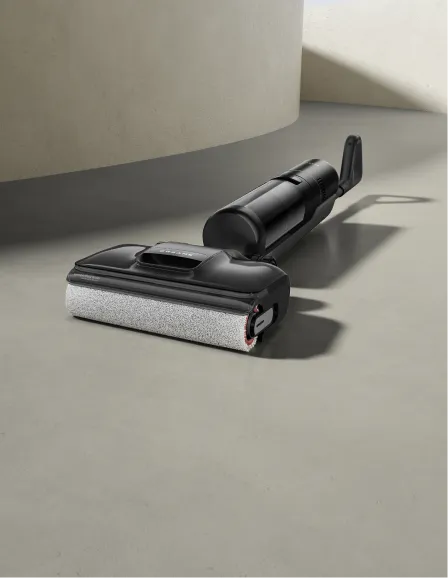
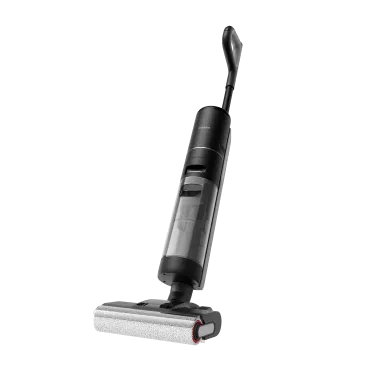
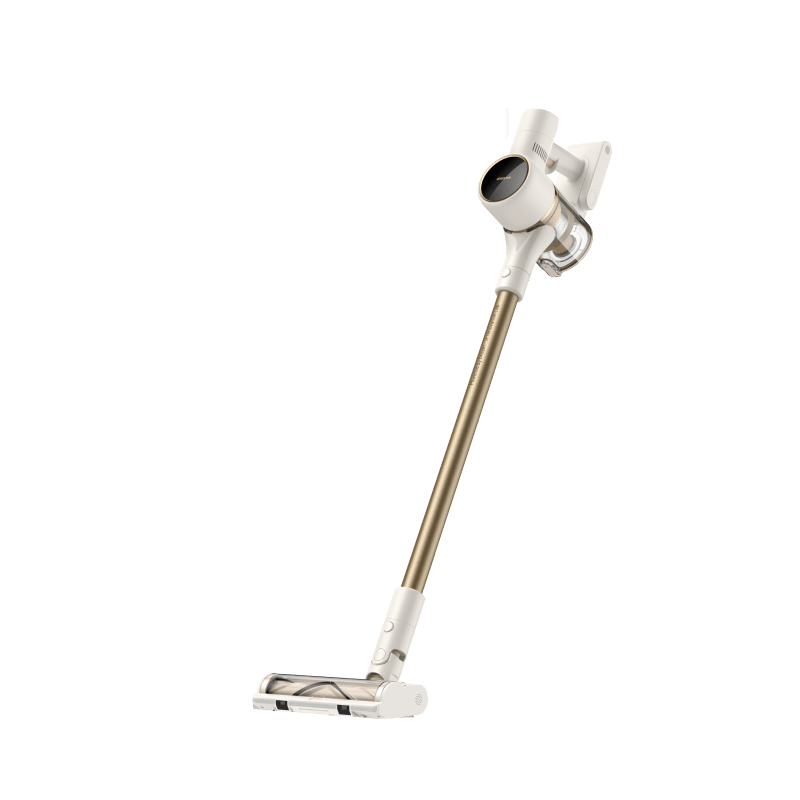
Modern cordless floor washers, like the Dreame H-series, are a completely different story. These combine vacuuming and mopping in one pass and run on battery power, typically consuming just 60 to 200 watts during operation. They're designed for hard floors and light wet messes, offering the convenience of a two-in-one device without the energy penalty of a traditional shop vac.
If you're looking for a wet dry vacuum cleaner that handles both spills and dry debris without spiking your energy bill, modern cordless floor washers are worth a serious look.
Best for: Kitchen floors, bathrooms, quick daily refreshes on hard surfaces
Pros:
- Extremely energy efficient
- Washes and vacuums simultaneously
- Lightweight
Cons
- Not ideal for carpet
- Limited battery runtime
- Needs water tank refills

Cordless Stick Vacuums & Handheld Vacuums
Battery-powered vacuums have come a long way. Early versions were underpowered novelties; today's models, especially those with brushless motors, deliver impressive suction in a lightweight, cable-free package.
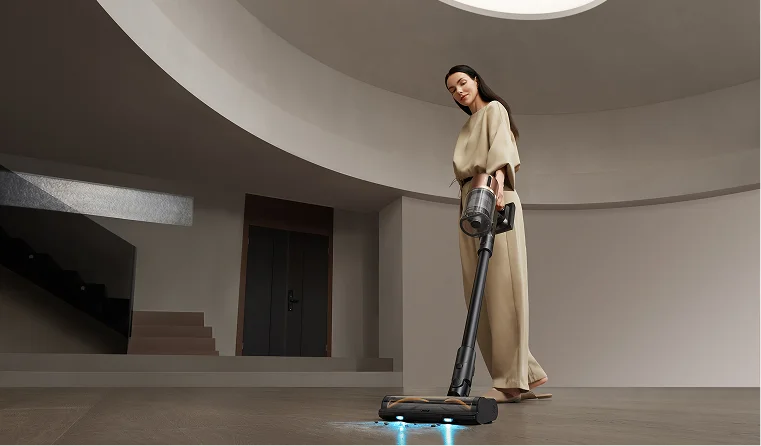
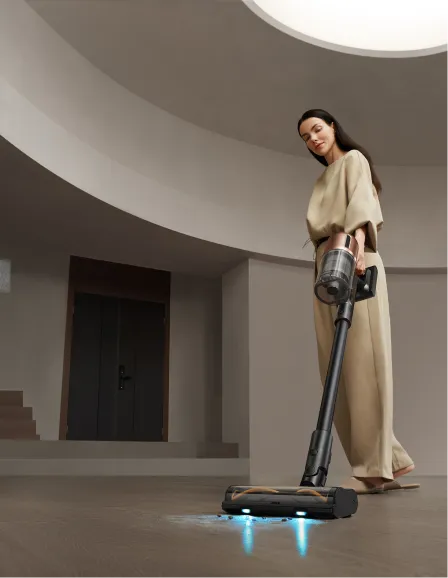
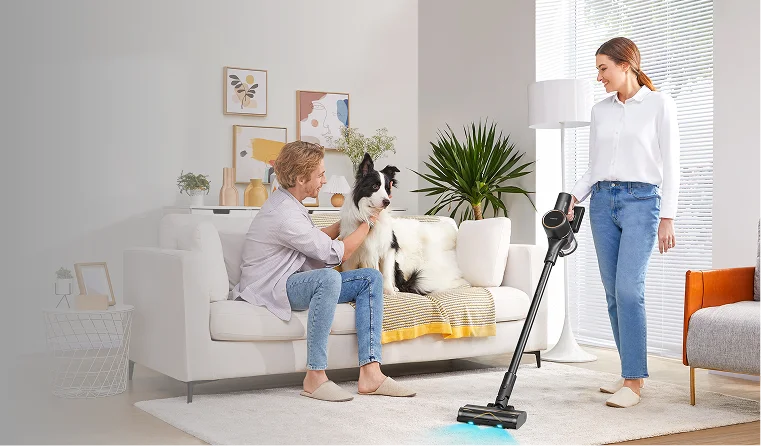
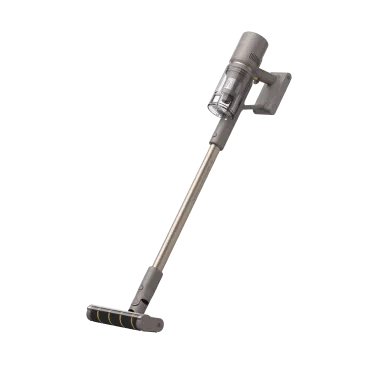
Typical wattage: cordless vacuums don’t “pull watts from the wall” while cleaning; they draw power from the battery. Many cordless stick vacuums list hundreds of watts of rated power depending on model and mode (for example, Dreame Z30 stick vacuum lists 855W rated power).
Best for: Apartments, quick daily pickups, stairs, car interiors
Pros:
- Often efficient per cleaning session
- Highly maneuverable and convenient
- No tripping over cords
Cons:
- Runtime limitations (varies widely by mode and model)
- May not match corded vacuums for deep carpet cleaning
- Battery degrades over time
Battery vacuums use energy differently: they charge from the wall, then clean using stored power. Over a year, many households still end up in the single-digit to low double-digit kWh range for typical cordless use—small compared with HVAC or electric drying.
To understand more about why these motors perform so well at lower wattage, check out this breakdown of brushed vs. brushless vacuum motors.
Robot Vacuums
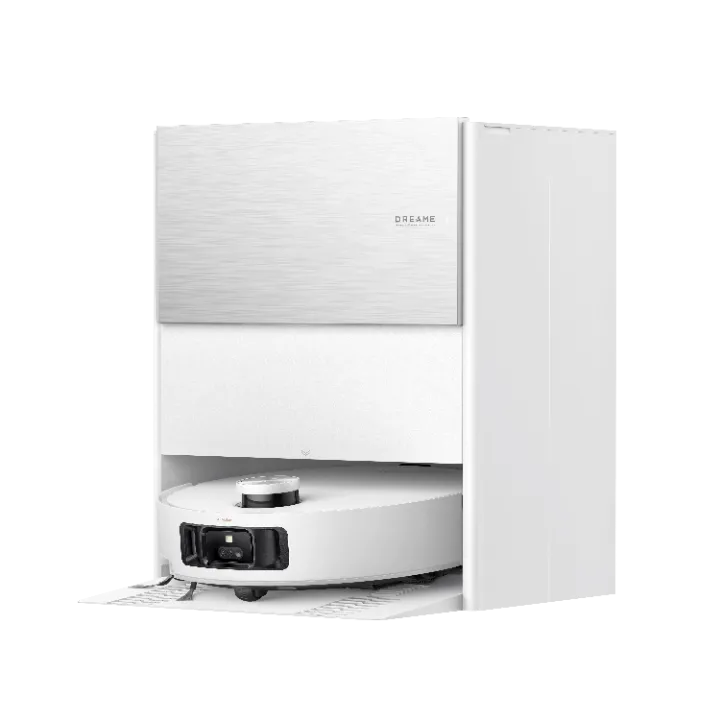
If energy efficiency is your top priority, robot vacuums are hard to beat. Robot vacuums are generally energy efficient while cleaning. Many estimates put robots around ~60–100W during cleaning, though it varies by model, suction mode, and floor type.
Typical wattage: ~60–100W
Best for: Daily maintenance cleaning, allergy sufferers, busy households, hard floors and low-pile carpet
Pros:
- Extremely low energy consumption
- Can run on a schedule, maintaining clean floors without effort
- Modern models include mopping, obstacle avoidance, and self-emptying features
Cons:
- Not ideal for deep-pile carpet pile or heavy debris
- Require occasional maintenance (emptying bins, cleaning brushes)
- Dock standby and dock “high power” features can raise annual kWh
When you combine low wattage with smart scheduling by running during off-peak electricity hours, a robot vacuum becomes one of the most cost-effective appliances in your home. For a full breakdown of how robot vacuums stack up energetically, see this energy and water audit of robot vacuums.
Does Higher Wattage in Vacuum Cleaners Mean Better Cleaning?
This is one of the most persistent myths in the appliance world, and it's worth addressing head-on: wattage measures energy input, not cleaning performance.
Think of it this way. A gas-guzzling car isn't automatically faster than a fuel-efficient one. What matters is how efficiently that energy is converted into useful work. The same principle applies to vacuums.
Vacuum performance is better measured by:
- Air Watts (AW): The actual suction power delivered at the cleaning head, accounting for airflow and pressure together
- Pascal (Pa): Measures suction pressure, particularly useful for robot vacuums
- CFM (Cubic Feet per Minute): Measures airflow volume
A vacuum rated at 1,400 input watts might deliver only 250 air watts of usable suction if its motor or airflow design is inefficient. Meanwhile, a modern vacuum with a high-efficiency brushless motor might achieve the same or better suction at 800 watts input.
For anyone comparing vacuums, don't let wattage be your primary criterion. Look at air watts, Pa ratings, and filtration quality. To go deeper on what suction numbers actually mean, this guide on what is a good suction power for a vacuum cleaner is worth a read.
How Much Does It Cost to Run a Vacuum Cleaner?

Let’s get into the math. The formula for electricity cost is simple:
- (Watts × Hours Used) ÷ 1,000 = kWh consumed
- kWh × your electricity rate = cost
The average US electricity rate in 2024 is about $0.16 per kWh, though it varies widely by state: California can reach $0.25–$0.30, while some Southern states are closer to $0.10.
Example 1: Traditional Corded Upright (1,200W)
- Vacuuming time: 1 hour per week
- Annual hours: 52
- Energy used: (1,200 × 52) ÷ 1,000 = 62.4 kWh
- Annual cost at $0.16/kWh: ~$10
Example 2: Robot Vacuum (40W) Running Daily
- Run time: 1 hour per day
- Annual hours: 365
- Energy used: (40 × 365) ÷ 1,000 = 14.6 kWh
- Annual cost at $0.16/kWh: ~$2.34
Note: If you include dock standby (often a few watts), robot annual kWh can be meaningfully higher than “cleaning-only” math.
The Comparison
Even though the robot runs daily and the corded vacuum only weekly, the robot costs roughly $7–$8 less per year. Plus, daily maintenance cleaning usually reduces how often you use your corded vacuum, lowering energy use further.
| Scenario | Annual kWh | Annual Cost |
|---|---|---|
| Corded Upright (1 hr/week) | 62.4 kWh | ~$10 |
| Robot Vacuum (1 hr/day) | 14.6 kWh | ~$2.34 |
| Cordless Stick (3×/week, 30 min each) | 6–8 kWh | ~$1–$1.30 |
The takeaway: even high-watt vacuums aren’t major electricity expenses. Still, shifting toward battery-powered or autonomous cleaning can reduce costs further.
Do Vacuums Use a Lot of Electricity?
Short answer: compared to most appliances, no.
A central AC uses 3,000–5,000 watts and runs for hours. Electric water heaters and dryers also draw 4,000–5,000 watts per cycle. Vacuums may peak high in wattage, but they run briefly — often just 30–60 minutes per week — making their yearly energy use tiny compared to HVAC or water heating.
What actually wastes the most electricity at home?
The biggest energy users in US homes are:
- Heating and cooling (HVAC): ~50% of home energy use
- Water heaters: ~18%
- Washers and dryers
- Refrigerators running 24/7
- Lighting in non-LED homes
By comparison, vacuums are energy sippers. Even running a 1,400W upright two hours daily (which is rare) would use about 1,022 kWh per year, similar to a refrigerator. Under normal use, vacuums account for well under 1% of a household’s electricity bill.
Small habits still help. Using a robot vacuum, keeping filters clean, and using eco mode all improve efficiency. For more ideas, check out these green home tips and this energy and water audit guide.
Watts vs. Amps vs. Volts: Decoding the Vacuum Label

Every vacuum has a rating plate, usually on the base or back. Here’s how to read it.
- Volts (V): Electrical pressure from your outlet. Standard North American outlets provide 120V, while heavy-duty shop vacs may require 240V.
- Amps (A): Current flowing to the motor. Household circuits are usually 15A or 20A. A vacuum drawing 12A uses most of a 15A circuit, which is why breakers sometimes trip when other appliances share the line.
- Watts (W): Total power use. This equals amps × volts and is the most useful number for estimating energy cost.
Quick formulas:
- Watts = Volts × Amps
- Amps = Watts ÷ Volts
A 1,200W vacuum on 120V draws about 10 amps. If you’re checking circuit capacity, add up all devices on that circuit and keep the total below the breaker rating.
Tips to Lower Your Vacuuming Energy Bill
You won't transform your electricity bill by optimizing your vacuuming habits, but these small adjustments do make your vacuum work more efficiently, which saves energy and extends the life of the motor.
- Keep filters clean. Clogged filters restrict airflow, forcing the motor to work harder and draw more power. Clean or replace them every 1–3 months as recommended.
- Use the right suction mode. Turbo can draw two to three times the power of eco mode. For daily cleaning, standard mode is usually enough.
- Match the vacuum to the job. Using a 1,400W upright for small messes wastes energy. A handheld or robot vacuum handles quick jobs more efficiently. Understanding the different types of vacuums and their ideal use cases helps you reach for the right tool every time.
- Switch to smart cleaning. Scheduling daily runs with a robot vacuum keeps floors consistently clean, reducing the need for energy-intensive deep cleaning sessions.
- Empty the dustbin often. A full bin reduces airflow and forces the motor to compensate, increasing energy use.
- Consider upgrading older vacuums. Motors from a decade ago are far less efficient than modern brushless designs. When comparing a shop vac versus a modern vacuum cleaner, newer models often deliver better cleaning with less power.
How Many Watts Does a Dreame Vacuum Use?
Dreame vacuums are built around motor efficiency, which means they deliver strong cleaning performance at relatively low energy consumption. Here's a general overview by category:
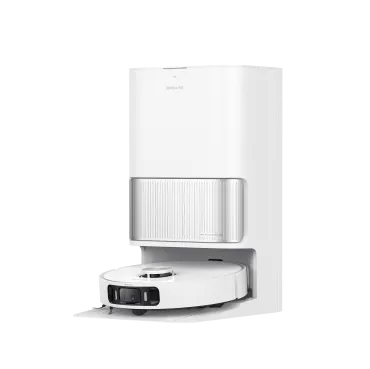
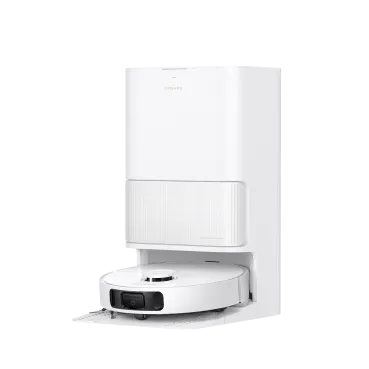
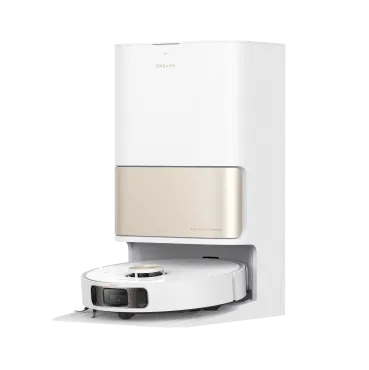
- Dreame Robot Vacuums: Typically 25–65W during operation, depending on the model and suction mode. Even in max mode, they remain among the most energy-efficient floor-cleaning tools available.
- Dreame Cordless Stick Vacuums: Battery systems draw 40–90W during charging; actual motor output varies by model and mode.
- Dreame Wet & Dry Floor Washers: The H-series models typically operate around 60–200W — far below the 1,000W+ draw of traditional corded vacuums.
The efficiency gains come primarily from Dreame's high-speed brushless motors, which minimize energy wasted as heat and convert more electrical energy into airflow and suction. For households looking to clean well without unnecessary energy expense, Dreame's lineup — from robot vacuums to wet and dry vacuum cleaners — is designed with that balance in mind.
Conclusion
Vacuum wattage matters, but higher watts don’t guarantee better cleaning, and even powerful vacuums use little electricity when used reasonably. What counts more is using the right vacuum for the job, keeping it maintained, and recognizing that modern low-wattage options like robot and cordless stick vacuums can match or outperform older corded models.
To be a conscious cleaner, check your vacuum’s rating plate, note the wattage and amps, and make sure you’re using the right tool for each task.
Your floors can be clean, and your electricity bill can stay predictable. You just need to know what you're working with.
FAQs
Will a robot vacuum increase my electric bill?
Not significantly. Most use very little electricity and cost only a few dollars annually.
Why do my lights flicker when I start the vacuum?
This happens because motors briefly draw extra current when starting up.
How many watts does a Dreame vacuum use?
It depends on the model. Robot vacuums may use under 100W, while cordless sticks often range between 200–500W.
Is 200 watts good for a vacuum cleaner?
For cordless vacuums, yes. Efficient airflow design allows strong cleaning performance at that power level.
Do vacuums use a lot of power?
They draw high power briefly but contribute very little to yearly energy consumption.
How many watts does the average vacuum use?
Corded uprights/canisters are commonly hundreds to ~1,440W; robot vacuums often ~60–100W while cleaning; cordless sticks vary widely and draw from the battery.
