









 Robot Lawn Mowers

















 Humidifiers


 Smart Door Lock


 Australia
 中国大陆
中国大陆 日本
日本


 Türkiye


 Ireland
 Portugal
 Italia
 Netherlands
 Belgium
 Greece
 Polska
 Norway
 Sweden
 Finland
 Denmark
 Hungary
 Czechia
 Slovenia
 Croatia
 Switzerland
 United
Kingdom
United
Kingdom
 Canada


 Colombia

In this article
The Energy Audit: A Tale of Two Efficiencies
At first glance, the comparison seems straightforward. A powerful upright vacuum has a high wattage, while a robot vacuum has a smaller motor. However, the robot vacuum's ecosystem includes a sophisticated base station that performs high-power tasks. Let's break down the real annual energy cost.
Assumptions:
Traditional Upright Vacuum (1,200W):
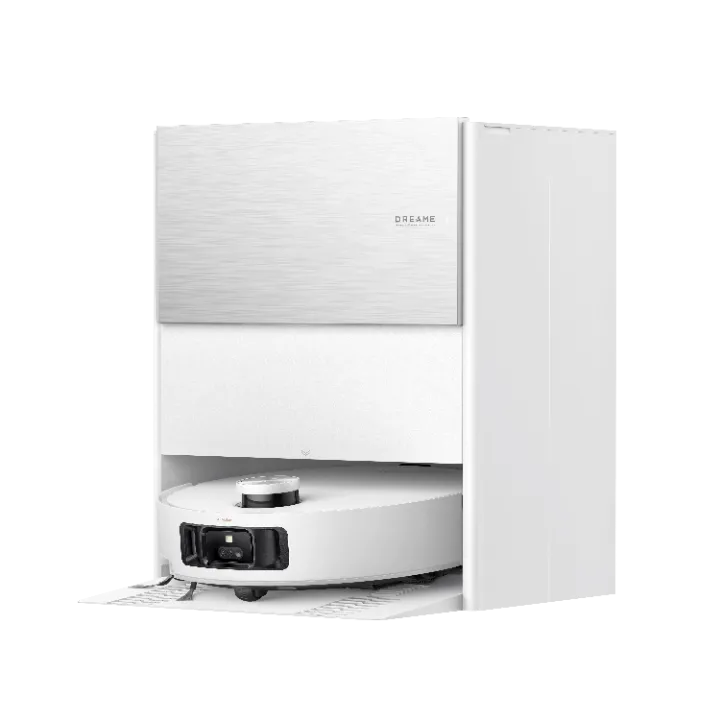
Dreame X50 Ultra Robot Vacuum:
The robot vacuum and mop’s energy use is a sum of its parts: charging, standby, and short, powerful base station functions.
| Appliance | Annual Energy Use (kWh) | Annual Energy Cost |
|---|---|---|
| Dreame X50 Ultra | ~47.9 kWh | ~$8.14 |
| Traditional Upright | ~31.2 kWh | ~$5.3 |
The Finding: While the robot vacuum's complex, always-on system uses slightly more energy annually than a simple upright (based on average upright wattage from models tested by Consumer Reports), the total cost for both is remarkably low—less than a single lunch. However, the real story of efficiency becomes clear when we look at water.
The Water Audit: A Decisive Victory for Automation
This is where the engineering of a modern robot vacuum and mop truly shines. The difference in water consumption isn't just an improvement; it's a revolutionary leap in efficiency.
Assumptions:
Traditional Mop & Bucket:
Dreame X50 Ultra Robot Mop:
The Finding: The Dreame X50 Ultra is over 96% more water-efficient than traditional mopping. Even where water rates are higher, the robot’s controlled dosing keeps annual usage extremely low.
From Footprint to Wallet: The Total Value of Automation
This resource efficiency has a direct and positive impact on your wallet, forming one part of the Total Cost of Ownership (TCO). While the initial investment in a premium robot like the Dreame X50 Ultra ($1,499.99) is higher, the long-term value becomes clear when you factor in the ultimate resource: your time.
(Manual Cleaning)
(Robot Managing)
(Net Time Saved)
Manual cleaning (vacuuming and mopping) takes at least 1.5 hours per week, totaling 78 hours per year. Managing a robot—occasional maintenance and
tidying—takes roughly 15 minutes per week, or 13 hours per year.
That's a net saving of 65 hours every year.
Conclusion: A Lighter Footprint, A Richer Life
Our audit reveals a clear picture. The energy footprint of a high-performance robot vacuum system is competitively low, but its water efficiency is nothing short of revolutionary. The Dreame X50 Ultra demonstrates that you don't have to choose between a deep clean and a light environmental footprint.
This remarkable efficiency, combined with the immense value of the 65+ hours it gives back to you each year, redefines the meaning of a "clean" home. It's a home that is not only physically spotless but is also run more efficiently, more sustainably, and with more time for the things that truly matter.

