










 Robot Lawn Mowers
















 Humidifiers


 Smart Door Lock


 Australia
 中国大陆
中国大陆 日本
日本


 Türkiye


 Ireland
 Portugal
 Italia
 Netherlands
 Belgium
 Greece
 Polska
 Norway
 Sweden
 Finland
 Denmark
 Hungary
 Czechia
 Slovenia
 Croatia
 Switzerland
 United
Kingdom
United
Kingdom
 Canada


 Colombia


Best Vacuum for German Shepherd Hair: Top Picks
Chris Zhang
|
German Shepherds shed daily, and twice a year, that shedding turns into coat blow. During coat blow, the undercoat releases in clumps over several weeks instead of the usual steady daily amount.
Finding the best vacuum for German Shepherd hair means choosing one that can handle both. The right model prevents tangling, has a bin that holds enough hair to get through a full room without needing to be emptied, and filters the fine undercoat instead of blowing it back into the air you breathe.
Below are five picks sorted by the problem they solve, from the daily layer to the twice-yearly coat blow.
Best Overall for the Daily Shed
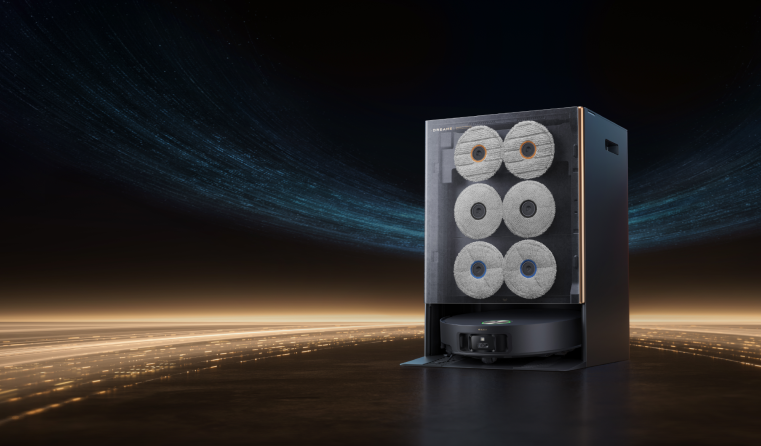
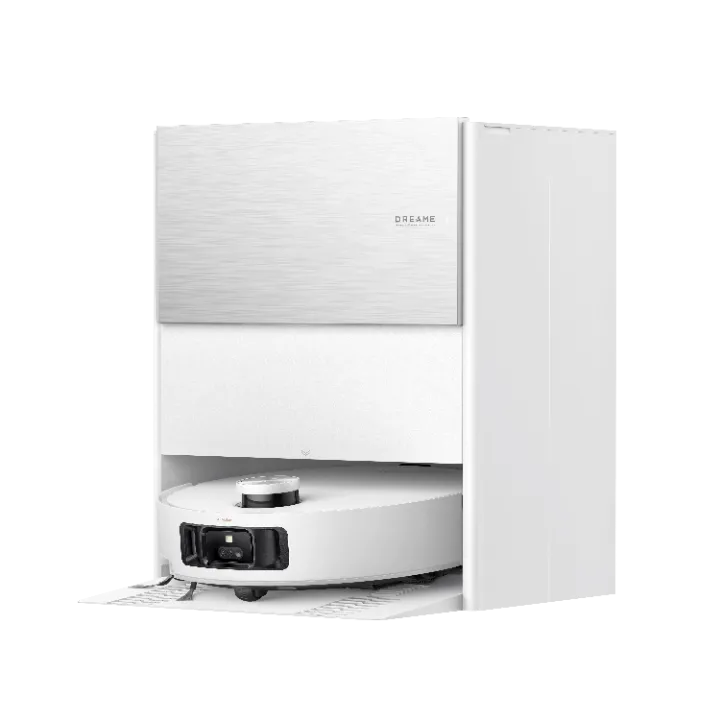
Dreame Pick: The X60 Max Ultra Complete is built for the daily shed, not just the twice-a-year blow. It leads on 35,000Pa Vormax™ suction, strong enough to pull embedded undercoat out of carpet in one pass instead of three. Its HyperStream™ Detangling DuoBrush 2.0 pairs a bristled rubber brush with a TPU rubber brush, and a retractable pressure plate lowers onto carpet to seal in suction, so long hair clears the roller instead of wrapping it, and more embedded debris comes out of the pile.
Its CarpetForce Vacuuming System detects carpet on its own, and CarpetForce Boosted Clean increases suction for a deeper pass. It also spots tasseled rugs and cleans them from the snag-free side instead of risking a snag. Landing at $2,399.99 CAD, this is the flagship price in the collection. It's built for households running it daily, where hands-off coverage matters more than the lowest price tag.
[product handle="x60-max-ultra-complete-robot-vacuum" slogan="Best Overall"]
Also consider: Roborock is a familiar name among premium robot vacuum shoppers, and eufy is a popular pick for buyers who want fewer bells and whistles. iRobot remains one of the most recognized names in the category overall.
Best for Heavy German Shepherd Shedding
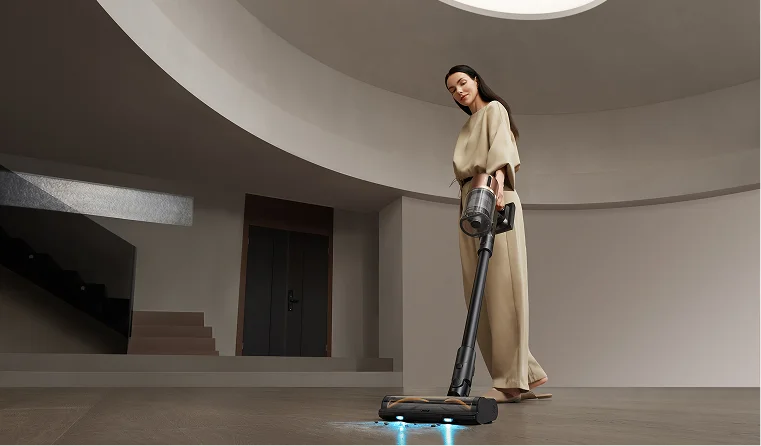
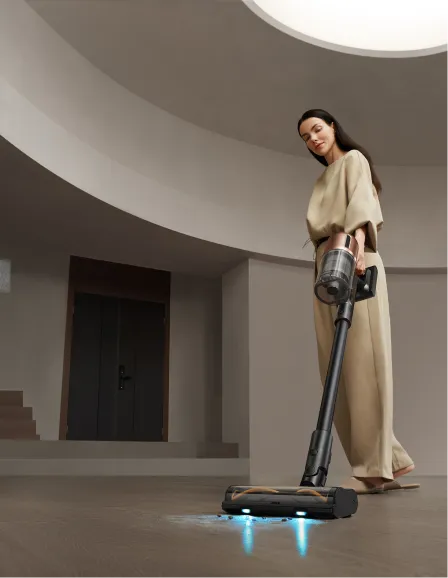
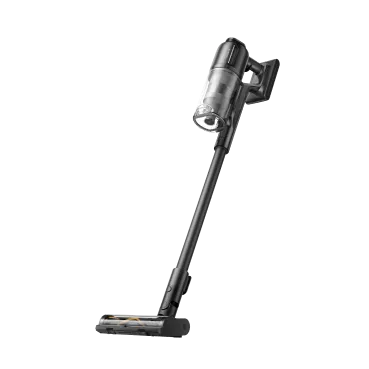
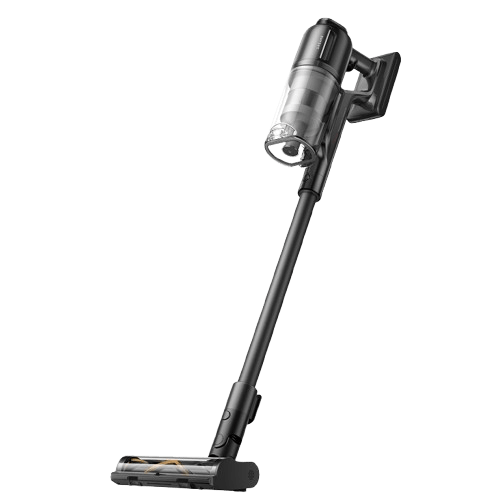
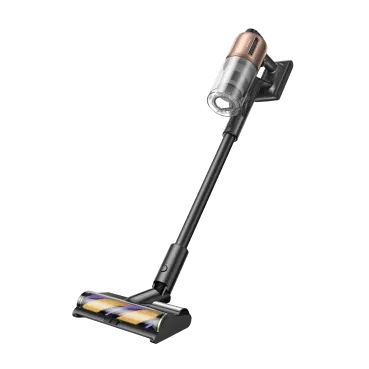
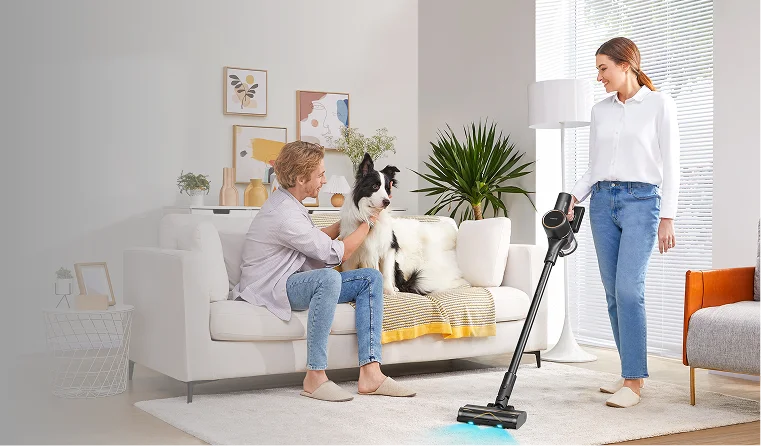
Dreame Pick: One of the best vacuums for heavy shedding dogs is the Z30. It pairs 310AW suction with an XXL dust cup, the removable container that collects debris as you clean, so a full room of shed hair doesn't mean stopping to empty it halfway through. Its built-in pet brush head lifts fur straight out of upholstery and stairs.
Auto suction adjusts based on dirt detection, and Enhanced Blue Light Dust Detection reveals the fine undercoat you can't see. Whole-machine HEPA filtration captures 99.99% (0.1μm) of fine particles, so undercoat doesn't blow back into the room, and the 0.6L dust cup holds a full coat-blow pass. At $899.99 CAD, it's priced exactly for hands-on cleanup during heavy shedding season. Browse our cordless stick vacuums for more options that can handle heavier shedding.
[product handle="z30-cordless-stick-vacuum" slogan="Best for Heavy Shedding"]
Also consider: Dyson is a well-known cordless name that shows up throughout most shedding-dog research, and Shark is a familiar pet-focused alternative. Bissell is another common name in pet vacuum shopping carts.
Best for Carpet and Rugs
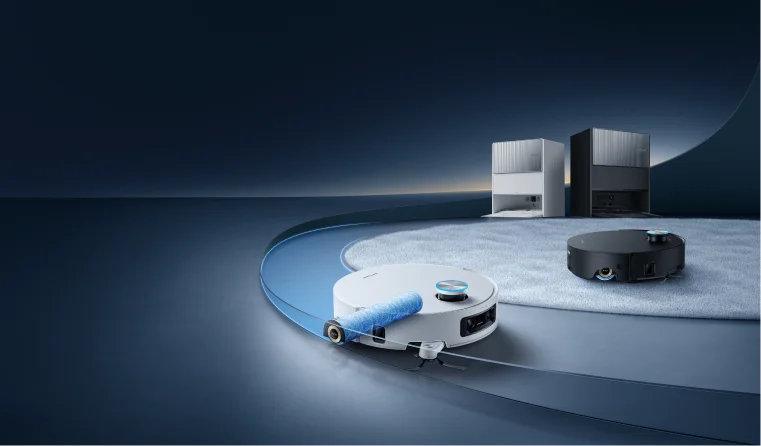
Dreame Pick: The Matrix10 Ultra is the carpet pick, because it keeps the mop off the pile and drives 30,000Pa Vormax™ suction straight onto dry carpet instead of dragging a damp pad across it. A German Shepherd's undercoat packs down into the pile rather than resting on top, and that is exactly the type of mess it's built to pull out.
On short-pile carpet, the mop automatically lifts 10.5mm to stay dry while suction holds steady, and Carpet Crossing Mode gets it smoothly over doormats and rugs without stalling. The HyperStream™ Detangling DuoBrush System keeps wrapped hair off the roller between empties. SideReach™ Vacuuming extends along baseboards too, where shed hair tends to collect. Coming in at $2,699.99 CAD, it sits at the top of the carpet-focused range, built to take daily carpet cleaning off your hands.
[product handle="matrix10-ultra-robot-vacuum" slogan="Best for Carpet"]
Also consider: Shark is a familiar name for carpet-focused shopping, and Roborock is a premium alternative worth a look if carpet coverage is the main concern.
Best for Hair Plus Muddy Paw Prints
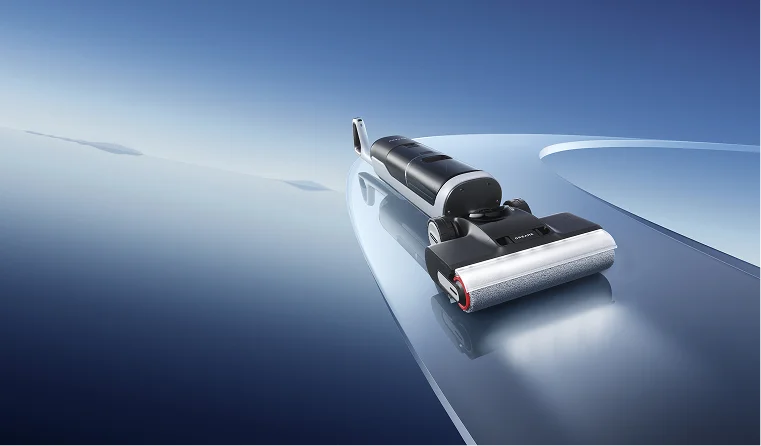
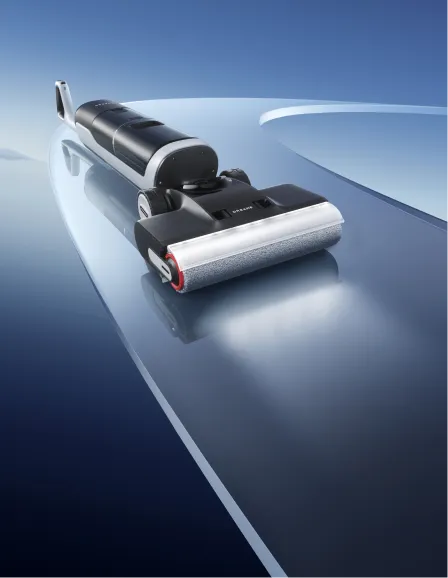
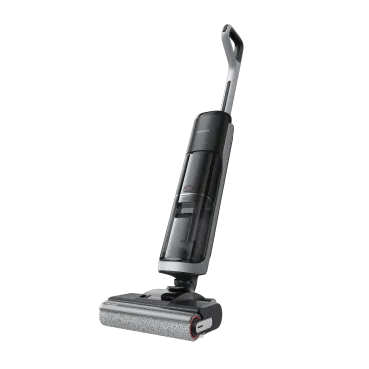
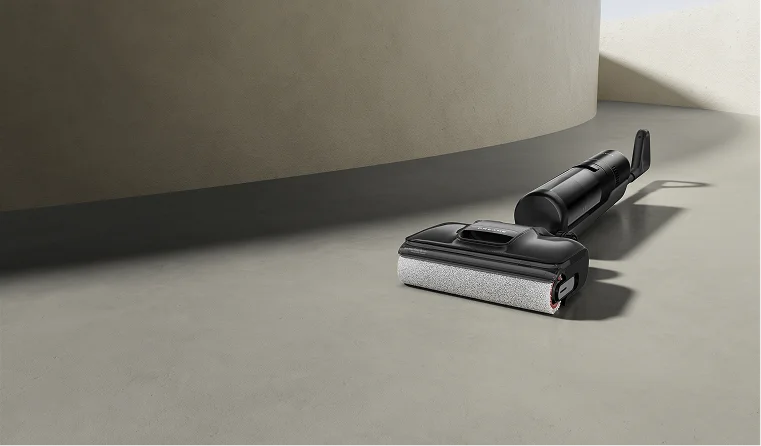
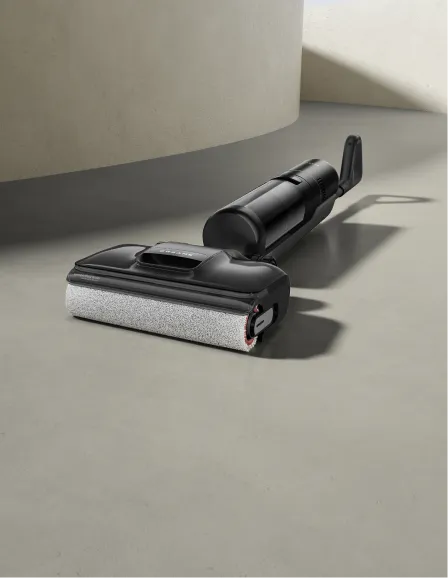
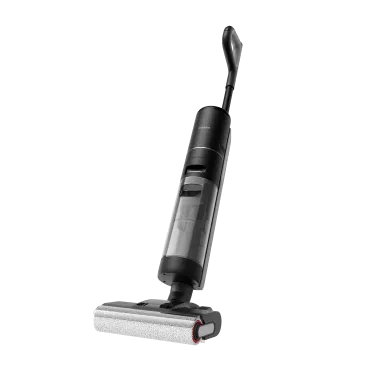
Dreame Pick: If your German Shepherd spends a lot of time outdoors, the H15 Pro Heat can handle the mud and hair that comes with it. On hard floors, 85°C hot water breaks down sticky mud, while its GapFree™ AI DescendReach robotic arm reaches the baseboard line where hair and grit collect.
The brush self-cleans at 100°C, hands-free and odor-free, and 180° Lie-Flat Smart Cleaning gets the machine flat enough to clean fully under low furniture. One charge covers 520+ m², enough for most homes without a mid-clean recharge. At $829.99 CAD, it handles hard floors from mud to daily hair, though on carpet it dry-vacuums only, since the wet function is built for sealed floors, not carpet fibers. See our wet dry vacuums for models that are built for messes.
[product handle="h15-pro-heat-wet-dry-vacuum" slogan="Best for Paw Prints"]
Also consider: Tineco is a well-known wet/dry alternative, and Bissell is a familiar name for floor washing in general.
Important: The wet function on a wet dry vacuum is for sealed hard floors only. On carpet and rugs, it dry-vacuums, since carpet holds water in the fibers and padding underneath, which leads to odors and mold.
Best Budget Pick
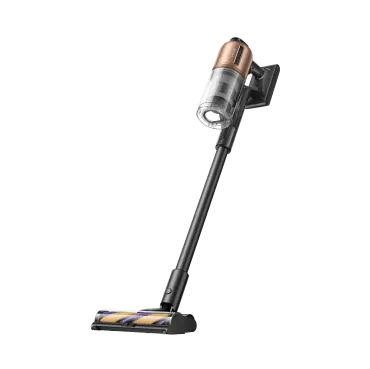
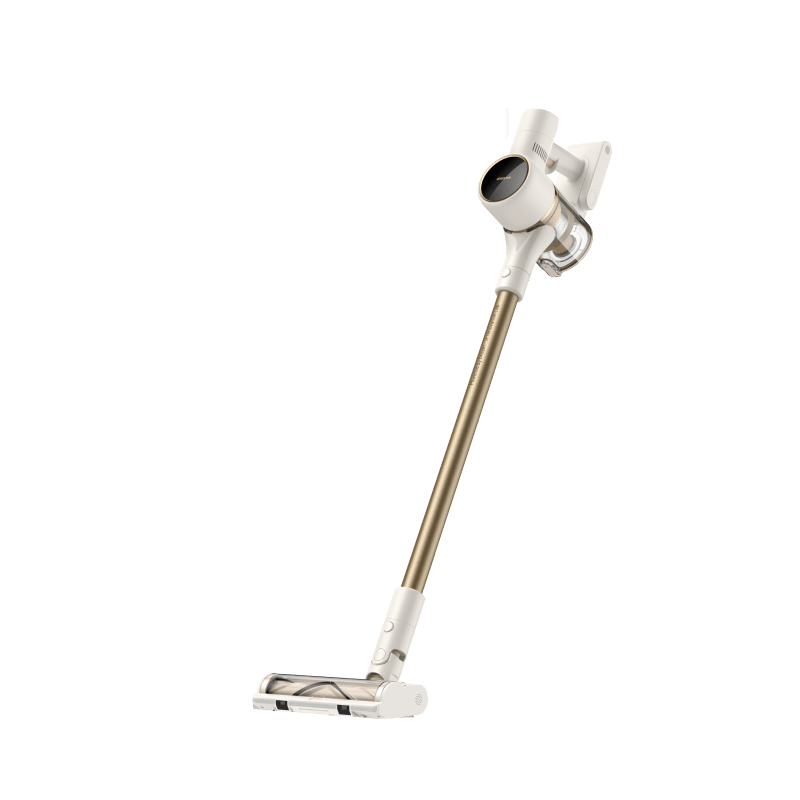
Dreame Pick: Not everyone needs a flagship-priced setup, and the R20 Pure is the budget pick that still handles everyday fur easily. Its 150AW suction lifts hair and dust off hard floors and rugs, and Enhanced Blue Light Dust Detection lights up what's easy to miss so you know when a spot needs a second pass.
At $499.99 CAD, it's built for steady, everyday shedding rather than the heaviest coat-blow weeks. If your German Shepherd sheds consistently but not dramatically, this is enough power without the flagship price.
[product handle="r20-pure-cordless-stick-vacuum" slogan="Best Value"]
Also consider: Shark is a familiar, budget-friendly alternative, and Bissell is another common name for buyers shopping by price.
Why German Shepherd Hair Is Harder on a Vacuum
A German Shepherd has a double coat, and the undercoat underneath is what actually gives a vacuum trouble. The outer guard hair is long and coarse, but the undercoat beneath it is fine and packed in tight.
Long hair from other breeds wraps loosely around a brush roll and pulls free easily. Fine, dense undercoat does the opposite. It packs into filters and mats around a roller instead of winding around it, which is why a vacuum built for long, loose hair can still struggle with a heavy undercoat.
Daily shedding is light and steady, so a vacuum on a routine can easily keep up. Shedding season, in spring and fall, requires more vacuuming, since the undercoat releases in volume for weeks.
Coat blow tends to test the limits of a vacuum, where a dust bin sized for daily use suddenly fills mid-room, and a filter not built for volume clogs partway through the clean. Once collected, fine undercoat can go airborne again the moment you empty the bin indoors, landing right back on the floor it just came off of.
If long human hair is also an issue in the house, the guide to robot vacuums and long hair covers which brush and roller features actually clear it and which ones just let it wrap.
What to Look For in a Vacuum for a Heavy-Shedding Dog
Start with the brush
Look for a brush that's built to be anti-tangle or detangling. The good ones comb or cut hair loose as they spin, so it clears into the bin instead of winding around the roller. A plain rubber roller with no real detangling design mats fast during a coat blow.
Check the bin capacity
A dust cup sized for daily dust runs empties itself twice as often once shedding season starts. Look for something closer to 0.6L or more, built around a full coat-blow week rather than an average day.
Look at the filtration
Fine undercoat breaks down into particles small enough to pass through a loose filter and straight back into the room. A true HEPA filter holds onto particles that fine, but it only works if the system around it is sealed, forcing air through the filter instead of leaking out the sides. Look for both, a HEPA rating and sealed filtration, working alongside strong suction.
For more on what this breed does to a vacuum specifically, see 9 surprising things every dog owner should know about vacuums, which covers the shedding and allergen realities of owning a dog.
Pick a self-emptying dock
If you're going the robot vacuum route, look for one with a dock that empties the vacuum's bin into a larger dust bag on its own, ideally 3.2L or more, and can go up to 150 days before you have to empty that bag, so coat blow doesn't turn into a daily chore.
Pro-tip: Empty the bin outdoors during coat blow. Fine undercoat is light enough to hang in the air, so emptying it indoors puts a good share of what you just collected right back on the floor.
Shedding is just one factor in choosing a vacuum. Our guide on how to choose a pet hair vacuum covers the rest, from suction and brush design to filtration, across every vacuum type for pet hair.
Do You Need More Than One Vacuum for a German Shepherd?
For most German Shepherd homes, yes, and it usually means two machines splitting two different jobs:
A scheduled robot vacuum handles the daily layer, running often enough that hair doesn't get the chance to build up.
A cordless vacuum handles the coat blow, plus the stairs and the sofa where a shedding dog sleeps. When hair has already worked its way into the upholstery, how to get pet hair off a couch covers the tools and technique for lifting it back out.
Relying on one machine for both jobs means neither gets done as well. A robot vacuum sized for daily upkeep gets overwhelmed during a full coat blow, and without one, you handle all the fur with a cordless vacuum alone, which can be overwhelming.
The X60 Max Ultra Complete and Z30 make for a great pairing, one for the daily layer, one for the heavy shedding.
How Dreame Tests Vacuums for Pet Hair
Pet hair mats and tangles a brush in ways human hair doesn't, and Dreame tests for that difference directly instead of assuming one hair test covers both.
Every roller brush, on a robot vacuum or a cordless stick, runs against a blended mix of hair lengths built to mat and tangle a poorly designed brush, with pet fur worked into that mix because it's finer and denser than human hair.
After each run, engineers weigh the hair left behind, both in the dust bin and caught around the brushes, giving a hair-tangling rate rather than just a cleaning score. A vacuum that pulls hair into the bin and keeps its brush clear scores better than one that only pushes it around the floor. Our full breakdown of how Dreame tests robot vacuums walks through the tangle-rate method and the rest of the scoring in detail.
For wet dry vacuums, the same hair runs wet and dry through the brush system across repeated rounds, checked for tangles after every pass, since a brush that clogs during a coat blow fails a pet household even if it handles a single mess fine.
The Right Setup for Shedding Season
For most homes with a German Shepherd, staying as fur-free as possible means running both a robot vacuum for daily upkeep and a cordless for the heavy German Shepherd shedding season. The picks above cover a range of household types and are designed to lighten your chore list.
Browse Dreame's robot vacuums for pet hair to find the right fit for your daily routine.
Frequently Asked Questions
How to clean up German Shepherd hair?
Vacuum daily during shedding season so loose hair never builds into drifts, and brush your dog outside so hair lands outdoors instead of on the floor. Empty the bin outdoors too, since fine undercoat is light enough to go airborne the moment it's released indoors.
Which robot vacuum is best for handling German Shepherd hair?
The X60 Max Ultra Complete is our top pick, with a detangling brush that clears hair instead of wrapping it, auto suction boost on carpet, and a dock that auto-empties for up to 100 days so you don't have to stop to empty the bin.
Can you vacuum a German Shepherd?
No. Grooming vacuums designed to brush and collect loose fur directly from a dog exist as their own product category, separate from a floor vacuum. Never run a household floor vacuum on a dog, and for hair already on the floor or furniture, use the picks above instead.
How often should I vacuum with a German Shepherd?
Daily during the spring and autumn coat blow, and every two to three days the rest of the year. The longer undercoat sits, the more it compacts into the carpet pile, so a short daily run pulls out more total hair than one longer weekly session.
Do I need a HEPA filter for German Shepherd hair?
Yes, more so than with most breeds. The undercoat breaks down into particles fine enough that a loose filter releases them straight back into the room, so a true HEPA filter is what actually holds onto them. If anyone in the house has allergies, it matters even more.
Will one vacuum handle a German Shepherd, or do I need two?
Usually two. A scheduled robot vacuum handles the daily layer, and a cordless vacuum handles coat blow, stairs, and furniture. One machine trying to do both jobs tends to fall short for whichever task it's not made for.


