Fur, Floors, and Feelings: A Smarter Cleaning System for Pet Homes

Fur, Floors, and Feelings: A Smarter Cleaning System for Pet Homes

Dreame Editorial Team |
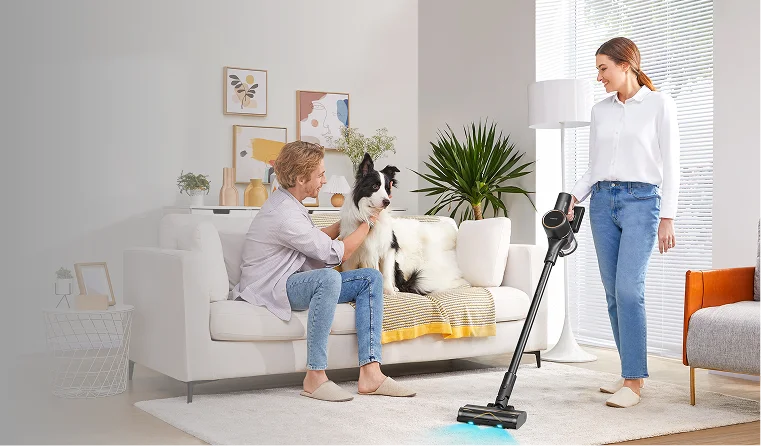
Pets make a home feel alive. But the mess they create can make you feel like you’re always falling behind. At Dreame, we believe you shouldn't have to choose between a happy pet and a clean home. This guide is about building a system that protects your time, your air, and your peace of mind. 1. The Joy and the Mess (Why it keeps coming back) Every pet owner knows the "morning scan." You walk out before coffee and spot it: a tumbleweed of fur drifting across the hardwood, litter grit near the box, or paw-tracked dust you swear wasn’t there last night. You’re not failing. You’re just living in a house where the mess is continuous. Pet ownership is now the norm—roughly 66% of U.S. households have at least one pet [1]. And many aren't just "one pet" homes anymore. Multi-cat and large-dog households are trending upward, which means more shedding, more tracking, and more "why is this everywhere?" moments [2]. Here’s the real mismatch: The Reality: Pets shed, track, and tumble crumbs 24/7. The Habit: Most humans clean in episodes (weekends, guest visits, panic bursts). That’s why frequency beats raw power in a pet home. A system that shows up daily will always outperform a "strong" tool you only have time to use once a week. 2. The Invisible Layer: Why Dander and Odor Feel Stressful A lot of owners treat pet hair like a visual problem—until allergies flare up or anxiety kicks in. Dander is the hidden workload. Pet dander comes from tiny shed skin cells and can trigger allergy symptoms [3]. What makes it stressful is that allergen-carrying particles are small enough (often 2-10 microns [4]) to hang in the air and settle deep into soft surfaces, not just sit on top where you can see them [5]. Then there’s the emotional side: The "Guest Panic" (Do my rugs smell? Is the couch covered in hair?) The low-level worry that your home isn’t "clean enough," even when you’re trying hard. Pet-home cleaning isn’t cosmetic. It’s environment control—for comfort, health, and confidence. 3. A Week in a Pet Home (Time Audit): Why You Can’t "Out-Work" a Shedding Dog If it feels like you’re always cleaning, it’s because pet mess creates repeat chores, not one-time chores. You can't "out-work" a shedding cycle manually. Here is a realistic "Manual Loop" vs. an "Automated System." Task (Weekly) The Manual Loop(Your Time) With a Robot Vacuum System(Your Time) Quick Fur Sweep 10–15 min × 7 days 0 min (automated) Litter / Food Pickup 5–10 min × 7 days 0 min (automated) Full Vacuum Pass 30–45 min × 2 times 0 min (automated) Mopping (Mud / Paws) 15–25 min × 3 times 0 min (automated) Maintenance Cleaning brushes / bins 10–25 min (weekly check) Total Weekly Time ~3–6+ hours ~10–25 minutes Manual tools charge you time for every mess. A robot vacuum system trades hours of labor for minutes of management. In a pet home, that trade is essential because daily cleaning is the only way to stay ahead. 4. Emotions on the Floor: Why Mess Turns into Guilt A messy floor doesn’t just look bad—it can feel like you’ve lost control of your space. Research has linked "stressful" home environments with negative mood patterns [6]. "Pet owner guilt" is a real experience; when we see fur piling up, we often feel like we aren't taking good enough care of our pets or our home [7]. That’s why our goal isn’t perfection. It’s reliability: Walking into a home that feels "reset." Turning off the part of your brain that constantly scans for grit and smell. Feeling comfortable inviting people inside. A pet-home system is a mental load reducer. 5. What Pet Owners Actually Want Most pet owners don’t want "a stronger vacuum." They want five specific outcomes that manual tools struggle to deliver: Consistent hair pickup (without constant "brush surgery"). Edge control (where fur drifts collect). Odor control (removing the smell, not just moving debris). Pet-safe navigation (avoiding bowls, toys, and accidents). Minimal maintenance (less daily cleaning of the cleaner). 6. Inside a Pet-Ready System: Our Solutions This is where "robot vacuum" becomes the right category—because it enables a loop you can actually sustain. At Dreame, we engineer our best robot vacuums for pet hair as complete systems designed to close this gap.[12] Anti-Tangle by Design Reliability beats peak performance if you have to spend 20 minutes cutting hair off a roller. Everyday Maintenance: We use a Detangling DuoBrush on many models, designed to channel hair into the bin to reduce wrapping during daily runs [8]. The "Zero-Scissors" Solution: For households with long hair (human or pet), we offer the TriCut Brush (compatible with select models). It uses a built-in safe blade to automatically trim wrapped hair as it cleans, removing the need for manual maintenance. Odor Control (The Hygiene Loop) We built a full hygiene loop into our stations: Better Chemistry: We offer a specialized Pet Odor Solution intended to neutralize organic smells at the source, rather than just masking them [9]. Self-Cleaning: Our stations wash mops with fresh water and dry them with hot air. This prevents the "wet mop smell" and ensures we aren't cleaning today's floor with yesterday's mess. Sealed Disposal: Our auto-empty stations trap dust and dander in a sealed bag for weeks, keeping allergens contained [10]. Navigation That Respects the Pet Non-camera sensors can avoid walls, but they can't reliably tell the difference between a toy, a tail, and a water bowl. AI Recognition: We use AI-powered RGB cameras to identify pets and common obstacles. Accident Avoidance: Our system is trained to identify and navigate around "pet accidents," saving you from the catastrophic mess that blind robots create. Reach Where Fur Hides Pet hair migrates under beds, along baseboards, and into corners. We emphasize ultra-slim designs to slip under furniture and MopExtend™ technology to physically reach out and clean edges where fur drifts gather. 7. Real Pet Homes (Three Scenes, Three Needs) Scenario A: The Multi-Cat Apartment The problem isn’t just litter—it’s tracking, especially around cat trees, bowls, and tight pathways. A system helps when it can run often, clean edges, and avoid pet items without constant babysitting. (Camera-based recognition helps here.) Scenario B: The Suburban Dog Home This is where frequency becomes everything: daily passes keep hair from building into rugs, while mopping workflows handle paw prints without turning into a second job. Scenario C: The Allergy-Sensitive Home When dander is a trigger, the goal is reducing allergen load in the environment. Allergy authorities commonly recommend steps like frequent vacuuming (often with HEPA-grade approaches) and broader indoor allergen control [11]. A robot vacuum system helps mainly by making consistency realistic. 8. A Smarter Routine for Pet Homes A pet-home routine shouldn’t be complicated. The system should do the repeating work. A Sustainable Loop: Daily: Run the robot once (or every other day) to stay ahead of shedding. Weekly: A quick 5-minute check—wipe sensors and check the brush. Occasionally: Replace the dust bag and refill the water. The point isn’t just cleaner floors. It’s fewer guilt spirals, fewer guest-panic cleanups, and a home that supports the joy your pets bring. References: https://www.iii.org/fact-statistic/facts-statistics-pet-ownership-and-insurance https://www.petworldwide.net/content-1/news/2025/06/24/appa-releases-dog-and-cat-report-2025.html https://www.lung.org/clean-air/indoor-air/indoor-air-pollutants/pet-dander https://pubmed.ncbi.nlm.nih.gov/1744363/ https://pmc.ncbi.nlm.nih.gov/articles/PMC5763515/ https://pubmed.ncbi.nlm.nih.gov/19934011/ https://pmc.ncbi.nlm.nih.gov/articles/PMC9264879/ https://ca.dreametech.com/products/anti-tangle-roller-brush https://ca.dreametech.com/products/dreame-robot-vacuums-pet-odor-solution-1l https://ca.dreametech.com/pages/robot-vacuum-for-pet-hair https://aafa.org/allergies/types-of-allergies/pet-dog-cat-allergies/ https://vacuumwars.com/best-robot-vacuum-for-pet-hair/
Continue reading
Robot Vacuum with Camera: Do You Need Eyes on Your Floors?

Robot Vacuum with Camera: Do You Need Eyes on Your Floors?

Dreame Editorial Team |
Remember the early days of robot vacuums? They were essentially blind bumper cars. They would ram into walls, get tangled in shoelaces, and—if you were really unlucky—drag a "pet accident" across the entire living room. Thankfully, those days are mostly behind us. The newest generation of cleaners has graduated from bumping around to actually seeing where they are going. This is the era of robot vacuums with cameras. But is it worth the extra cash? Does a camera actually make the cleaning better, or is it just a gimmick? And let's be real—is it safe to have a camera roaming your house? Let’s dig into why giving your robot vacuum "eyes" might be the upgrade you didn't know you needed. Why Do Robot Vacuums Have Cameras? It isn't just about showing off cool tech. It’s about context. Old-school sensors (like lasers or physical bumpers) can feel that something is in the way, but they have no idea what it is. A robot vacuum with AI technology and RGB cameras processes the world a lot like we do. The device doesn't just sense an obstacle, it recognizes it. The robot vacuum sees a cable and thinks, "Don't eat that." It sees a sock and thinks, "Go around." Below are the three biggest advantages of having a camera on your robot vacuum: 1. Superior AI Obstacle Avoidance The biggest headache with older robot vacuums was the "pre-clean." You had to run around picking up every little thing before you turned the vacuum on. That defeats the whole purpose, right? Cameras change the game. By using AI trained on millions of images, these robot vacuums can: Identify over 240+ types of objects, spotting things as small as a charging cable (down to 0.04 inches / 1 mm). Tell the difference between obstacles, eg. the robot vacuum knows to clean tight against a table leg and avoids a pet mess. Navigate cluttered rooms autonomously, making them truly “set-and-forget.” This is what makes modern AI vacuums far more “hands-off” than their older counterparts. 2. Remote Home Monitoring (A Bonus Security Feature) For a lot of people, this is the standout feature. A camera-equipped robot vacuum isn't just for cleaning; it’s a security camera on wheels. Here’s what you can do: Patrol Mode: You can send the robot vacuum to specific rooms. Did you leave the oven on? Is the back window open? Just drive the robot vacuum over and check. Two-way audio: Talk to our family at home while you're away Pet Check-ins: See what your pets are doing while you're out 3. More Smarter Features for Pet Owners Cameras unlock some of the most creative and genuinely useful features for people with pets. Advanced robot vacuum models offer: Pet-Finding Mode: The robot looks for your pet and snaps a photo or a short video when it finds them. Remote Voice Calls: You can talk to your pet through the app - great for anxious animals. Pet Voice Interaction: Trigger friendly sounds (meows, barks, etc.) to comfort or calm pets. Automatic Pet Vlogs: The robot vacuum generates clips of your pet’s daily adventures as it travels around the home. These features turn your robot vacuum into a little companion for your pet, making solo days at home less lonely. If you are already setting up a connected home, adding this to your list of smart home ideas makes a lot of sense for that extra layer of peace of mind. Camera vs. LiDAR: Which Navigation is Better? For a long time, you had to pick a side. You could have Cameras (great for seeing objects) or LiDAR (great for mapping and working in the dark). In 2025, you don't have to choose. Leading manufacturers have adopted Hybrid Navigation systems for their robotic vacuums. They use LiDAR to quickly map room shapes, complemented by cameras for navigating uneven floors. Some models include retractable LiDAR towers, allowing the vacuums to slide under low furniture without getting stuck.  How Hybrid Navigation Works: Lifted DToF (Direct Time-of-Flight) LiDAR scans your home in a full 360° sweep without the robot needing to rotate, generating fast, highly accurate maps. When approaching low furniture, the robot vacuum retracts the DToF tower, lowering its body so it can slide underneath. Once underneath, it switches to its dual AI cameras, using LED illumination to capture RGB images and build a 3D understanding of the low-clearance space, allowing the vacuum to clean areas most robots can’t reach. A Real Example:The Dreame Matrix10 Ultra uses this exact system: Liftable DToF sensor for rapid, precise 360° mapping. Automatic sensor retraction makes the vacuum's height just 3.5 inches to clear low sofas and cabinets. Dual AI cameras + LED lights for advanced obstacle recognition in dark or tight spaces 3D low-area perception so it can navigate places traditional LiDAR towers cannot.  If you want to nerd out on the tech, it is worth reading up on how robot vacuums navigate so you know exactly what you are paying for. Is a Robot Vacuum with a Camera Safe? Let’s address the obvious fear: "I don't want a spy in my house." That is a totally valid concern. If you bring a camera inside, you need to know where that footage is going. Here is your checklist for a secure robot vacuum: It Stays Local: The safest robot vacuums process images right there on the machine using powerful chips. They don't need to send video to the cloud just to figure out what a shoe looks like. Look for the Badge: Check for third-party security certifications like TÜV Rheinland or UL. For instance, the Dreame X50 Ultra is UL Solutions Diamond-Level Certified, ensuring top-tier cybersecurity to keep your home data fully protected. These aren't just stickers; they mean the brand has been audited for data privacy. Off by Default: A trustworthy robot vacuum won't start recording the second you plug it in. You should have to go into the settings and actively turn on any camera streaming features. Pro-tip If you are worried about privacy, check the app settings. Reputable brands allow you to disable image upload entirely, relying solely on local AI processing for obstacle avoidance. Top Picks: Which Camera Robot Vacuum Fits Your Home? All Dreame flagship models use advanced RGB AI to see the world, but they pair that vision with different mechanical superpowers. Here is how to pick the right one for your specific needs. Feature X50 Ultra Aqua10 Ultra Roller Matrix10 Ultra L50 Ultra Vision System AI RGB + Dual-Laser 3D OmniSight™ 2.0 (AI RGB x 2) OmniSight™ (AI RGB x 2) RGB AI + Dual-Line Laser Key Innovation VersaLift (Lowers Height) Fresh Water Roller Wash Multi-Mop™ Switching ProLeap™ System Suction Power 20,000Pa 30,000Pa 30,000Pa 19,500Pa Obstacle Climb 2.36 inches 3.15 inches 3.15 inches ProLeap™ Enabled Best For Low Profile & Privacy Hygiene & Pets Heavy Duty & Mop Swap Agile Climbing 1. The "Go-Anywhere" Flagship: Dreame X50 Ultra Best For: Homes with low furniture, high thresholds, and privacy-conscious owners. The Visual Edge: It uses AI RGB combined with Dual-Laser 3D Structured Light. Why It Wins: It is the ultimate shape-shifter. It features VersaLift, which lowers the robot vacuum to just 3.5 inches to see and clean under low sofas. Conversely, its retractable legs allow it to climb obstacles up to 2.36 inches. Plus, it holds the UL Solutions Diamond-Level Certification for cybersecurity. [product handle="x50-ultra-robot-vacuum" rating="4.8"] 2. The Hygiene Specialist: Dreame Aqua10 Ultra Roller Best For: Pet owners and households that demand the cleanest floors possible. Refer to our guide on robot vacuums and pets to pick a model that can handle the fur (and the accidents). The Visual Edge: It features OmniSight™ 2.0 powered by AI RGB x 2 (Dual Cameras). This provides a wider field of view for spotting pet messes and toys. Why It Wins: It pairs superior vision with the FluffRoll™ system, which continuously rinses the roller with fresh water. The auto-retracting LDS ensures it avoids 240+ objects while the ProLeap™ legs help it climb over door strips. [product handle="aqua10-ultra-roller-robot-vacuum" rating="4.8"] 3. The Heavy-Duty Deep Cleaner: Dreame Matrix10 Ultra Best For: Mixed flooring and large homes requiring varied cleaning strategies. The Visual Edge: Like the Aqua10, it utilizes OmniSight™ Navigation with AI RGBx2 for precise dual-camera recognition. Why It Wins: It is built for power. With 30,000Pa Vormax™ Suction, it picks up everything. Its standout feature is the Multi-Mop™ Switching Dock, allowing the robot vacuum to automatically swap mops tailored to specific messes it identifies on your floor. [product handle="matrix10-ultra-robot-vacuum" rating="5"] 4. The Agile Climber: Dreame L50 Ultra Best For: Homes with sunken living rooms or many thresholds. The Visual Edge: It uses a robust combination of Dual-Line Laser + RGB AI + LED to map complex layouts. Why It Wins: It features the Innovative ProLeap™ System and Dual Flex Arm Technology, making it an expert at conquering steps and cleaning into hard-to-reach corners without getting stuck. [product handle="l50-ultra-robot-vacuum" rating="4.8"] Final Thoughts Giving your robot vacuum "eyes" isn't about making it complicated. It’s about making it independent. It stops the robot vacuum from getting stuck, keeps it away from cords, and gives you a little window into your home when you aren't there. If your floors are usually covered in life’s daily mess—toys, shoes, pets—this tech is the difference between a robot vacuum that works and a robot vacuum that gets stuck.  Ready to choose? Check out the full lineup of Dreame robot vacuums. For a full breakdown of specs and budgets, take a look at our complete robot vacuum buying guide to get the perfect match. FAQ About Robot Vacuums with Cameras Do all robot vacuums have cameras?  No, not all of them. Most standard models rely solely on LiDAR (laser lasers) or infrared sensors to detect walls and furniture. Cameras are typically found on 2025 top-rated models (like the Dreame L50 Ultra) because they allow the robot vacuum to recognize specific objects—like distinguishing between a shoe and a pet mess—rather than just bumping into them. Can a robot vacuum with a camera work in the dark?  Yes, but it depends on the model. Standard cameras struggle in low light, which is why top-tier models like the Dreame X50 Ultra use a Hybrid System. They combine cameras with LiDAR (which sees in the dark using lasers) and built-in LED headlights that automatically turn on when the robot enters a dark room or goes under a bed. Does the robot vacuum record everything it sees?  No. By default, the robot vacuum uses its camera solely for "live" navigation—processing images instantly to avoid obstacles and then discarding them. Any recording or live-view feature (like Pet Vlogs) requires explicit user permission and activation in the app.  Can I watch the camera feed on my phone?  Yes. If you enable the Real-Time Camera feature in the Dreamehome App, you can see what the robot sees. This is protected by an additional layer of security (often a PIN code) to ensure only you can access the feed. Do I need Wi-Fi for the camera to work?  You need to connect Wi-Fi to use the remote features (like viewing the live feed or receiving pet alerts). However, the robot vacuum’s AI Obstacle Avoidance processes locally on the device, meaning it can still dodge shoes and cables perfectly fine even if your Wi-Fi goes down.


Continue reading
Robot Vacuum Roller Mop vs. Mop Pad: Which One’s Right for Your Home?

Robot Vacuum Roller Mop vs. Mop Pad: Which One’s Right for Your Home?

Dreame Editorial Team |
Getting a robot vacuum that also mops can feel like a game-changer until you realize there are two very different systems out there: roller mops and mop pads. Both promise sparkling floors, but they work in unique ways. Choosing the wrong one could leave you with streaks on tile, damp carpets, or extra upkeep you weren’t expecting. In this guide, we’ll break down exactly how each system works, their strengths and trade-offs, and which Dreame models use them best. By the end, you’ll know whether a roller mop or a mop pad robot vacuum is the smarter fit for your home, lifestyle, and floors.   Roller Mop or Mop Pad? The Basics Before diving deep, let’s clear up what these terms mean. Roller Mop Robot Vacuum: Uses a continuous roller that spins against the floor. It sprays fresh water, scrubs, squeezes out dirty water, and refreshes as it goes. Think of it as a mini floor-washing machine. Advanced models like the Dreame Aqua10 Ultra Roller use AquaRoll™ mopping—a fresh-water system that sprays, scrubs, squeezes out dirty water, and refreshes the roller in real time, preventing you from mopping with dirty water. Mop Pad Robot Vacuum: Uses flat pads that wipe the floor. Depending on the model, these pads either vibrate for scrubbing or spin to add pressure. Models like the Dreame X50 Ultra feature dual rotary mops with MopExtend™ RoboSwing Technology to reach tight edges with focused scrubbing power. Many modern pad systems also include smart features like auto-lift to keep carpets dry and edge-extending technology for better coverage. Both can handle everyday dust and spills. But the differences show up when you look at deep stains, edges, maintenance, and carpets. How Each Mop System Works (Mechanics 101) Understanding the mechanics behind each system helps explain their performance differences. Robot Vacuum with Roller Mop A roller mop robot vacuum operates like a mini car wash for your floors. The process is continuous and self-cleaning: Spray: Fresh water mists onto the roller right before it touches the floor. Scrub: The roller spins at high speed (e.g., 100 RPM on the Dreame Aqua10 Ultra Roller), applying significant pressure (9-11 N) to agitate and loosen stuck-on grime. Squeeze: A built-in scraper squeegees dirty water out of the roller into a dedicated waste tank. Refresh: The system immediately soaks the roller with fresh, clean water for the next pass. This closed-loop system ensures you're never just pushing dirty water around.   Dreame Take We built the Aqua10 Ultra Roller to answer one simple question: why settle for cleaning with dirty water? The world’s first AquaRoll™ mopping system uses a continuous cycle of fresh water. Every inch of your floor is cleaned with pure water, not residue from the last swipe, so you can trust that what feels clean, truly is.   Robot Vacuum Mop Pad Types Pad systems use a different approach, with two common subtypes: Vibrating Plate Single Pad: A single, wide pad vibrates at high frequency. This offers broad coverage and is excellent for daily dust and light spills, but it provides less aggressive scrubbing power. Dual Spinning Pads: Two circular pads rotate rapidly, often in opposite directions. This creates higher local pressure, making them better at tackling scuffs and dried-on spots. How Well Do They Clean? A Performance Showdown The real test is on your floors. Here’s how the two systems compare in common scenarios. Cleaning Scenario Robot Vacuum with Roller Mop Robot Vacuum with Mop Pads Stuck-On, Greasy Messes Excel. The combination of high-pressure scrubbing, continuous fresh water, and hot-water wash cycles makes rollers unmatched for tackling kitchen grease, dried syrup, or tracked-in mud. Good. Dual spinning pads can handle many messes but may require multiple passes or more manual pre-soaking for the toughest, dried-on stains. Edge & Corner Reach Varies. The cylindrical shape can leave a small, uncleaned gap against the walls. However, many models, like the Aqua10 Ultra Roller, feature Detangling SideReach™ & MopExtend™ Tech for getting exceptionally close (~0.2in (5mm)) to edges. Excellent (with the right features). Models with advanced software can twist and extend pads into corners. The Dreame X50 Ultra's MopExtend™ RoboSwing Technology allows it to clean up to 1.6in (4cm) into edges and nooks. Water Control & Floor Safety Precise. Advanced systems control water spray precisely, and features like Dreame’s AutoSeal™ Roller Guard automatically close over carpets to prevent any moisture transfer. Generally Safe. Pads are typically damp, not wet. Automatic mop lifting (e.g., ~0.4in (10.5mm on the X50 Ultra) instantly raises the pads when a carpet is detected, ensuring absolute dryness. Hard Floor Daily Maintenance Superior. The roller system is designed for a deeper, wash-like clean every time, effectively replacing your traditional mopping routine. Excellent. Perfect for daily dusting, light spills, and maintaining already-clean floors with quiet efficiency. Carpet & Rug Safety Excellent. Features like Dreame’s automatic AutoSeal™ Roller Guard and roller lifting ensure carpets stay completely dry and protected. Excellent. Automatic mop lifting is a standard and highly reliable feature on most premium pad-based models.   Which Is Easier to Maintain? Long-term upkeep is a crucial factor in your decision. Roller Mop Systems Daily Effort: Low. The dock's hot-wash and hot-air drying cycle does the heavy lifting, sanitizing the roller and preventing mildew and odors automatically. You rarely need to touch the roller itself. Long-Term Care: The roller is a durable component but may need replacement after extensive use. Dock filters and water lines require occasional rinsing to prevent mineral buildup, especially if you use the optional auto-drain water hookup kit. Mop Pad Systems Daily Effort: Moderate. Reusable mop pads need to be rinsed after runs or swapped out for a fresh one. However, docks with 176°F (80°C) hot water washing and drying (like on the Dreame X50 Ultra) keep them fresher longer. Long-Term Care: Very simple. Pads are machine-washable and typically need replacing every 3–6 months. The overall system has fewer mechanical parts involved in the mopping process. Docking & Self-Cleaning: The Command Center The dock is the brain of the operation, and both systems offer impressive automation. Roller Docks (e.g., Aqua10 Ultra Roller): These are comprehensive cleaning stations. They often feature 212°F (100°C) ThermoHub™ Mop Self-Cleaning for a deep, sanitary scrub; 158°F (70°C) hot air drying; and advanced options like auto-refill, auto-drain, and even dual-solution dosing (e.g., a dedicated pet odor solution). Pad Docks (e.g., Matrix10 Ultra): Modern pad docks are highly capable. They include hot water washing, hot air drying, auto water refilling, and sometimes even several types of mops being changed automatically based on the type of floor to clean. Features like Dreame’s AceClean™ DryBoard ensure the washboard itself stays clean and dry after every cycle. Which One Should You Choose? Your Decision Guide Stop thinking in terms of features and start thinking in terms of your lifestyle. Here’s how to choose. Choose a Robot Vacuum with Roller Mop If: Your floors deal with regular, tough messes from kids, pets, or cooking. You want to replace your traditional mopping fully. You prefer maximum automation and the lowest daily manual effort. Your Priority: Deep cleaning power over everything else. Our Recommendation: The Dreame Aqua10 Ultra Roller is the pinnacle of this technology, designed for whole-home adaptive cleaning. Read our review of Aqua10 Ultra Roller to find out pros and cons of this model.  Choose a Robot Vacuum with Mop Pads If: You need excellent daily maintenance for dust, light spills, and footprints. Quiet operation and lower consumable costs are important to you. Your home has many complex edges, corners, and low-profile furniture to clean under. Your Priority: Versatility, precision, and value. Our Recommendation: The Dreame X50 Ultra offers incredible intelligence and cleaning prowess with its dual spinning pads and industry-leading obstacle avoidance. For more on the value of mopping robots, check out our blog: Are Mopping Robot Vacuums Worth It? FAQs Is a robot vacuum with a roller mop better than pads? It depends. Roller mops are best for grease and heavy messes, while mop pads are great for daily light cleaning. Should a robot vacuum have a big roller (main brush)? Yes, a larger roller helps with suction and debris pickup, but for mopping, the cleaning mechanism matters more. Are reusable mop pads worth it? Yes, reusable pads save money in the long run, especially if you don’t mind rinsing or machine washing them. Which is easier to maintain? Roller mops automate more cleaning but need dock care. Pads are cheaper but require more hands-on washing. Can either type keep carpets safe automatically? Yes, roller systems use carpet guards, while mop pads rely on mop-lift tech.
Continue reading
5 Everyday Messes A Wet/Dry Vacuum Handles (That A Mop Can’t)

5 Everyday Messes A Wet/Dry Vacuum Handles (That A Mop Can’t)

Dreame Editorial Team |
We have all been there. It’s 7:30 AM, and a bowl of cereal hits the floor. Milk splashes, flakes scatter, and suddenly, you are facing a logistical nightmare. Do you grab a paper towel first? Then a broom for the dry flakes? Then  mop for the sticky residue? This is what we call "Process Friction." Facing a mixed mess requires a complex decision tree that drains your mental energy before the day has even started. It is no wonder that 52.7% of people report procrastinating chores due to this exact kind of "Decision Fatigue." The wet dry vacuum was invented to solve this. By consolidating the workflow, it makes cleaning 3-4x faster because it eliminates the need to "pre-clean." While standard models consolidate the task, the Dreame H15 Pro Heat eliminates the cognitive load entirely. It acts as a universal tool that doesn't ask you to categorize the mess—it just erases it. Here are 5 specific everyday disasters where the old mop-and-bucket method fails, and how the Dreame H15 Pro Heat changes the physics of cleaning. Mess #1: The "Kitchen Slick" (Dried Grease & Oil Spills) Skyler conwetwe Mopping cold grease just smears it across the floor. Cleaning isn't just scrubbing; it is a thermodynamic process. Most animal fats and kitchen greases have melting points between 86°F and 122°F (30°C - 50°C). When you attack a grease spill with a traditional mop soaked in lukewarm tap water (<30°C), you trigger a "Thermodynamic Failure." The cold water keeps the grease in a solid state. Instead of removing it, the mop merely shears off the top layer and spreads the rest into an invisible, slippery film across your kitchen floor. How Dreame Solves It: 185°F (85°C) Active Hot Water. The H15 Pro Heat changes the game by applying Active Hot Water well above the melting point of common fats. This heat triggers a "Phase Change," instantly turning solid grease into liquid. Once liquefied, the oil can be emulsified and extracted into the dirty water tank rather than being pushed around. Industrial grease traps utilize this exact principle ("molecular expansion") to move soils away from surfaces. The H15 Pro Heat miniaturizes this industrial standard for your home, effectively solving how to clean an oil spill on the kitchen floor with 100% efficiency. Mess #2: The "Gross Tangle" (Wet Hair & Dust) Pulling slimy hair off your brush after every pass? There are few things in domestic life more repulsive than pulling a clump of wet, slimy hair off a cleaning tool. It triggers a "Psychodynamic of Disgust"—a primal reaction to biological waste. Even many premium wet/dry vacuums fail here; they use "Passive Scrapers" that squeeze water but fail to intercept hair, forcing you to perform surgery on your vacuum roller with a pair of scissors. If you have pets, you know this struggle well—read our guide on building a cleaning system for pet homes. How Dreame Solves It: TangleCut™ 2.0. We believe you should never have to touch the mess you just cleaned. Unlike passive bars, the H15 Pro Heat uses a serrated dual-comb structure that actively penetrates the brush bristles. As the roller spins, these high-density teeth catch and cut the hair, feeding it directly into the tank.  With "removing hair from drains" ranked as a top-two most hated chore, TangleCut™ offers more than just convenience—it offers "emotional protection" from the grossest part of cleaning. Mess #3: The "Mystery Mix" (Cereal, Stew, Smashed Eggs) You have to guess how to clean each type of mess… A mop is a "blind tool." It doesn't know if it is cleaning fine dust, a viscous yogurt spill, or a pile of cereal. You have to provide the brainpower and the elbow grease to adjust your scrubbing pressure. How Dreame Solves It: RGB AI Detection. The H15 Pro Heat doesn't just suck; it sees. Equipped with an RGB Camera that is 5x more sensitive than traditional dirt sensors, the unit optically distinguishes between mess types (e.g., liquid vs. particulate). It automatically adjusts suction power and water flow in real-time. This "Active Intelligence" reduces decision fatigue. The machine thinks, so you don't have to. Mess #4: The "No-Go Zone" (Rug Edges) You stop at rugs and edges, or switch tools to finish. In the era of the mop, the rug was a barrier. You would mop the hard floor, hit the edge of the kitchen runner, and stop. You’d have to fetch a separate dry vacuum to finish the job. Even early wet/dry vacuums struggled here, often leaving a 1-3cm "dirty strip" along walls due to bulky fixed bezels. How Dreame Solves It: CarpetFlex & GapFree™ Robotic Arm. To solve the edge problem, the H15 Pro CarpetFlex features a Robotic Arm that physically extends the brush, maintaining 0mm contact with baseboards and furniture legs. For the rugs, the CarpetFlex system allows you to swap to a dedicated carpet brush. The system auto-detects the change and engages 23,000Pa of suction, functioning as a powerful wet vacuum for carpets that extracts deep dust from fibers that a mop could never touch. The Ultimate "Mess": The Cleanup (Self-Cleaning) Your mop or roller smells like mildew the next day. Perhaps the biggest failure of the mop is what happens after you clean. A wet mop stored in a closet is a nutrient broth for bacteria. Biofilms form that are resistant to standard chemical disinfection, creating that distinct "sour mop smell"—which is actually the scent of VOCs released by bacterial growth. How Dreame Solves It: ThermoTub™ Hygiene Cycle. The H15 Pro Heat is a biosecurity device. The Kill Chain: While standard self-cleaning bases use cold water, the ThermoTub™ washes the brush with 100°C (212°F) boiling water. This thermal shock reduces bacterial kill time from minutes to seconds. The Prevention: Immediately after washing, the system engages a 194°F (90°C) Fast Drying cycle. In just 5 minutes, it removes moisture, denying microorganisms the environment they need to regrow. Conclusion We are witnessing the obsolescence of analog cleaning. The mop was a tool for a different era—passive, inefficient, and biologically hazardous. The wet dry vacuums represent the new standard of Active Hygiene. It doesn't just clean your floor; it upgrades your quality of life by removing the friction, filth, and fatigue of the "Old Way." It is time to retire the bucket. References & Further Reading Top Three Reasons Why You Should Replace Your Mop with a Wet/Dry Vacuum  Mopping vs. Wet Vacuuming: Which is Better?  Survey: The Most Hated Chores  User discussions on the "yuck" factor of cleaning tools: r/VacuumCleaners, r/CleaningTips Global market trends on the shift to wet/dry vacuums: TechSci Research, Business Research Insights, Market Reports World
Continue reading
How Many Watts Does a Vacuum Use? Energy Usage & Cost Guide

How Many Watts Does a Vacuum Use? Energy Usage & Cost Guide

Dreame Editorial Team |
You just got your electricity bill, and it's higher than you expected. Or maybe you've been running a new vacuum on an older circuit and noticed the breaker tripping. Whatever got you wondering, you're asking the right question. Understanding vacuum wattage isn't just trivia. It affects your monthly costs, your home's electrical load, and whether you're getting the most out of your cleaning routine. Here’s the short answer: most corded household vacuums run roughly 600–1,440 watts, while robot vacuums are often around 60–100 watts while cleaning. But that range hides a lot of nuance, and the surprising truth is that higher wattage doesn't always mean better cleaning. In this guide, we'll break down energy usage by vacuum type, bust the "more watts = cleaner floors" myth, and show you exactly what your vacuum costs to run each year. Let's get into it. Average Wattage by Vacuum Type Different vacuum categories are designed for different cleaning needs, which affects their power consumption. Before diving into the details, here's a quick reference table to orient you: Vacuum Type Typical Wattage Amps (120V) Annual Energy Use* Upright Vacuum (corded) 600–1,440 W 5–12 A 52–75 kWh Canister Vacuum (corded) 600–1,440 W 5–12 A 52–75 kWh Wet/Dry Shop Vac 800–1,500 W 7–13 A 6–15 kWh Cordless Floor Washer 60–200 W (battery) N/A 4–10 kWh Cordless Stick Vacuum 200–500 W (battery motor power varies) N/A 6–15 kWh Handheld Vacuum 15–100 W (battery) N/A 1–5 kWh Robot Vacuum 60–100 W (cleaning) + dock standby (~few watts) N/A 15–45 kWh (*Based on average usage patterns across a household year: corded upright/canister ~1 hour/week (52 h/yr); shop vac ~0.5–2 hours/month (6–24 h/yr); cordless floor washer ~30 minutes/week (26 h/yr); cordless stick ~30–60 minutes/week equivalent charging energy; handheld ~10–30 minutes/week; robot vacuum ~30–60 minutes/day (180–365 h/yr) and dock standby can add ~20+ kWh/year depending on the dock.) In the US and Canada, standard household outlets run at 120V. So if your vacuum is rated at 1,200 watts, it draws 10 amps (Watts ÷ Volts = Amps). Standard circuits are 15 or 20 amps — meaning a 1,400W vacuum is pulling close to the limit of a shared circuit. Upright and Canister Vacuums These are the workhorses most of us grew up with, the upright ones you push through carpet or the canister you drag from room to room. They're powerful, reliable, and still the go-to choice for larger homes with a mix of carpet and hard floors. Typical wattage: ~600W to ~1,440W Best for: Deep carpet cleaning, larger homes, pet hair, whole-home vacuuming sessions Pros: Strong suction for embedded dirt and allergens Wide range of attachments and tools No charging required, consistent power throughout use Cons: High wattage means a higher electricity draw per session Heavier and less maneuverable than newer form factors Can be cumbersome for quick cleanups At 1,200 watts, running a traditional upright for one hour a week costs roughly $7–$10 per year (at average US electricity rates). That's not alarming on its own, but if you're vacuuming daily or running multiple appliances on the same circuit, it adds up. Wet/Dry Vacuums & Floor Washers This category covers two very different types of machines that often get lumped together. Wet/Dry shop vacs (garage/worksite) Industrial/garage wet-dry shop vacs are built to tackle sawdust, water, debris, and anything else a job site or workshop throws at them. Many common 120V models land around ~800–1,500W (higher-power models exist but are less typical on standard household circuits). They're not built for daily household cleaning; they're built for heavy-duty situations where you need serious suction fast. Best for: Garages, workshops, water extraction, construction cleanup Cordless floor washers Modern cordless floor washers, like the Dreame H-series, are a completely different story. These combine vacuuming and mopping in one pass and run on battery power, typically consuming just 60 to 200 watts during operation. They're designed for hard floors and light wet messes, offering the convenience of a two-in-one device without the energy penalty of a traditional shop vac. If you're looking for a wet dry vacuum cleaner that handles both spills and dry debris without spiking your energy bill, modern cordless floor washers are worth a serious look. Best for: Kitchen floors, bathrooms, quick daily refreshes on hard surfaces Pros: Extremely energy efficient Washes and vacuums simultaneously Lightweight  Cons Not ideal for carpet Limited battery runtime Needs water tank refills Cordless Stick Vacuums & Handheld Vacuums Battery-powered vacuums have come a long way. Early versions were underpowered novelties; today's models, especially those with brushless motors, deliver impressive suction in a lightweight, cable-free package. Typical wattage: cordless vacuums don’t “pull watts from the wall” while cleaning; they draw power from the battery. Many cordless stick vacuums list hundreds of watts of rated power depending on model and mode (for example, Dreame Z30 stick vacuum lists 855W rated power). Best for: Apartments, quick daily pickups, stairs, car interiors Pros: Often efficient per cleaning session Highly maneuverable and convenient No tripping over cords Cons: Runtime limitations (varies widely by mode and model) May not match corded vacuums for deep carpet cleaning Battery degrades over time Battery vacuums use energy differently: they charge from the wall, then clean using stored power. Over a year, many households still end up in the single-digit to low double-digit kWh range for typical cordless use—small compared with HVAC or electric drying.  To understand more about why these motors perform so well at lower wattage, check out this breakdown of brushed vs. brushless vacuum motors. Robot Vacuums If energy efficiency is your top priority, robot vacuums are hard to beat. Robot vacuums are generally energy efficient while cleaning. Many estimates put robots around ~60–100W during cleaning, though it varies by model, suction mode, and floor type. Typical wattage: ~60–100W Best for: Daily maintenance cleaning, allergy sufferers, busy households, hard floors and low-pile carpet Pros: Extremely low energy consumption Can run on a schedule, maintaining clean floors without effort Modern models include mopping, obstacle avoidance, and self-emptying features Cons: Not ideal for deep-pile carpet pile or heavy debris Require occasional maintenance (emptying bins, cleaning brushes) Dock standby and dock “high power” features can raise annual kWh When you combine low wattage with smart scheduling by running during off-peak electricity hours, a robot vacuum becomes one of the most cost-effective appliances in your home. For a full breakdown of how robot vacuums stack up energetically, see this energy and water audit of robot vacuums. Does Higher Wattage in Vacuum Cleaners Mean Better Cleaning? This is one of the most persistent myths in the appliance world, and it's worth addressing head-on: wattage measures energy input, not cleaning performance. Think of it this way. A gas-guzzling car isn't automatically faster than a fuel-efficient one. What matters is how efficiently that energy is converted into useful work. The same principle applies to vacuums. Vacuum performance is better measured by: Air Watts (AW): The actual suction power delivered at the cleaning head, accounting for airflow and pressure together Pascal (Pa): Measures suction pressure, particularly useful for robot vacuums CFM (Cubic Feet per Minute): Measures airflow volume A vacuum rated at 1,400 input watts might deliver only 250 air watts of usable suction if its motor or airflow design is inefficient. Meanwhile, a modern vacuum with a high-efficiency brushless motor might achieve the same or better suction at 800 watts input. Dreame Take Modern brushless motors convert electrical energy into suction far more efficiently than older brushed motor designs. They run cooler, last longer, and deliver more air watts per input watt. That's why a Dreame stick vacuum drawing 60–80 watts during operation can outperform a decade-old corded vacuum drawing 1,200 watts on certain surfaces. For anyone comparing vacuums, don't let wattage be your primary criterion. Look at air watts, Pa ratings, and filtration quality. To go deeper on what suction numbers actually mean, this guide on what is a good suction power for a vacuum cleaner is worth a read. How Much Does It Cost to Run a Vacuum Cleaner? Let’s get into the math. The formula for electricity cost is simple: (Watts × Hours Used) ÷ 1,000 = kWh consumed kWh × your electricity rate = cost The average US electricity rate in 2024 is about $0.16 per kWh, though it varies widely by state: California can reach $0.25–$0.30, while some Southern states are closer to $0.10. Example 1: Traditional Corded Upright (1,200W) Vacuuming time: 1 hour per week Annual hours: 52 Energy used: (1,200 × 52) ÷ 1,000 = 62.4 kWh Annual cost at $0.16/kWh: ~$10 Example 2: Robot Vacuum (40W) Running Daily Run time: 1 hour per day Annual hours: 365 Energy used: (40 × 365) ÷ 1,000 = 14.6 kWh Annual cost at $0.16/kWh: ~$2.34 Note: If you include dock standby (often a few watts), robot annual kWh can be meaningfully higher than “cleaning-only” math. The Comparison Even though the robot runs daily and the corded vacuum only weekly, the robot costs roughly $7–$8 less per year. Plus, daily maintenance cleaning usually reduces how often you use your corded vacuum, lowering energy use further. Scenario Annual kWh Annual Cost Corded Upright (1 hr/week) 62.4 kWh ~$10 Robot Vacuum (1 hr/day) 14.6 kWh ~$2.34 Cordless Stick (3×/week, 30 min each) 6–8 kWh ~$1–$1.30 The takeaway: even high-watt vacuums aren’t major electricity expenses. Still, shifting toward battery-powered or autonomous cleaning can reduce costs further. Do Vacuums Use a Lot of Electricity? Short answer: compared to most appliances, no. A central AC uses 3,000–5,000 watts and runs for hours. Electric water heaters and dryers also draw 4,000–5,000 watts per cycle. Vacuums may peak high in wattage, but they run briefly — often just 30–60 minutes per week — making their yearly energy use tiny compared to HVAC or water heating. What actually wastes the most electricity at home? The biggest energy users in US homes are: Heating and cooling (HVAC): ~50% of home energy use Water heaters: ~18% Washers and dryers Refrigerators running 24/7 Lighting in non-LED homes By comparison, vacuums are energy sippers. Even running a 1,400W upright two hours daily (which is rare) would use about 1,022 kWh per year, similar to a refrigerator. Under normal use, vacuums account for well under 1% of a household’s electricity bill. Small habits still help. Using a robot vacuum, keeping filters clean, and using eco mode all improve efficiency. For more ideas, check out these green home tips and this energy and water audit guide. Watts vs. Amps vs. Volts: Decoding the Vacuum Label Every vacuum has a rating plate, usually on the base or back. Here’s how to read it. Volts (V): Electrical pressure from your outlet. Standard North American outlets provide 120V, while heavy-duty shop vacs may require 240V. Amps (A): Current flowing to the motor. Household circuits are usually 15A or 20A. A vacuum drawing 12A uses most of a 15A circuit, which is why breakers sometimes trip when other appliances share the line. Watts (W): Total power use. This equals amps × volts and is the most useful number for estimating energy cost. Quick formulas: Watts = Volts × Amps Amps = Watts ÷ Volts A 1,200W vacuum on 120V draws about 10 amps. If you’re checking circuit capacity, add up all devices on that circuit and keep the total below the breaker rating. Tips to Lower Your Vacuuming Energy Bill You won't transform your electricity bill by optimizing your vacuuming habits, but these small adjustments do make your vacuum work more efficiently, which saves energy and extends the life of the motor. Keep filters clean. Clogged filters restrict airflow, forcing the motor to work harder and draw more power. Clean or replace them every 1–3 months as recommended. Use the right suction mode. Turbo can draw two to three times the power of eco mode. For daily cleaning, standard mode is usually enough. Match the vacuum to the job. Using a 1,400W upright for small messes wastes energy. A handheld or robot vacuum handles quick jobs more efficiently. Understanding the different types of vacuums and their ideal use cases helps you reach for the right tool every time. Switch to smart cleaning. Scheduling daily runs with a robot vacuum keeps floors consistently clean, reducing the need for energy-intensive deep cleaning sessions. Empty the dustbin often. A full bin reduces airflow and forces the motor to compensate, increasing energy use. Consider upgrading older vacuums. Motors from a decade ago are far less efficient than modern brushless designs. When comparing a shop vac versus a modern vacuum cleaner, newer models often deliver better cleaning with less power. How Many Watts Does a Dreame Vacuum Use? Dreame vacuums are built around motor efficiency, which means they deliver strong cleaning performance at relatively low energy consumption. Here's a general overview by category: Dreame Robot Vacuums: Typically 25–65W during operation, depending on the model and suction mode. Even in max mode, they remain among the most energy-efficient floor-cleaning tools available. Dreame Cordless Stick Vacuums: Battery systems draw 40–90W during charging; actual motor output varies by model and mode. Dreame Wet & Dry Floor Washers: The H-series models typically operate around 60–200W — far below the 1,000W+ draw of traditional corded vacuums. The efficiency gains come primarily from Dreame's high-speed brushless motors, which minimize energy wasted as heat and convert more electrical energy into airflow and suction. For households looking to clean well without unnecessary energy expense, Dreame's lineup — from robot vacuums to wet and dry vacuum cleaners — is designed with that balance in mind. Conclusion Vacuum wattage matters, but higher watts don’t guarantee better cleaning, and even powerful vacuums use little electricity when used reasonably. What counts more is using the right vacuum for the job, keeping it maintained, and recognizing that modern low-wattage options like robot and cordless stick vacuums can match or outperform older corded models. To be a conscious cleaner, check your vacuum’s rating plate, note the wattage and amps, and make sure you’re using the right tool for each task. Your floors can be clean, and your electricity bill can stay predictable. You just need to know what you're working with. FAQs Will a robot vacuum increase my electric bill? Not significantly. Most use very little electricity and cost only a few dollars annually. Why do my lights flicker when I start the vacuum? This happens because motors briefly draw extra current when starting up. How many watts does a Dreame vacuum use? It depends on the model. Robot vacuums may use under 100W, while cordless sticks often range between 200–500W. Is 200 watts good for a vacuum cleaner? For cordless vacuums, yes. Efficient airflow design allows strong cleaning performance at that power level. Do vacuums use a lot of power? They draw high power briefly but contribute very little to yearly energy consumption. How many watts does the average vacuum use?  Corded uprights/canisters are commonly hundreds to ~1,440W; robot vacuums often ~60–100W while cleaning; cordless sticks vary widely and draw from the battery.
Continue reading
Steam Mop vs. Regular Mop: Which One Is Right for Your Floors?

Steam Mop vs. Regular Mop: Which One Is Right for Your Floors?

Dreame Editorial Team |
We have all looked at the cleaning aisle wondering if it is time to upgrade. The traditional cotton mop and bucket have been used for generations, but the idea of steam cleaning—killing germs with nothing but heat—is very appealing. But is a steam mop actually better than a regular mop? Or is it a device that will end up unused in your closet? The answer depends entirely on your flooring type and the kind of mess you deal with most often. A steam mop might be highly effective for bathroom tile, but it can be damaging to luxury vinyl planks. Here is a direct breakdown of steam mops vs. regular mops, and a look at the alternative (the vacuum mop) that might replace them both. At-a-Glance Comparison Table If you are looking for a quick answer, here is how the three main floor-cleaning tools compare. Feature Regular Mop Steam Mop Vacuum Mop (Wet/Dry Vac) Best For Heavy liquid spills & rough floors Sanitizing tile & grout Daily maintenance (dust + stains) Sanitization Low (depends on chemical) High (heat kills bacteria) High (on hot water models) Debris Pickup No (must sweep first) No (must sweep first) Yes (suction + mopping) Floor Safety Safe for all sealed floors Risk (heat damage on wood/vinyl) Safe for sealed hard floors Water Usage High (buckets of water) Low (steam vapor only) Optimized (controlled clean water tank) Cost Low Medium High (investment piece) Regular Mops: Best for Heavy Spills and Tight Budgets The traditional string or spin mop is the standard tool for many homes. It is not high-tech, but when you have a large mess—like a dropped carton of juice—a regular mop absorbs liquid better than any other tool. Pros Low Cost: Very cheap to buy and replace heads. High Absorbency: Excellent for soaking up large puddles. Safe: Compatible with almost any floor type. Cons Physical Effort: Scrubbing and wringing requires manual labor. Dirty Water: You often push grime around rather than removing it. Slow Drying: Floors can stay wet for 15-20 minutes. The regular mop is still the best option for large spills. If your main goal is soaking up big puddles or cleaning a garage, the absorbency of a cotton or microfiber mop head is superior. However, for general hygiene, it has a major flaw: unless you change the water constantly, you are washing your floors with dirty water. Steam Mops: Best for Sanitizing Tile and Grout Steam mops use an internal heater to turn water into hot steam (usually around 200°F/93°C). This steam is released through a microfiber pad to loosen grime and kill bacteria on contact. Pros Chemical-Free: Kills bacteria using only water. Instant Drying: Moisture evaporates almost immediately. Grease Removal: Heat melts stuck-on food easily. Cons No Suction: Pushes hair and crumbs into wet piles. Corded: Must be plugged into a wall outlet. Risk: High heat can warp wood and vinyl. A steam mop is excellent for hygiene, but it is not a vacuum. If you skip the sweeping step, you will simply push wet clumps of dust around the floor. It is the ideal tool for ceramic tile in kitchens and bathrooms where germs are a concern, but it adds an extra step to your routine since it cannot handle loose debris. For more on where to avoid using steam, check our guide on what floors should not be steam mopped. Vacuum Mop vs. Steam Mop: Solving the "Sweep First" Issue If the regular mop leaves dirty water behind, and the steam mop requires you to vacuum beforehand, is there a more efficient option? This is where the vacuum mop (we dry vacuum) fits in. It solves the biggest frustration with floor cleaning: the two-step process. The Core Difference: Workflow & Convenience With a steam mop, you cannot simply start cleaning. You must vacuum or sweep first to remove dust, hair, and crumbs. If you don't, the steam pad pushes wet debris into your grout lines. This doubles the time it takes to clean. A vacuum mop handles dry debris and wet cleaning simultaneously. It sucks up pet hair and crumbs while a spinning roller scrubs the floor with clean water. Unlike a bucket mop, dirty water is immediately sucked into a separate tank, ensuring you are always washing with fresh water. Which One Should You Choose? Stick with a Steam Mop if: You are willing to sweep first and your main priority is chemical-free sanitization on durable tile floors. Choose a Vacuum Mop if: You want to reduce your cleaning time. If you face mixed messes—like dropped cereal with milk, or muddy paw prints mixed with fur—a vacuum mop is the only tool that handles solids and liquids in one pass. For a deeper dive into this comparison, read our guide on Wet Dry Vacuum vs. Steam Mops. Our Top Choice: Dreame H15 Pro Heat If you are hesitant to switch to a vacuum mop because you want the heat of a steam mop, we have the solution. The Dreame H15 Pro Heat is our top recommendation because it combines the benefits of these two technologies. Hot Water Washing (ThermoRinse™): Unlike standard vacuum mops that use cold water, the H15 Pro Heat washes floors with 185°F (85°C) hot water. This gives you the grease-melting capability of a steam mop while actively vacuuming up debris. Sterile Self-Cleaning (ThermoTub™): When you dock the unit, it self-cleans with boiling water (212°F/100°C). This kills bacteria on the brush roller, solving the primary hygiene issue of traditional mops. [product handle="h15-pro-heat-wet-dry-vacuum" rating="4.5"] It offers the sanitizing benefits of heat and the time-saving convenience of a vacuum in one device. Can You Use Steam Mops on Hardwood or Vinyl Floors? This is the most critical question to answer before buying a steam mop. The short answer is: Be very careful. Wood is porous, and vinyl uses adhesives. The high pressure of a steam mop forces moisture deep into the grain of hardwood or the joints of vinyl. Over time, this causes warping and strips the finish. High heat can also melt the adhesive in Luxury Vinyl Plank (LVP), causing the floor to peel. Stick to damp regular mopping or specialized tools.  Since every floor requires a different approach to avoid damage, we have compiled a full library of cleaning guides. Find the specific instructions for your floor type below: Wood & Timber: How to Clean Hardwood Floors | Timber Floor Guide Synthetic Floors: How to Clean Laminate Floors | Linoleum Cleaning Tips Stone & Tile: Marble Floor Care | Tile & Grout Cleaning Guide Specific Rooms: How to Mop Bathroom Floors | Tile Cleaning Final Verdict: Match the Mop to Your Lifestyle There is no single "best" mop, only the best one for your specific needs. Stick to a Regular Mop if: You have a strict budget, deal with large liquid spills often (like in a garage), or have very rough, uneven stone floors. Switch to a Steam Mop if: You have mostly sealed tile floors (kitchens/bathrooms) and your priority is killing germs without chemicals. Upgrade to a Vacuum Mop if: You want to skip the "sweep before you mop" step. If you have a mix of tile and wood, and want to wash floors with constantly clean hot water, a model like the H15 Pro Heat is the most efficient choice. Frequently Asked Questions Is a steam mop better than a regular mop? For hygiene on tile, yes. Steam kills bacteria that regular mops might just spread around. However, regular mops are better for absorbing large spills and are safer for delicate wood floors. Do steam mops clean better than a traditional string mop? They sanitize better, but they do not necessarily remove heavy soil better. A string mop has more texture to scrub away mud, whereas a steam mop relies on heat to dissolve light grime. Why are my floors sticky after steam mopping? This is usually because the steam pad is dirty, or the heat has re-activated old soap residue left behind from previous cleaners. Read more about why your floor is sticky after mopping. Where does the dirt go when you use a steam mop? It must stick to the pad. If you do not sweep first, the pad gets saturated quickly and starts pushing dirt into the grout lines. What are the disadvantages of a steam mop? The main downsides are that they cannot pick up debris (you must sweep first), and they can damage sensitive flooring like hardwood and vinyl. Do steam mops clean or just sanitize? They primarily sanitize (kill germs). For physical cleaning (removing crumbs and dirt), you need to vacuum first or use a vacuum mop that does both.
Continue reading