Carpets are a great interior decor item that most homes have invested in, but how often they should be cleaned has always been a matter of debate. Some experts recommend at least once a week, but others advise a biweekly cleaning routine.
Whichever advice one chooses to follow, the bottom line remains that you can vacuum your carpet less and still keep it clean. There are many advantages of vacuuming less, including increasing the lifespan of the carpet and maintaining carpet fiber. Below are the main reasons why one should adopt a less frequent carpet cleaning routine. Also, get to learn how to choose the right vacuum.
Why Do We Need to Vacuum Less for Carpet?
Cleanliness has been said to be second to godliness, but that does not mean homeowners have to go overboard in maintaining a clean home. One should vacuum less for carpet because it helps to:
Protect the Fiber of the Carpet
It has been argued that dirt is likely to wear out a carpet, but even getting rid of it can do a lot of harm. Vacuum cleaners cause wear and tear to these cherished home decor accessories. A beater brush is mainly designed to be used on synthetic fibers, but some people use it on woolen carpets.
Wool carpets are made by spinning wool fibers together to make yarn, and when subjected to the rough treatment of beater brushes, such wool carpet fibers pull away from the yarn. Since the beater brush’s bristles are made from nylon, the rubbing action can be too abrasive on the fibers causing them to be pulled and torn.
Since vacuum cleaners usually have different settings, it is most likely to damage the carpet at low settings, while at high settings, the cleaning will not be efficient. Vacuuming less, therefore, protects the carpet fibers in the long run.
Increase the Lifespan of the Carpet
The general lifespan of a carpet is five to fifteen years, depending on the construction, after which it starts aging and fibers begin to wear out. Although that would be natural wear and tear, frequent vacuuming would speed up the aging process. A carpet that would have lasted for five years before its fibers were torn starts aging in three years or less.
Limit Chances of Voiding the Warranty
Carpets usually come with a warranty, and a manufacturer is confident in its product that will have a texture retention warranty covering the carpet for as long as 20 years. However, each manufacturer has his own exclusions. As a buyer, one is expected to follow a certain cleaning and maintenance routine for the carpet warranty to be valid.
For texture retention, which basically covers texture damage, and wears warranty covering deterioration, the carpet has to meet a certain threshold for manufacturers to compensate for the damage.
In most cases, manufacturers demand that carpet loses at least 10% of fiber before it can be replaced. Too much vacuuming will have the carpet deteriorating without even reaching the threshold; thus, one is left with a worn-out irreplaceable carpet.
How to Vacuum Less and Still Keep Your Carpet Clean?
When you vacuum less for carpet, you help protect your carpet from too much wear and tear. There are different ways to still keep the carpet clean without subjecting it to frequent vacuuming. Here are three tips:
Take off Your Shoes
Shoes carry loads of germs and dirt that can make the house’s inhabitants sick. While germs are invisible, the dirt shoes leave on the carpet is usually unsightly. Besides leaving the carpet dirty and prompting thorough cleaning, the particles also act sandpaper.
Consequently, the “sandpaper” wears out the carpet faster. As people step on the particles, they are broken down and ground into the carpet fibers. This causes the fibers to wear out and dull the carpet’s appearance.
Encourage visitors to leave shoes at the entrance to avoid tracking mud and dust into the house and onto the carpet. If taking shoes off is not an option, one can opt for a microbial mat at the home entrance. It may not be as effective as removing shoes, but it will reduce the bacteria and amount of dirt entering the home.
Clean Carpet Stains Locally
Upon spilling tea or wine on the carpet, there is no need to clean the entire carpet. Instead, clean the stains immediately because once it stains, getting rid of it will be a headache. To locally clean a stain increases the lifespan of the carpet by preventing frequent scrubbing of the carpet fibers, which would wear them out.
Moreover, each stain demands a different kind of cleaning procedure. Therefore, even if there are different strains, one can protect the carpet from damage using the right products for each spot.
Engage Professionals
Some manufacturers will declare a warranty void because one did not engage professionals in the maintenance process. Besides keeping the warranty valid, professional cleaning at least twice a year keeps the carpet clean and maintains it for longer.
Choose the Right Vacuum for Your Carpet
Getting the right cleaning equipment can be hectic given the many vacuum cleaners available. Most vacuum cleaners are designed for cleaning wide areas, but some, like the Dreame D9 robot vacuum, are ideal for small area cleaning. Since different vacuums cater to different needs, always look for one that suits your home, taking into account pets, children, and stairs.
Conclusion
The general recommendation for cleaning carpets is once a week, but too much of anything has adverse effects. Keeping the carpet clean does not necessarily have to be from frequent vacuuming. Locally cleaning the carpet, taking shoes off, and engaging professionals are a few tips to vacuum less and maintain cleanliness. Additionally, when purchasing a vacuum, always ensure that it can meet the home’s specific needs.
Vacuuming can require a lot of energy and time to complete. However, there is a way to ensure that it becomes a more straightforward process that requires less effort. That is by the use of robot vacuum cleaners. Most people are investing in this appliance as it helps them to finish their vacuuming tasks quickly.
Initially, people did not seem to realize the importance of having a robot vacuum in their homes. However, many people realize why they should invest in a robot vacuum cleaner for a small apartment. The increasing need for smart gadgets in homes has impacted the growing popularity of robot vacuums.
One thing that has impacted the popularity of these machines is that they are getting advanced from time to time. That means they are now performing better in performing their cleaning purposes. This article explains more about why robot vacuums are growing in popularity.
Are Robot Vacuums Good for Apartments?
Before investing in a robot vacuum, most people ask whether it is necessary to invest in one. The best answer to this question is yes! There are several clear reasons why robot vacuums are suitable for apartments, and here are some:
1. High efficiency
Robot vacuums are among the most efficient gadgets that every apartment owner should have. One thing that everyone who’s used them before agrees on is that they are very efficient. A robot cleaner does the job without any intervention, unlike a traditional vacuum cleaner.
2. Easy to use
The other reason to have it in an apartment is that it is relatively easier to use than most gadgets. The only task that requires a human being is placing the robot at the right starting point. The rest of the cleaning process goes on without any assistance.
3. Programmable
Having a robot vacuum for a small apartment is an excellent idea because it is programmable in different ways. A busy schedule does not mean an apartment should remain dirty. A robot vacuum can get programmed to clean the floor at a specific time every day. It will do that even when the apartment owner is away on vacation or at work.
4. Wi-Fi connectivity
Cleaning an apartment no longer requires human presence thanks to dynamic technology. An apartment owner can now connect to a robot vacuum and operate it from the office or any other location. They can do this using an application that gives them access to the robot vacuum controls.
5. It works well in tight spaces
Most apartments are small, and using a traditional vacuum cleaner can be challenging, mainly because of hard-to-reach spots. However, it is easy to clean with a robot vacuum cleaner as it requires a small space, which means extensive cleaning is possible. The robot vacuum's heights also make it easy for it to go through short spaces.
Timing Tips for Vacuuming an Apartment
Is it ever too early to start vacuuming? Most people do not know what the right time for vacuuming should be. That is because several apartments do not have vacuuming rules. That makes it challenging to decide on an appropriate time to start vacuuming.
1. Appropriate time
So, what is the right time to vacuum? Vacuuming largely depends on the time that the apartment owner feels ready to do it. However, they also need to do it at an excellent time so as not to affect their neighbors. The fact that there may be no vacuuming rules does not mean disturbing anyone’s peace.
Therefore, it makes sense to be considerate of neighbors as vacuum cleaners usually produce noise that can wake neighbors up if used at night. The best thing to do after moving into a new apartment is to check whether there are any rules on vacuuming times.
If there isn’t, it is necessary to understand the schedules of the closest neighbors before deciding on an appropriate time. Mostly, anytime between 7 AM and 11 PM should be fine. However, some neighbors could be sleeping during the day and working at night, making it necessary to consult.
2. Mode switch
Robot vacuums take more time to clean an apartment than traditional vacuum cleaners do. That makes it necessary to understand the right time to use a robot vacuum. Since this type of vacuum produces noise like the traditional vacuum, it will be more irritating to neighbors if it is prolonged.
That makes it necessary to identify the right time to vacuum an apartment to avoid noise complaints. As mentioned earlier, day times better for vacuuming. That is because most people get occupied with other tasks and won’t hear the noise even if they are home.
There are also various cleaning modes on vacuum cleaners, and switching from one mode to another depends on the intensity of cleaning. More intense cleaning modes may make the robot produce too much noise, which can be irritating. It is better to switch to modes that produce noise that neighbors can bear.
How to Vacuum an Apartment?
Vacuuming is necessary in every place that is carpeted and has human traffic. Most people do not take vacuuming the right way to be a skill. That makes them vacuum their apartments the wrong way every time they do it. However, doing it the right way is a skill, and here are some expert steps to follow:
Keeping a vacuuming routine
Vacuuming is applicable where there is loose dirt and dust. However, many people wait for too long until their floors no longer need to get vacuumed but deep cleaned. Keeping a vacuuming routine makes it easy to maintain proper floor hygiene and avoid the costs involved in deep cleaning.
Taking enough time
Most robot vacuum cleaners can be configured to work in specific ways. That allows configuring the machine to work at a certain speed. That ensures it takes time to get rid of any dirt from the floor, as brushing through leaves a lot of dirt in the fabric.
Focus on high traffic areas
It helps to put more effort into cleaning high-traffic areas. That is because there is a higher chance of these areas harboring more dirt than other parts of an apartment. Setting the vacuum cleaner to pass through these points repeatedly helps to ensure they are clean.
Maintain the vacuum cleaner properly
It is necessary to ensure that the robot vacuum cleaner is clean after every session. That means emptying the canister before it fills, as that can make it less efficient. Therefore, it is necessary to clean everything regularly to allow enough airflow and make it more effective.
Using the right machine
There are as many types of robot vacuum cleaners as floors in apartments. That makes it necessary to buy a vacuum cleaner that can work well for the type of floor in an apartment. Otherwise, getting the desired results with the wrong cleaner can be impossible.
Best Robot Vacuum Cleaner Recommendation for Small Apartment
There are various choices to make when going to the market for a robot vacuum cleaner from brands like Dreame. Most people experience trouble when deciding what the best robot vacuum for an apartment is. Here are some things to consider when choosing a robot vacuum cleaner:
1. Remotely Manage Cleaning on APP
There are several benefits of purchasing a robot vacuum cleaner with a companion app. As mentioned earlier, virtually controlling a Wi-Fi-enabled robot vacuum cleaner is straightforward. The app can also be beneficial in other ways, such as mapping already cleaned areas and scheduling the robot vacuum.
2. Low noise
Another necessary thing is considering the noise output of a robot vacuum before buying it. Being mindful of neighbors is vital, and vacuuming at the right time can be significant. However, finding a low-noise vacuum cleaner can help anyone living in an apartment.
3. Budget
The budget is another factor to consider when buying a robot vacuum. There are expensive options that have all the convenience features people look for in these devices. Also, there are cheaper options that may not come with sophisticated features like Wi-Fi connectivity and many more.
Dreame F9 Robot vacuum makes cleaning of homes easier than using traditional vacuum cleaners. That has made this device more popular compared to the hand-held devices that require human presence to work. As mentioned earlier, people are looking for smart solutions in their homes, and this device gives them the help they desire.
This article has focused on how robot vacuums can be beneficial to any apartment owner. The advancement of technology has increased their need as they can work even with the owner is miles away.
Generally, cleaning has become more comfortable and less time-consuming with the advancement of vacuum cleaners.
Laminate floors can be hard to clean properly if you've never looked into their upkeep. They look like hardwood, so you'd expect to clean them like hardwood.
However, the wear layer protecting the printed wood appearance underneath doesn't handle moisture, heat, or acidic cleaners the way real wood or tile does. If you clean laminate floors the wrong way, you might see warped edges, streaks that won't lift, or worse, permanent dull patches.
This guide covers the 5-step method that keeps laminate looking new and how to pick the right cleaner. We also cover which mops and vacuums work better on this flooring and the tools that have replaced the old bucket-and-mop routine for most laminate homes.
A Quick Overview on How to Clean Laminate Floors
Laminate is moisture-sensitive, so you'll need to remember to use less water and apply the right cleaning agents to prevent damage to your flooring. Below is a quick summary of how to clean laminate floors:
Vacuum or dry sweep first to remove grit before any wet cleaning
Spray pH-neutral cleaner onto a microfiber pad, never directly on the floor
Mop in straight lines along the length of the planks
Dry immediately with a clean microfiber cloth
Skip steam mops, vinegar, oil soaps, and any method that leaves standing water
5 Steps to Clean Laminate Floors
The routine below works for cleaning your laminate floors daily and weekly. It takes about 15 to 20 minutes for an average room and protects the wear layer if you stay consistent with it.
Step 1: Vacuum or dry sweep first
If you skip dry sweeping or vacuuming first, the mop drags grit across the laminate floor surface. Grits such as hair, sand, pet kibble or crumbs act like sandpaper when a wet pad moves over it. Taking a few minutes with a soft-roller vacuum or a microfiber dust mop before any wet cleaning is the single easiest way to protect your floors long-term.
You'll want to look for vacuums with a soft brush roll designed for hard floors for this step. Stiff bristle-only brushes can leave faint scratch lines over time, especially in high-traffic spots near doors and the kitchen.
Step 2: Spray cleaner on the pad, not the floor
This is the step most people get wrong, and it can cause the most damage. Spraying cleaner directly on the laminate surface creates pooled liquid that seeps through the seams, which can lead to permanent warping.
Spray onto your microfiber pad instead before applying it to your flooring. This way, you also get to control exactly how much moisture touches the floor.
Pro-tip: Pooled liquid is the top cause of laminate edge warping. A warped plank can't be fixed without replacing it.
Step 3: Mop in straight lines along the plank grain
Cleaning in a back-and-forth motion across the plank pushes dirt into seam gaps. You'll want to go along the lengths instead to lift the dirt out, and you'll get a cleaner finish with fewer streak lines when light hits the floor at certain angles.
Step 4: Dry immediately
Even a lightly damp pad leaves behind enough moisture to cause streaks or seep into seams if you leave it. Follow each section with a dry microfiber cloth in the same direction you just mopped, and the floor dries clean.
Step 5: Spot-check and address stains
Once the cleaning is done, crouch down and look across the floor with light behind you. Missed spots and streaks show up clearly at that angle. You can use a slightly damp pad with a pH-neutral solution to remove ink, scuff marks, or sticky residue.
Don't use abrasive sponges or magic erasers. While they might look gentle, they can strip the wear layer in patches.
How to Choose a Cleaner for Laminate Floors
You need a pH-neutral cleaner. The wear layer on laminate is only designed to tolerate products in the 6 to 8 pH range. Most common household cleaners sit well outside that, and the damage they cause is slow enough that you won't notice until the floor already looks dull.
What pH-neutral means, and why it matters
The pH scale runs from 0 (acidic) to 14 (alkaline), with 7 being neutral. Laminate's wear layer holds up fine between 6 and 8. Outside that range, your cleaner is slowly breaking down the protective coating with every use.
Most all-purpose cleaners are nowhere near that range. They are mostly formulated for tile, granite, or countertops, and are not suitable for laminate flooring. Make sure to check the label before you use anything on laminate, even if the cleaning product is marketed specifically for hard floors.
Ingredients to avoid
These ingredients show up in cleaners that people use all the time, and each causes a specific type of damage:
Vinegar is mildly acidic. One or two uses won't ruin your floor, but if you use it regularly, it can dull the wear layer permanently.
Oil-based soaps leave a residue that traps dirt and builds into a hazy film. Once it's on laminate, it's hard to get off without damaging the surface.
Ammonia strips the protective coating and breaks down the sealant between seams. It's the main ingredient in most glass and all-purpose cleaners.
Wax-based products are designed for traditional hardwood, not laminate. They build up unevenly and leave a streaky finish after you clean.
Bleach discolors the photo layer underneath the wear coating. Even diluted, it's too harsh for regular use.
The DIY cleaner that works for routine cleaning
A simple home mix handles most regular cleaning without any of the above issues:
1 gallon of warm (not hot) water
A few drops of mild dish soap (the kind labeled gentle or free and clear)
Stir gently and use it on your microfiber pad following the 5-step method. Plain warm water on a pad is often enough on its own for light cleaning.
If you'd rather use a commercial product, look for one labeled specifically "laminate floor cleaner" with a pH of 6 to 8 on the safety data sheet. The label should also state it leaves no residue.
Best Mops for Laminate Floors
A microfiber spray mop keeps moisture controlled and lifts dirt off the laminate flooring. If you choose the wrong mop, it dumps water on the floor and leaves it pooling.
The four types of mops for laminate
Mop Type
How It Works
Best For Laminate?
Microfiber spray mop
Built-in cleaner reservoir, fine spray, flat pad
Yes, the traditional gold standard
Steam mop
Heats water into steam, distributes through pad
No, heat and moisture warp the laminate surface
Wet/dry vacuum mop
Dispenses controlled water and immediately suctions it back
Yes, the modern alternative
Electric spin mop
Motorized rotating pads, manual water control
Sometimes, depends on water control
Table 1: Best Mop Types for Laminate Floors and Which Mops to Avoid
Why wet/dry vacuums are the modern solution for laminate floors
Traditional wet mops were designed for tile and sealed hardwood floors that tolerate water, but laminate floors are not designed for water tolerance over time.
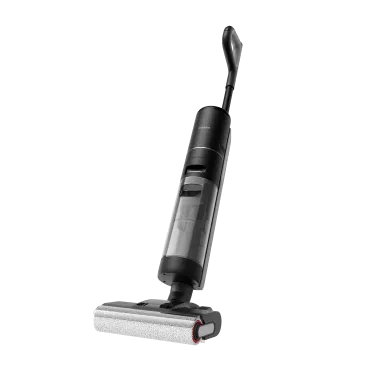
In contrast, a wet/dry vacuum such as the Dreame H15 Pro Heat dispenses controlled water and suctions it back up in the same pass, so moisture never pools on the surface or seeps into the seams. The single-roller design also means you're not dragging dirty water around the way a traditional flat mop does after the first few passes. You get the cleaning benefit of wet mopping with the moisture-protection benefit of dry vacuuming.
[product handle="h15-pro-heat-wet-dry-vacuum" rating="4.7"]
The Dreame H14 Pro provides the same controlled-water approach, with fewer top-end features, but available at a lower price. This model is a suitable option for laminate-only homes that do not need carpet handling.
Dreame Take: Traditional wet mops leave too much water on laminate, which can cause warping over time. Our wet dry vacuums use just the right amount of water and immediately suction it up, so your floors get clean without staying wet. This is the optimal care for laminate floors.
Best Vacuums for Laminate Floors
Grit causes the most long-term wear on laminate. As such, having a good vacuum to remove the grit before it starts to scratch the laminate floor surface is another way you can preserve your floors longer.
You'll want to look for a vacuum with a soft brush roll, strong-enough suction to lift fine dust without scratching, and a design that does not leave scuff marks from rough edges or hard wheels.
Best Cordless Stick Vacuums for Laminate Floors
Cordless stick vacuums are the most convenient and efficient for a daily-use pick. They handle quick passes between mop sessions without needing a full cleaning routine each time. Some of the best cordless stick vacuums for laminate floors include the following:
Dreame Z30 is a premium cordless stick vacuum that delivers 310 AW of suction. It runs for up to 90 minutes on a full charge, and captures fine dust through the HEPA 14 filtration. If you have laminate floors and pets, you'll find that the included pet deshedding tool makes a noticeable difference during shedding seasons.
Dreame Z20 is a mid-range option that still gets the job done well. It offers 250 AW of suction and pairs with an optional auto-empty station that handles the bin between cleans. It doesn't include the pet deshedding tool, but can cover laminate-heavy homes well without flagship pricing.
Smaller homes that only need routine dust pickups will find the Dreame R10 a handy, entry-level option. It works well with laminate dust pickup, but it may not be the right choice if you have heavy shedders or a large floor area to cover.
Best Robot Vacuums for Laminate Floors
For homeowners who want to skip the hassle of pulling out a cordless stick vacuum every other day, you can consider using a robot vacuum to handle the daily grit removal automatically. On laminate flooring, that consistency is what protects the wear layer over time.
If you're looking for a premium robot vacuum to automatically clean a laminate-heavy home, you can consider the Dreame L60 Pro Ultra. At the time of writing, Vacuum Wars ranked it the second best robot vacuum in 2026, after the Dreame X60 Max Ultra Complete. The L60 Pro Ultra navigates your house with Smart Liftable LiDAR, which means it raises in open areas for precise 360° mapping and lowers automatically to glide under low furniture. This translates to more efficient cleaning paths and fewer missed spots.
The Dreame L50 Ultra is a great pick as well for laminate floors. It features a HyperStream™ Detangling DuoBrush, which handles human hair up to 30cm in length without tangling, eliminating the need to cut hair from brushes. This matters greatly on laminate where long hair tends to wrap around standard brush rolls and drag across the wear layer.
The Dreame L40 Ultra Gen 2 is a solid mid-range pick for mixed-flooring homes where laminate is the main surface. It pairs 25,000 Pa Vormax suction with a 0.41-inch mop lift for carpet cleaning, so the carpet stays dry while the rest of the floor gets cleaned. The all-in-one PowerDock empties the dustbin and self-cleans the mop between runs.
If your home mixes laminate with a few carpeted rooms, this guide on how robot vacuums clean carpets breaks down what to expect and how performance depends on the carpet pile and the vacuum's suction.
Best Wet/Dry Vacuums for Laminate
The Dreame H15 Pro Heat is also a lead pick here. It replaces both your daily vacuum and your traditional mop in a single tool, which makes it the most efficient setup for homes where laminate is the dominant flooring. The Dreame H14 Pro covers the same ground at a lower price point if the H15 Pro Heat is more than you need.
[product handle="h15-pro-heat-wet-dry-vacuum" rating="4.7"]
Check out Dreame's wet dry vacuum collection to decide which model is best for your routine cleaning needs.
Can You Use a Steam Mop on Laminate Floors?
Steam mops are not suitable for laminate floors. They combine the two things laminate handles worst: heat and moisture. Steam penetrates the seams between planks faster than liquid water does, and once it reaches the fiberboard core underneath the wear layer, the planks swell and lift. That damage is permanent and can't be reversed without replacing the affected planks.
Important: Most laminate manufacturer warranties are voided by steam mop use. Even if your laminate is labeled water-resistant, steam is a different test entirely. Check your manufacturer's care guide before using any steam-based product on your floor.
You might notice that some newer sealed laminates claim steam tolerance, but the risk of damage and the replacement costs are probably not worth it. If the seal weakens or the steam setting is too high, you're looking at the same permanent swelling. You can opt for microfiber spray mops which handle the same dirt without putting your floor at risk.
If you want a deeper clean without the warping risk that steam brings, the Dreame H15 Pro Heat dispenses water in controlled volumes and suctions it back immediately, so moisture never sits long enough to reach the seams. It's tough on messes yet gentle enough to protect your laminate floors.
How to Clean Very Dirty Laminate Floors
The method for a deep clean on laminate is the same 5-step routine, but you'll have to apply the routine more carefully and with slightly more cleaning solution. You'll still need to be careful with the moisture control and pH rules so that you don't damage the floor.
Here's how you can work through heavily dirty laminate floors:
Vacuum thoroughly first, and don't rush it. Heavy soil usually means heavy grit underneath. If you skip this and go straight to mopping, you'll scratch the floor during the clean. You may need to run the vacuum twice, including along the edges where dirt tends to collect.
Use a slightly stronger pH-neutral solution than usual. You'll still want to avoid vinegar, ammonia, and oil soaps. Since you're dealing with more dirt, you'll need to increase the dish soap in your DIY mix to about 1 tablespoon per gallon of warm water and use a fresh microfiber pad.
Work in sections and don't let the solution sit. The cleaning agent can leave streaks if it dries before you wipe it. To avoid streaking, you should apply the solution to one section, wipe it down, and move to the next before going back.
Rinse with clean water on a fresh pad after the first pass. This step removes the residue that the cleaning solution loosened. Otherwise, your floor will look hazy once it dries, even if it felt clean during mopping.
Dry each section immediately. A dry microfiber cloth or your wet/dry vacuum's drying mode finishes the job and prevents moisture from sitting in the seams.
Let's say you're working on specific stains on your laminate floors. You may find the tips below helpful without damaging the wear layer:
Ink responds well to rubbing alcohol dabbed on a microfiber cloth. Lift the stain rather than scrubbing it, or you'll spread it further.
Grease comes up with a pH-neutral degreaser diluted in water, applied to the pad and wiped immediately. However, remember that you can't let the degreaser dwell on the surface.
Scuff marks usually rub out with the flatter side of a tennis ball. It sounds odd, but it works without touching the wear layer.
Sticky residue like gum or candy hardens with a few minutes of ice on top, then lifts cleanly with a plastic scraper. You should never use a metal scraper on laminate due to the scratching risks.
How to Clean Fake Wood / Faux Wood Floors
"Fake wood" and "faux wood" usually mean laminate, but they can also describe luxury vinyl plank (LVP) or engineered hardwood. The cleaning method depends on which one you have since each one behaves differently when it gets wet.
Here's how you can tell them apart:
Laminate has a fiberboard core with a photo image of wood covered by a clear wear layer. It might sound slightly hollow when you tap it. You can also look at the cut edges; you'll see a brown fiberboard core rather than actual wood.
Luxury vinyl plank (LVP) is fully synthetic and feels slightly softer underfoot. The edges are usually gray or black rather than brown, and the planks are more flexible than laminate.
Engineered hardwood has a real wood veneer over a plywood core. If you look at the edges, you'll see distinct wood grain layers rather than a uniform core material.
The 5-step method covered earlier is what you need for laminate floors. If you have LVP, the cleaning approach is similar but your floor tolerates slightly more moisture and is less sensitive to pH swings. Products designed for sealed hardwood apply if you have engineered hardwood; these floors tolerate higher moisture levels and oil-based soaps that would damage the laminate's wear layer.
When you're not sure what you have, treat it as laminate. The laminate method is the most conservative of the three and won't cause damage to LVP or engineered hardwood if you apply it to either one by mistake.
7 Mistakes to Avoid When Cleaning Laminate Floors
Most laminate damage builds slowly and stays invisible until it's too late to reverse. By the time you notice the wear layer dulling or the edges lifting, the damage has already been happening for months. Below are the common mistakes that homeowners with laminate floors may not initially know.
1. Spraying cleaner directly on the floor
If you've been spraying cleaner straight onto your laminate, you're not alone. It's the most natural thing to do. The problem is that pooled liquid seeps into the seams between planks and warps the edges from underneath, and that kind of damage shows up long after the habit started. Instead, you should spray the cleaner onto your microfiber pad to get the same clean result without putting the floor at risk.
2. Using vinegar as a regular cleaner
Vinegar is one of those cleaning tips that gets passed around a lot, and it's not completely wrong. A light use here and there won't ruin your floor. However, if you use it regularly over months, the mild acidity slowly dulls the wear layer. You should always use a pH-neutral cleaner for the same streak-free finish without that trade-off.
3. Applying oil-based soaps
Oil-based soaps feel like a natural choice for wood-look floors, but they leave behind a residue that traps dirt and builds into a hazy film over time. Once that film settles into laminate, it's hard to remove without damaging the surface underneath.
4. Using a steam mop without checking first
If you already own a steam mop, check your laminate manufacturer's care guide before you use it on your floors. Heat and moisture together are the hardest combination for laminate to handle, and most manufacturer warranties are voided by steam use, even on floors labeled water-resistant.
5. Leaving water on the surface for too long
Spills happen, and laminate can handle a quick one as long as you wipe it up promptly. If you leave moisture for longer than 10 to 15 minutes, that's enough time for the moisture to seep into the seams. Keeping a dry microfiber cloth nearby makes it easy to deal with spills before they become a problem.
6. Using abrasive scrubbers on tough stains
When a stain won't budge, reaching for a magic eraser or a scrubbing pad feels like a logical next step. They do remove the stain, but they also strip the wear layer in patches that show up as permanent dull spots afterward. A slightly damp microfiber pad with your pH-neutral solution, applied with a bit of patience, handles most tough stains without touching the wear layer.
7. Running a beater brush vacuum on bare laminate
Your vacuum's beater brush is designed to agitate carpet fibers, but it's not suitable for hard floors. On laminate, it leaves faint scratch lines over time that are most visible in high-traffic areas near doors and the kitchen. You can switch to a soft brush roll setting, or use a vacuum designed for hard floors to keep your surface scratch-free.
The Bottom Line on Cleaning Laminate Floors
Laminate floors are more forgiving than most people think, as long as you respect the two things it's sensitive to: moisture and pH. Keep water controlled, use the right cleaner, and your floors will hold up well for years. The right vacuum and mop make both of those things easier to manage consistently.
Browse the Dreame wet and dry vacuum collection to see which model fits your home, or take a closer look at the Dreame H15 Pro Heat. It dispenses water in controlled amounts and suctions it back in the same pass, so you get a mop-style clean without the standing water that warps laminate.
Frequently Asked Questions
How often should you clean laminate floors?
You should vacuum or dry sweep daily in high-traffic areas, especially if you have pets. A damp mop with pH-neutral cleaner once a week works well for most homes. Spills should be wiped up immediately, regardless of your regular schedule.
Can you mop laminate floors with vinegar?
Using vinegar occasionally won't cause immediate damage, but regular use can dull the wear layer over time. A pH-neutral cleaner gets you the same streak-free result without the long-term trade-off.
What's the best way to clean very dirty laminate floors?
Vacuum thoroughly first, then use a slightly stronger pH-neutral solution on a microfiber pad. Work in sections, rinse with clean water on a fresh pad, and dry immediately. Make sure to avoid anything abrasive or acidic regardless of how dirty the floor is.
Can you use a Swiffer on laminate floors?
The dry pads work fine for quick dust pickup between proper cleans. The wet pads release more liquid than laminate prefers, so if you use them, make sure that you also dry the floor immediately after each pass to prevent moisture sitting in the seams.
How to clean laminate floors without streaks?
Spray your cleaner onto the microfiber pad rather than the floor and use a pH-neutral solution. You should also dry each section immediately after mopping. Streaks usually come from the wrong cleaner or moisture that sat too long before drying.
If you’re tired of switching between mops, vacuums, and brooms to keep up with dust, spills, and pet hair, then you're not alone. This is particularly true if you’re juggling multiple floor types like hardwood, tile, and carpet. That’s where robot floor cleaners come in.
Vacuums are now more than just dust suckers. They mop, scrub, dry, self-empty, and even map your rooms. But how well do they work? Are they worth the investment? In this guide, we’ll break down the latest advancements in robot vacuuming, mopping, and scrubbing tech so you can decide if these smart helpers are right for your home.
What Types of Robot Floor Cleaners Are There?
From basic dust-busting to advanced deep-cleaning, robot floor cleaners come in several categories:
1. Robot Vacuums (Robot Sweepers)
Perfect for daily dust and debris, robot vacuums (or robot sweepers) use suction to pick up dirt. They’re great for dry messes and work well on hard floors and low-pile carpets.
Best for: Picking up dust, pet hair, and debris
Ideal for: Hard floors, carpets, and rugs
Key feature: Strong suction power
2. Robot Vacuum & Mop Combos (Wet and Dry Robot Cleaners)
Also called wet and dry robot cleaners, these hybrid models vacuum and mop in one go. Advanced versions can lift mop pads when moving over carpets, preventing soggy rugs.
Best for: Homes that need both vacuuming and mopping
Ideal for: Hardwood, tile, and laminate
Key feature: Auto-switching between vacuuming and mopping
Read more on whether or not wet and dry vacuum cleaners are worth it.
3. Robot Mops
These focus solely on wet cleaning. They’re ideal for tiled kitchens and bathrooms but lack vacuum functionality. This means you'll still need to sweep or vacuum separately.
Best for: Deep cleaning hard floors
Ideal for: Tile, vinyl, and sealed hardwood
Key feature: Oscillating or vibrating mop pads for tough stains
4. Robot Scrubbers
Robot floor scrubbers use rotating pads and extra pressure to lift stubborn grime. These are less common in homes but excellent for heavy-duty cleaning in high-traffic areas.
Best for: Heavy-duty floor cleaning
Ideal for: Commercial spaces or homes with stubborn grime
Key feature: Rotating brushes and water jets for deep scrubbing
5. Self-Cleaning Robots
The latest innovation, self-cleaning robots, return to their base to wash mop pads, dry them with hot air, and empty the dustbin. It’s about as hands-free as cleaning gets.
Best for: Minimizing maintenance
Ideal for: Busy households that want true hands-off cleaning
Key feature: Auto-empty dustbins, mop washing, and drying stations
Dreame Take Models like the Dreame L40 Ultra take self-cleaning to the next level with all-in-one docking stations that handle emptying, mopping, and drying, so you rarely need to intervene.
Do Robot Cleaners Work on Different Floor Types?
Short answer: yes, but with some caveats. Today’s models are designed to handle a mix of surfaces, but some perform better than others depending on the cleaning task.
Here's a quick comparison:
Cleaner Type
Hardwood
Tile
Laminate
Carpet (Low-Pile)
Carpet (High-Pile)
Vinyl
Linoleum
Robot Vacuum
✅
✅
✅
✅
⚠️
✅
✅
Robot Vacuum & Mop
✅
✅
✅
✅
⚠️
✅
✅
Robot Mop
⚠️
✅
✅
❌
❌
✅
✅
Robot Scrubber
⚠️
✅
⚠️
❌
❌
⚠️
⚠️
Legend:
✅ = Good compatibility
⚠️ = Partial compatibility/performance may vary
❌ = Not recommended
Pro-tip If you have both hard floors and thick carpets, opt for a robot like Dreame’s X50 Ultra Robot Vacuum with HyperStream™ Detangling DuoBrush technology. Its dual-rotating brushes tap and sweep in opposite directions to dig deeper into carpets while still gliding gently over hard surfaces. It also auto-adjusts brush speed using ultrasonic sensors for floors and carpets to optimize cleaning across every surface.
Features to Look For in Robot Floor Cleaners in 2025
Let’s face it: not all robots are created equal. Here are key features that make a real difference in 2025:
1. Floor-Type Recognition
Adjusts cleaning settings based on whether it’s on carpet, tile, or hardwood.
Robots like Dreame’s models use ultrasonic sensors to detect the surface and adjust brush speed. They spin faster on carpets (1,200 RPM) and slow down on hard floors (1,000 RPM).
2. Smart Navigation
Avoids obstacles, remembers room layouts, and cleans efficiently.
Gone are the days of aimless zigzagging. Today’s robots use LiDAR and AI-powered vision to map your space and clean methodically.
3. Multi-Level Mapping
Stores maps of different floors (great for homes with stairs).
If you live in a multi-story home, look for models that can save maps of different floors and auto-detect which one they’re on. This saves you the effort of remapping every time you carry the vacuum upstairs. Check out this guide on robot vacuums for multi-floor homes.
4. Self-Cleaning Base Stations
Reduce manual work with auto-empty dustbins, mop washing, and drying stations.
This is definitely a game-changer. Premium models now empty their dustbin, wash and dry the mop, and prep for the next clean automatically. It cuts down manual maintenance to nearly zero.
5. Smart Home Integration
Works with Alexa, Google Home, Apple HomeKit, and smartphone apps for voice/schedule control.
Integrate your robot with your smart home to start, stop, or schedule cleans with your voice. Many apps now let you set no-go zones or spot-clean areas remotely.
6. Battery Life & Fast Charging
Some models clean for 3+ hours and recharge quickly.
A good robot should handle at least 2,000 ft² (185 m²) on a single charge. Models with auto top-up can recharge mid-clean and resume exactly where they left off.
7. Tangle-Free Brushes
Prevent clogs from pet hair or long fibers with anti-hair-wrap brushes.
Look for models that use detangling brush technology that prevents tangles and boosts suction. Dreame’s X50 has bristled rubber brushes that spin in opposite directions, minimizing hair wraps while doubling cleaning power.
Challenges and Considerations
Even with smart features, robot cleaners aren’t perfect. Here’s what to watch out for:
Can Robot Vacuums Go Over Floor Transitions?
Yes, good models can. Look for robots with liftable side brushes or wheels that can handle up to 0.39 in (10 mm) thresholds. This helps prevent mop drag and ensures smooth movement across rooms.
Can Robotic Cleaners Scratch the Floor?
Generally, no. But cheap models with stiff brushes might. Look for models with soft rubber wheels and mop pads designed to glide over sensitive surfaces. And make sure debris like sand or gravel isn't left for the robot to push around.
Are They Really Hands-Free?
Mostly. Unless you're using a self-cleaning model, you'll still need to refill water tanks or empty dustbins occasionally. Some Dreame robots can go weeks without manual intervention thanks to smart stations.
Can a Robot Vacuum Replace Manual Cleaning?
For everyday upkeep, yes. For deep seasonal cleaning, you may still need to supplement manually.
How Often Should the Robot’s Mop Pad Be Cleaned?
Self-cleaning stations handle this. Without one, rinse pads after every use to avoid streaks.
Do Robots Fall Down Stairs?
Nope. Sensors prevent falls. Just make sure your model has cliff detection.
How Often Should I Clean the Robot’s Dustbin?
If it has an auto-empty station, you might only need to empty it monthly. Otherwise, every few cleaning cycles.
Dreame Take At Dreame, we design robots that adapt to your lifestyle and not the other way around. Whether it’s DuoBrush deep carpet cleaning, ultrasonic floor detection, or fully automated base stations, we’re building products that clean smarter, not harder.
Final Verdict: Are Robot Floor Cleaners Worth It?
If you value time, convenience, and clean floors, then yes, a robot floor cleaner is absolutely worth it in 2025. Technology has come a long way, with multi-surface capability, smart features, and hands-free operation becoming standard.
Just make sure to choose a model that fits your home. Mixed floor types? Go for vacuum and mop hybrids with mop-lift tech. Big house? Prioritize long battery life and multi-floor mapping. Pets? Look for detangling brushes and high suction power.
Long before today's vacuums could dodge furniture and empty themselves, they were loud, clunky beasts dragged through parlors and powered by cranks. Their evolution mirrors our shifting lifestyles, and it all started over 160 years ago.
Who and When Invented the Vacuum Cleaner?
The first vacuum cleaner was invented in 1860 by Daniel Hess of Iowa. His device used rotating brushes and bellows to generate suction—an idea that still powers vacuums today.
A major leap came in 1901, when Hubert Cecil Booth built a giant electric vacuum that used suction, not blowing. His machine was so large that it sat in horse-drawn wagons outside homes. People hosted "vacuum parties" to watch it work through hoses run into windows.
The first truly home-friendly model came in 1907, thanks to James Murray Spangler, a janitor in Ohio. Using a fan motor, soapbox, and pillowcase, he made the first portable electric vacuum. He sold his idea to William Hoover, founder of a company that turned "hoovering" into a household verb. [1]
These early inventions laid the groundwork for everything that came next. Here's how the design kept improving decade by decade.
A Timeline of Vacuum Cleaner Innovation
1860–1900: Muscle-Powered Beginnings
The first vacuums needed real effort to use. After Daniel Hess's invention in 1860, Ives McGaffey built the "Whirlwind" in 1868, which you had to crank by hand while pushing it across the floor. In 1876, Melville Bissell added rollers and brushes to make cleaning a bit easier, but it was still a workout.
1901–1930: The Power of Electricity
The arrival of electric motors changed everything. Hoover's Model O launched in 1908 for $60 (about $2,100 today), making vacuuming faster and easier. In 1919, Hoover added the famous beater bar. And in 1921, Electrolux created a flat-lying model that could be under beds and couches, an early step toward user-friendly design.
1950–1990: Smarter, Cleaner, Safer
Vacuum features have seen a significant upgrade in this era. In the 1950s, disposable dust bags replaced reusable ones, making clean-up much easier. In the 1970s, HEPA filters arrived, helping trap dust and allergens. And in 1993, James Dyson introduced the first bagless vacuum with cyclonic suction—no more clogging, no more power loss.
2000–Today: Smarter, Smaller, Hands-Free
The first robot vacuums entered the scene in 2002, letting people clean without lifting a finger. Meanwhile, cordless stick vacuums got lighter and more powerful, and wet/dry models became go-to choices for people who want to clean both dust and spills in one go. [1]
2023–2025: Dreame's High-Tech Leap
As robot vacuums became more common, users began to notice their limits. Many models struggled with corners, low furniture, tangled hair, and small floor barriers like sliding door tracks.
But in a few years, Dreame Technology has redefined what robotic vacuums can do:
→2023: The L20 Ultra added Robotic Flex Arm™, finally letting robots reach into corners and along walls.
→2024: The X40 Ultra improved with Dual Flex Arms, cleaning even closer to the edges.
→2025: The X50 Ultra introduced multiple groundbreaking features:
ProLeap™ System to climb over door tracks up to 22 mm (0.87 in)
VersaLift Navigation™ to clean under low furniture without missing spots
HyperStream™ Detangling DuoBrush™ to stop hair from getting wrapped
And at CES 2025, Dreame revealed its biggest leap yet: the Bionic Multi-Joint Robotic Arm™, built to move more like a human hand for superior reach.
With 785+ patents and products in over 21 million homes worldwide, Dreame is pushing the boundaries of vacuum tech for a smarter, more efficient future. [3]
Global Market Trends: What's Driving Growth?
Vacuum cleaners are changing fast around the world. The Asia Pacific region leads the global demand (about one-third of all vacuums), followed by North America. Canister vacuums remain the most popular choice due to their versatility in cleaning different floor types. But robot vacuums are growing quickly, especially as more people start using smart home devices.
Most vacuums still have cords, but cordless ones are catching up fast thanks to the long-lasting batteries. And instead of going to a store, more people buy vacuums online. It's easier to read reviews, compare features, and get the best deal delivered right to your door. [2]
What's New Through 2025?
Today's vacuums go far beyond simple suction:
Wi-Fi & voice control via Alexa or Google Assistant
Self-emptying models reduce manual maintenance
AI optimization learns cleaning habits and adapts routes
Eco-conscious designs lead in Europe, with some models using up to 49% recycled plastics
The future of vacuum is all about automation, efficiency, and sustainability—themes driving all home appliances forward.
How Did the Vacuum Cleaner Change Society?
The vacuum cleaner did more than clean floors:
Time-saving tech helped reduce household labor
Post-COVID-19 hygiene habits fueled demand for smarter cleaning
Online shopping transformed how people choose and buy appliances
Environmental awareness now influences how vacuums are built and marketed
This humble appliance now reflects wider trends in technology, health, and lifestyle.
Conclusion
From Daniel Hess's 1860 design to Dreame's Bionic Robotic Arm™ in 2025, vacuum cleaners have come a long way. What once required effort and noise now runs silently, learns on its own, and fits neatly into our daily lives.
As the global vacuum market heads toward $13.33 billion by 2030, the future looks smart, sustainable, and even more automated. Cleaning, once a chore, is now an intelligent part of modern living. [2]
FAQs
Q1: What types of vacuums are most popular today?
Canister vacuums remain the most common globally. Robotic vacuums are rapidly gaining popularity, while cordless stick and wet/dry vacuums appeal for their portability and multi-function use.
Q2: Why do people in the UK call vacuums 'Hoovers'?
"Hoover" became a generic term after William Hoover's early dominance in the vacuum industry. In the UK, people still say "hoover" the way many people in North America say "Google", as a verb based on a brand.
Q3: How did people clean before vacuums?
Before vacuums, people swept with brooms and took carpets outside to beat the dust out. It was time-consuming, messy, and exhausting, especially in urban areas.
Q4: Were there vacuums in the 1920s?
Yes, but they were luxury goods. Models like Hoover's with disposable bags and beater bars were available, though most families didn't own one until prices dropped after WWII.
Q5: What's the biggest innovation in 2025?
Dreame's Bionic Multi-Joint Robotic Arm™, shown at CES 2025, is a major step forward. It mimics human flexibility, allowing robotic vacuums to clean tight spaces like never before.
References
[1] Vacuum cleaner - Wikipedia
[2] Household Vacuum Cleaners Market Size, Share & Trends Analysis Report
[3] A Dream Unveiled in 2017 - Dreame
Spilled coffee again? And dragging out the heavy vacuum feels like more work than the mess itself? That's why portable vacuum cleaners have become increasingly popular nowadays.
A portable vacuum cleaner is changing the game—lightweight, compact, and easy to grab when you need it. Whether it's spilled cereal, pet hair, or car crumbs, this mini vacuum handles it fast without the bulk.
In 2024, the market was worth around $5.12 billion, and experts say it could reach nearly $9 billion by 2033. In simple terms, more and more people are turning to compact, grab-and-go vacuums to keep their homes clean without the bulk and hassle of traditional ones.
You don't need a massive machine for most cleaning tasks. And this guide will walk you through the world of small and mini vacuums.
3 Benefits of Mini Vacuums
1. They're Ridiculously Easy to Use
With much lighter weight than larger models weighing more than 10 lbs, you can use them for 15 minutes without breaking a sweat.
So that you'll actually USE them, instead of leaving them to gather dust for the inconvenience. They live on your counter, in your car, or tucked in a drawer. There's no assembly trouble, no cord hunting; you just pick them up and use them.
2. They Get Into Places Where Your Big Vacuum Can't
Ever tried vacuuming your car with a full-size vacuum? It's basically impossible. But handheld vacuum cleaners excel exactly where traditional vacuums fail miserably.
Your workspace becomes actually clean—between keyboard keys, around monitors, inside those mysterious desk drawer corners.
Your car interior finally gets the attention it deserves: cup holders, seat cracks, that black hole between the seat and console where everything disappears. The best mini vacuum for cars combines portability with specialized attachments designed specifically for automotive interiors.
3. They "Pay" for Themselves
Here's something many people don't know: mini vacuums can actually save you money.
Think about those cans of compressed air you buy to clean your keyboard. They usually cost $5 to $8 each and run out fast.
But a mini vacuum can:
Save on repeat costs — no need to keep buying compressed air cans
Lower long-term spending — one purchase works for years
Combine two tools — a vacuum and a blower in one device
In the long term, it saves you time and money.
How to Select the Right Mini Vacuum
Loving mini vacuums is easy. Choosing the right one? That's where it gets messy. Let's match features to a real-life mess.
Surface Analysis: Matching Power to Purpose
For Hard Floors and Smooth Surfaces
If you're cleaning tile, hardwood, or kitchen counters, you don't need super strong suction. A small vacuum with medium power (12–18 air watts) and a wide nozzle will clean well without using too much energy.
For Carpets and Fabrics
Carpets and couches hold onto dust more tightly. You'll need a vacuum with a spinning brush head that can lift dirt from deep inside the fibers. Look for one with 15–25 air watts of power and brush speeds of 3,000 RPM or more for the best cleaning.
For Electronics and Delicate Items
Cleaning computers, keyboards, or other sensitive devices? Go for a mini vacuum with adjustable suction and a blowing mode. These are gentle but still get the job done. Some even come with anti-static features to protect electronics from damage while removing dust.
Debris Classification: Engineering Solutions for Real Problems
For Pet Hair
Pet hair wraps around cheap brushes and clogs up the filter fast. A good vacuum for pet owners uses anti-tangle brushes that mix silicone and bristles to grab fur without getting stuck.
For Allergies
If your nose gets stuffy or your eyes get itchy at home, your vacuum might be part of the problem. Look for models with true HEPA filters, such as Dreame Z30 Cordless Stick Vacuum. This can trap almost all the tiny stuff floating in the air—dust mites, pet dander, even smoke.
For Mixed Messes
One day it's cereal on the floor, the next it's sand from someone's shoes. If you're cleaning up random messes all the time, go with a vacuum that has changeable nozzles and medium suction power. These flexible tools handle crumbs, dust, and grit without switching machines.
How You Clean: Match the Vacuum to Your Routine
Clean Daily?
If you like quick daily cleanups, go for a lightweight vacuum that charges fast. USB-C charging is handy and easy to use. A trigger-style button helps save battery since it only runs when you press it.
Clean Weekly?
If you do longer cleanups on weekends, you'll need a vacuum with a strong battery that lasts at least 25–40 minutes. A battery level display is useful so you know how much power you have left. A bigger dustbin helps too—you won't need to stop and empty it often.
Use for Travel or Car?
For the car or road trips, choose a small vacuum that's easy to pack. It should come with special nozzles for car seats and tight spaces. A carrying case and universal charging options will make it easier to use anywhere.
Use at Home?
Select a vacuum with strong suction, at least 20 minutes of battery life, and a mid-sized dustbin. A floor brush helps tackle everyday messes like dust, crumbs, and spills.
If you have pets, look for a motorized brush with an anti-tangle design and a washable filter. These features help remove fur from sofas, rugs, and pet beds without clogging the system.
Use at a Desk?
Look for a quiet vacuum that won't interrupt meetings or focus time. It should be small enough to store in a drawer and light enough for one-handed use. A soft nozzle helps clean keyboards, monitors, and bookshelves gently and safely.
How Much is a Mini Vacuum Cleaner?
Prices vary, but most mini vacuums fit comfortably into a small appliance budget. You'll find solid options whether you're spending $30 or $150, depending on features and performance.
Price Range
Typical Offerings
Under $30
Basic cordless minis (e.g., unbranded or small brands)
$30–60
Quality handhelds from known brands
$60–120
Feature-rich models with extra tools
$120+
Premium units with motorized brushes and HEPA filters
Types of Mini Vacuums
Before you buy, it helps to know what kind of mini vacuum suits your needs. Here are the three most common types and what they do best:
Portable / Handheld Vacuum Cleaners
These are small, easy-to-carry vacuums perfect for quick cleanups. You can use them on furniture, stairs, cars, or countertops. Many models are cordless and lightweight, which makes them great for daily use.
If you're not sure where to start, a handheld vacuum guide can help you pick the right one for your needs.
Mini Robot Vacuum Cleaners
These smart vacuums clean your floors on their own. Just set a schedule, and they'll sweep up dust and crumbs while you relax. Most are best for hard floors and low-pile carpets. Some even return to their dock to charge when the battery runs low.
Mini Wet and Dry Vacuum Cleaners
These vacuums can handle both dry messes and liquid spills. They're great for kitchens, bathrooms, or places with kids and pets. A good mini wet and dry vacuum can pick up crumbs, pet hair, and even small spills in one go.
5 Key Features to Consider for Mini Vacuums
And when choosing a small vacuum, it's not just about size, budget, and types. Paying attention to a few key features can help you find the one that truly fits your cleaning needs.
Suction Power
Look for a vacuum that balances strength and efficiency. Most small vacuums offer between 12 to 25 air watts, which is strong enough for daily use. Wet and dry vacuums may have slightly higher power to handle liquids and heavier messes.
Dustbin Capacity
A larger dustbin means fewer trips to empty it. For daily home cleaning, 200ml to 500ml is ideal. Smaller models made for desks or cars usually hold less but are easier to carry.
Filter Type
If you have allergies or pets, a HEPA filter is a must. It traps tiny dust and pet dander. Some vacuums also use multi-stage filters, and the best ones come with washable filters to save money and reduce waste.
Battery Life vs. Corded Options
Most mini vacuums today use lithium-ion batteries. They charge faster and last longer than older types. Battery-powered models usually run for 20–40 minutes per charge. Some offer removable batteries, which means you can swap them out for extended use. If you prefer no battery worries, corded options still exist but are less flexible.
Attachments
The right tools make a big difference.
Pets: Motorized brushes.
Office: Anti-static dusting brushes.
Car: Flexible hoses and narrow nozzles.
Home: Wide floor heads.
Comparison Table: Which Type is Right for You?
Feature
Small Handheld Vacuums
Small Robot Vacuums
Small Wet and Dry Vacuums
Suction Power
Medium (12–25 AW)
Low to medium
Medium to strong
Battery Life
15–40 minutes
60–120 minutes (auto-run)
20–35 minutes
Price Range
$30 – $150
$100 – $300+
$60 – $180
Best For
Cars, stairs, and small messes
Floor sweeping, daily dusting
Kitchens, bathrooms, and pet areas
Practical Uses for Mini Vacuums
If you already own a portable vacuum, see how far you can stretch its uses.
Everyday Cleaning Tasks
Mini vacuums are perfect for quick jobs you don't want to save for later. It can handle:
Toast crumbs on the counter
Pet hair on the sofa
Dust hiding in window tracks
Tight corners in your car
The keyboard is full of dust and crumbs
Unconventional Uses
And here are more creative ways other than regular uses:
Shoo away summer bugs: Use blow mode to gently push mosquitoes or flies off your desk, food, or baby gear.
Dry up wet spots fast: A short burst of air can dry kitchen counters, bathroom floors, or damp sneakers.
Cool off your face: Point the air at your face during skincare or makeup for a quick refresh.
Clean up candles and diffusers: Vacuum away old wax flakes or dried flower bits without spilling a thing.
Tidy up wrinkled clothes: Use warm air to smooth shirt collars or sleeves before a meeting.
Dust your indoor plants: Gently blow or vacuum the leaves to help them stay healthy and shiny.
Clear hair from bathroom corners: Those tricky strands near the tub or toilet? Gone in seconds—no bending needed.
Of course, there are even more creative uses to be discovered as you use it yourself.
Easy Maintenance Tips for Mini Vacuums
Regular care keeps your vacuum running like new and saves you from early repairs.
1. Clean the Filter
Wash every 3–5 uses
Let it dry fully before reuse
Replace disposable filters every 2–3 months
2. Empty the Dustbin
After each use
Rinse and dry to prevent odors
3. Charge the Battery Right
Recharge at 20–30%
Store at 40–60% if not using for a while
Don't overcharge
4. Check Performance
Weak suction?
Clean the filter
Check for blockages
Final Take
Mini vacuums aren't just for light messes—they're for life on the go. Whether it's a dusty keyboard, a spilled snack, or a furry couch, a good mini vacuum keeps your space clean without the hassle.
Choose one that fits your habits, your home, and your time. The right mini vacuum helps you clean more, stress less, and stay ahead of everyday messes.











 Robot Lawn Mowers

















 Humidifiers


 Smart Door Lock


 Australia
 中国大陆
中国大陆 日本
日本


 Türkiye


 Ireland
 Portugal
 Italia
 Netherlands
 Belgium
 Greece
 Polska
 Norway
 Sweden
 Finland
 Denmark
 Hungary
 Czechia
 Slovenia
 Croatia
 Switzerland
 United
Kingdom
United
Kingdom
 Canada


 Colombia


