










 Robot Lawn Mowers


















 Humidifiers


 Smart Door Lock


 Australia
 中国大陆
中国大陆 日本
日本


 Türkiye


 Ireland
 Portugal
 Italia
 Netherlands
 Belgium
 Greece
 Polska
 Norway
 Sweden
 Finland
 Denmark
 Hungary
 Czechia
 Slovenia
 Croatia
 Switzerland
 United
Kingdom
United
Kingdom
 Canada


 Colombia

In this article
Cleaning the garage on Sunday often means that by the next weekend, dirt and grit have returned, especially along the edges and under the car. A garage robot vacuum can keep that layer of dust in check, but it won't tackle the bigger messes that pile up in a garage.
It excels at managing everyday dust and tracked-in grit, as long as the floor stays relatively clear. However, it's not designed to handle sawdust and oil spills of a busy workshop. This guide goes through where it works and where it falls short.

Can You Use a Robot Vacuum in a Garage?
Yes, you can use a garage robot vacuum on a tidy floor to manage everyday dust and dirt tracked in from outside. The challenge is that in a busy workshop, a robot vacuum isn't the ideal way to keep a garage clean.
A garage demands more from a vacuum than a living room does, with larger open spaces, more dirt from tires and shoes, and various items that can fall on the floor.
This doesn't rule out a robot vacuum. It just means its role is to maintain cleanliness by keeping an already clear floor clean.
Does the type of garage floor matter for a robot vacuum?
The floor type does matter, but it's not the only factor. Smooth, hard, dry surfaces like sealed concrete, epoxy-coated concrete, and smooth tile provide the best traction for the wheels and let the sensors read the surface accurately.
Rougher surfaces can hinder garage floor cleaning. Deep cracks and loose gravel may slow down a robot vacuum or disrupt its navigation. Standing water and oil spots pose even greater risks, while raised obstacles, such as doorway steps or stray tools, can completely halt a cleaning cycle.
An imperfect floor doesn't mean it's an absolute no-go. A mostly clear, level surface significantly enhances a robot vacuum's performance, and it can still handle dust and grit even with a few rough patches.
What a Robot Vacuum Does Well in a Garage
A robot vacuum's biggest advantage in a garage is preventing dust buildup, which is a different job from cleaning an already dirty garage.
Keeps tracked-in dust and grit from building up
Dust and grit accumulate from shoes and tires, settling in corners and along walls where brooms often miss. A quick daily run keeps this layer in check, reducing how much you need to clean by hand.
Pick a robot vacuum with a spinning side brush that extends beyond the vacuum's body to reach corners and baseboards, directing debris into the main brush's path. Many models also deploy a mop pad similarly, ensuring edges are wiped clean rather than just swept. This distinction creates a garage that not only looks swept but also has clean corners.
Cleans under and around parked cars
A low-profile robot vacuum can easily clean under and around parked cars without you having to move them. Clearing under a car hands-free is something no broom or upright can do, which is another advantage of a robot vacuum.
Runs on a schedule so the floor stays dust-free
Scheduling a robot vacuum to run a few times a week makes garage floor cleaning effortless. Since it runs automatically on a schedule you set, you can cross that task off indefinitely, freeing up your routine.
Where a Robot Vacuum Falls Short in a Garage
Limitations depend more on floor debris and the environment's temperature than on suction strength. Owners report four common scenarios where a robot vacuum underperforms in a garage, which you should know before using one unsupervised.
Debris that can damage the machine
Wood shavings can clog the brush, while welding slag and dropped bolts can damage the internals, and heavy gravel wears down brushes and wheels much faster than indoor debris.
These tasks are better suited for a shop-vac or broom, not a robot vacuum for workshop use. Our tips for improving your robot vacuum's lifespan cover the routine upkeep that keeps a machine healthy after gritty runs, including brush and filter care.
Oil, spills, and stains
A robot vacuum cannot degrease a floor. Oil spots and dried spills need to be scrubbed by hand, not with a pass from a vacuum and mop, since a floor can look clean while still carrying an oil film. Establish a no-go zone around oily patches to prevent the mop from contacting them, ensuring safety over relying on the machine to navigate around.
Some robot vacuums use thermal mop pads that hold heat, so hot-water mopping stays effective longer during a pass and can help lift non-oily stains a cold pass would leave behind. While the mop pads are replaceable, it's best to scrub oily stains by hand rather than relying on a heated mop pad.
Large spaces, battery, and getting lost
A two- or three-car garage usually covers a few hundred square feet, so most modern robot vacuums can clean it on a single charge and minimize battery depletion during cleaning.
However, open areas can confuse mapping, causing the vacuum to re-clean areas already covered. Our guide to how long robot vacuum batteries last breaks down what affects runtime.
A common challenge is navigating in and out. The garage door lip or step into the house may exceed the vacuum's climbing ability, potentially leaving it stranded. A threshold ramp can help.
Cold and unheated garages
Consider the implications of using a robot vacuum in an unheated garage during winter in cold climates. Low temperatures can reduce battery capacity and affect charging, reducing performance when you need it most. Always consult your model's manual for its operating temperature range before depending on it in the coldest months.
What to Look For in a Garage Robot Vacuum
Dock capacity, part durability, threshold height, and dry-run mode are what distinguish garage robot vacuums. These four criteria apply whether you're looking for the best robot vacuum for your garage or already own one.
A dock that can hold more
Garage grit is heavier than household dust, so a robot vacuum's dust box fills much faster out there than it does indoors. Look for a self-emptying dock with a large dust bag, ideally around 3L or more. This lets you empty it every few weeks, not after every run.
Some docks are rated for up to 150 days between bag changes, though that figure assumes normal indoor use. A weekly garage schedule with heavier debris fills the bag faster, so expect to change it well before then.
A few go a step further and dry the bag with warm air, which keeps damp garage dust from clumping inside it.
Durable brushes and wheels for gritty floors
Abrasive grit wears down rubber and bristles faster than carpet or tile. Most robot vacuums come with replaceable brushes, but the key differences are their materials and where to buy replacements.
Rubber and TPU-rubber brushes typically withstand grit better than standard bristles, as bristles can fray while rubber maintains its shape. Buy replacements from the manufacturer's store rather than unbranded options: official parts ensure a proper fit and are usually similarly priced, reducing the risk of poor compatibility with off-brand products.
Climbing height for the garage door lip
When comparing models, focus on the single-step climbing height rather than the spec sheet number. Manufacturers often list a climbing height for a double-layer threshold, which consists of two smaller stages that are easier to navigate.
This can result in a higher figure than what a machine can actually handle at a typical garage lip, which is just one raised step. Our guide on whether robot vacuums can go over thresholds lays out how high most can realistically climb and why some stall at a raised edge.
A vacuum-only mode for bare or oily concrete
Choose a robot vacuum that lets you set cleaning modes by area in the app, rather than for the entire space. Since garage floors are usually bare or sealed concrete that shouldn't be wet-mopped because of potential oil residue, designate the garage for vacuuming only while the rest of the house can mop as usual. Ensure the app supports per-zone mode assignment before making a purchase.
Built-in lighting for a dim garage
Most garages are much darker than even a dim living room. Look for LiDAR navigation plus low-light obstacle detection. LiDAR lets the robot map and navigate even in a dark garage, while built-in lighting can help its camera identify smaller objects and hazards on the floor.
Tips for Running a Robot Vacuum in Your Garage
The one tip that determines whether a robot vacuum will work in your garage at all is to clear the floor first. Think of it as a quick maintenance check rather than a full cleanup.
Clear the floor before a scheduled run
Do a quick two-minute check for items that could damage the machine. Clear the floor for scraps, loose parts, cords, or anything sharp. If your floor requires sweeping each time, a garage robot vacuum may not be the best answer for your needs.
Give the dock a sheltered spot with power
A garage dock needs an easily accessible outlet, away from tire paths and door tracks, and less exposed to dust and moisture. Check your model's manual for placement instructions.
Set no-go zones around tools and floor drains
Fence off the workbench area and any floor drains or trench grates that could be interpreted as a drop-off. Drawing zones in the app takes much less time than repeatedly rescuing the machine.
Clean the brushes and sensors more often than indoors
Clean the machine more often than you would inside, especially the sensors, and check the wheels too, since grit collects in the axles. Our step-by-step guide on how to clean a vacuum properly covers the brush and filter routine to build from.
Is a Garage Robot Vacuum Worth It?
A garage robot vacuum is a maintenance tool for a floor that you already keep relatively clear, rather than a fix for a busy workshop. It's worth considering if you can maintain a clear floor between runs.
That said, if you find yourself having to clear the floor of bigger obstacles before every cycle, it may not be the best fit. If you think it would be a good fit, browse our range of robot vacuums or use the robot vacuum and mop comparison tool to look at features side-by-side.
Top Robot Vacuum Picks for Garages
A robot vacuum faces greater challenges in a garage than in a living room, so here are four options that can handle that kind of space.
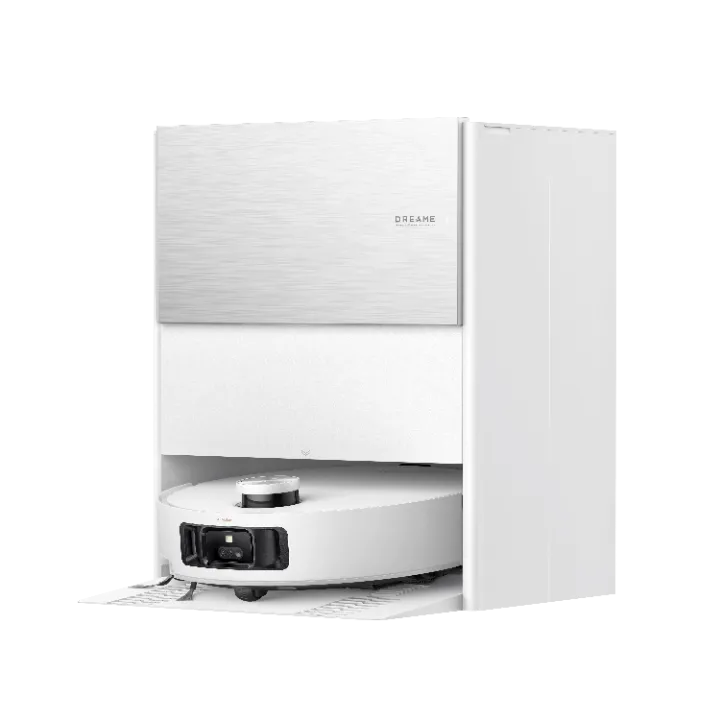
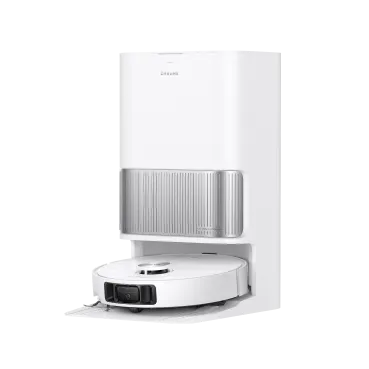
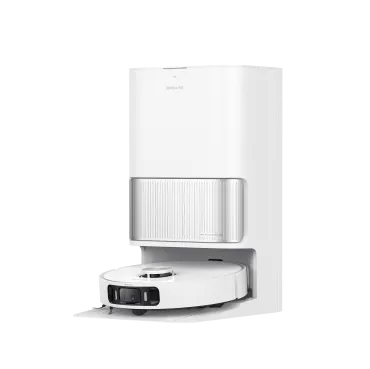
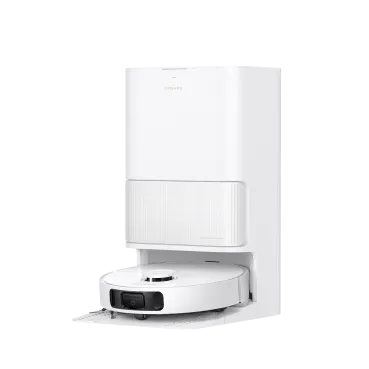
- X60 Max Ultra Complete, the adaptable pick. Its strong obstacle handling and carpet-aware cleaning make it better suited to uneven floors and mixed surfaces.
- D20 Air Plus, the everyday pick. Built for daily maintenance on mostly clear floors, with hands-free dust collection, edge-to-corner reach, and an anti-tangle brush to handle dust and tracked-in grit.
- L60 Pro Ultra, the value pick. It offers the same suction as the flagship model at a lower price and features a self-maintaining dock, so you don't sacrifice cleaning power for savings.
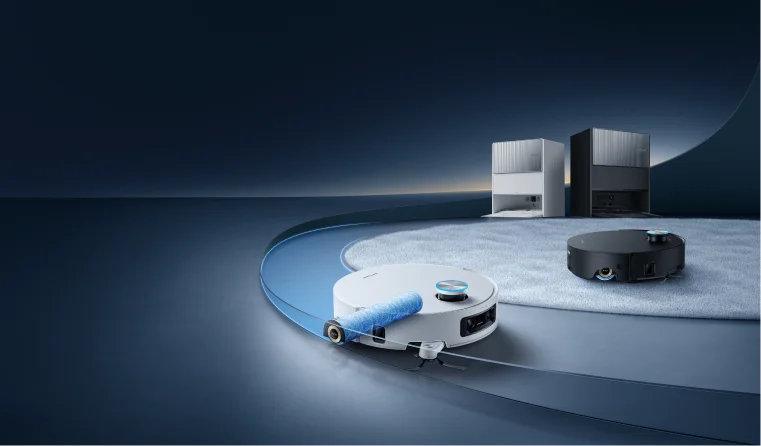
- Aqua10 Ultra Roller, the smooth-floor pick. Its continuously refreshed roller mop works well on clear, sealed concrete or epoxy floors, and it can move onto carpeted areas without soaking them.
[product handle="aqua10-ultra-roller-robot-vacuum"]
Frequently Asked Questions
What is the best garage robot vacuum?
The best garage robot vacuum combines a large auto-empty dock, durable brushes, and a vacuum-only mode for bare concrete, rather than any single named model. For heavier workshop messes like sawdust, a shop vac is still the better choice.
Do robot vacuums work on concrete?
Yes, concrete is one of the easiest surfaces for a robot vacuum to clean, as long as it is sealed or finished. Bare or unsealed slabs should not be wet-mopped because they can absorb moisture.
If I have to sweep first, what is the point?
Preparing the floor before using the robot vacuum isn't the same as just sweeping dust. You are picking up items that could damage the machine, such as cords or tools, while the robot vacuum handles everyday dust a broom misses. If your garage requires a complete sweep each time, then a robot vacuum may not be the right option for you.
Can a robot vacuum handle sawdust or metal shavings?
No. Fine sawdust clogs filters, curly wood shavings clog the brush, and metal fragments can cause internal damage. These are shop-vac jobs, and the owner reports consistently support this.
Will a robot vacuum survive an unheated garage in winter?
It depends on how cold the garage gets. Lithium batteries lose capacity and can charge poorly in the cold, so an unheated garage in winter is a real consideration. Check your model's manual for its rated operating temperature before running it.
How often should you run a robot vacuum in a garage?
Frequent runs, ideally daily, are essential for a garage robot vacuum, since garages accumulate dust faster than living rooms. The key advantage lies in preventing buildup instead of cleaning it later.

