










 Robot Lawn Mowers

















 Humidifiers


 Smart Door Lock


 Australia
 中国大陆
中国大陆 日本
日本


 Türkiye


 Ireland
 Portugal
 Italia
 Netherlands
 Belgium
 Greece
 Polska
 Norway
 Sweden
 Finland
 Denmark
 Hungary
 Czechia
 Slovenia
 Croatia
 Switzerland
 United
Kingdom
United
Kingdom
 Canada


 Colombia

In this article
A lived-in home always has a little clutter on the floor, but that doesn't mean cleaning has to stop. A robot vacuum with obstacle avoidance detects a stray charger or pet mess and steers around it while keeping your floors spotless.
Not all obstacle avoidance is equal, but you may not need every feature, which is why the Dreame picks below are sorted by what your home actually calls for, from everyday clutter to models that also climb over thresholds.

Best Overall Obstacle Avoidance
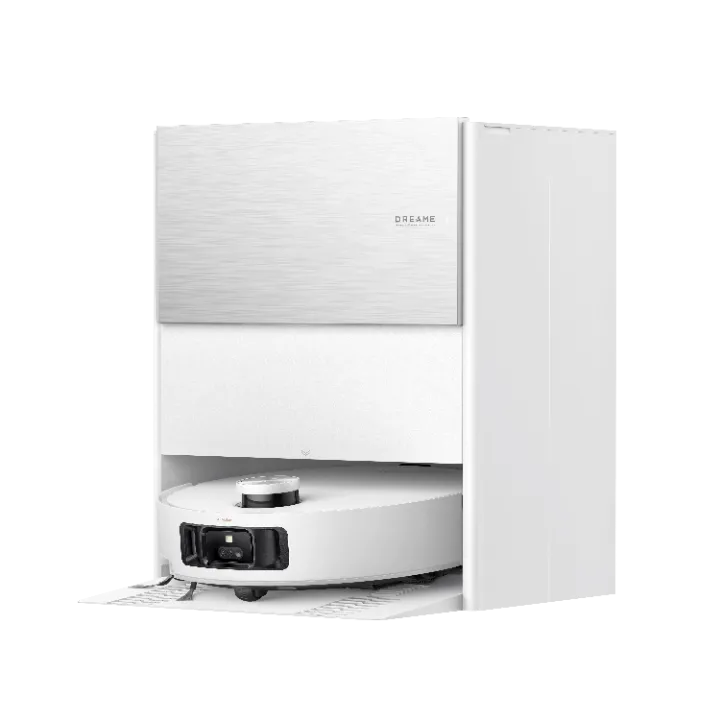
Dreame Pick: The X60 Max Ultra Complete can handle just about anything you put in front of it. Its OmniSight™ system runs dual 120° AI cameras that recognize 280+ object types, so it reads the clutter on your floor and steers around it instead of bumping into it.
You also get a proactive light that helps it spot low objects in dark corners and under your furniture, where camera-only systems struggle, and VersaLift™ DToF navigation that lifts to map the room then retracts to clean below low furniture. Coming in at $2,399.99 CAD, it's the model to reach for when you want the one that handles the widest range of obstacles.
[product handle="x60-max-ultra-complete-robot-vacuum" slogan="Editor's Pick"]
Also consider: Roborock has a loyal following at the flagship end, and Dyson draws attention for its vision-led approach to navigation.
Best for Pet Messes
Dreame Pick: For pet homes, the Aqua10 Ultra Roller leads with its upgraded AstroVision™ system. Its two AI cameras build 3D detail and route around 240+ objects down to 1mm, trained with NVIDIA and reinforcement learning, so it keeps cleaning accurately even when you shift the furniture around or a bowl ends up somewhere new.
That means it spots an accident and drives around it instead of smearing it across the room, while StereoEdge™ adds a second layer of 3D structured light that catches the thin, low stuff like cables and pens that cameras alone can miss. To understand in detail how avoidance systems deal with messes from pets, read our guide on robot vacuums and dog poop. Priced at $2,299.99 CAD, it's a great choice for a pet-owner household.
[product handle="aqua10-ultra-roller-robot-vacuum" slogan="Best for Pet Messes"]
Also consider: iRobot is the name most pet owners recognize for mess detection, while Roborock is a common premium cross-shop.
Best for Cords, Socks, and Clutter
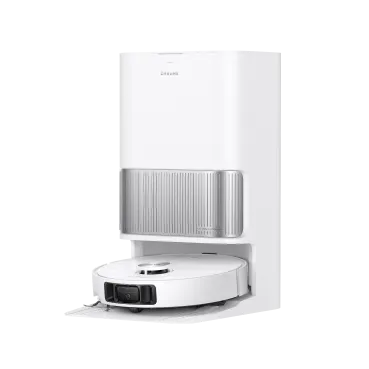
Dreame Pick: The L60 Ultra is built for busy homes that have more than just the odd toy on the floor. It uses AI-enhanced 3D ToF detection tuned to 280+ object types, picking out the small, low things that stop lesser models, like a charging cable or a stray sock, and cleaning a path around them instead of dragging them along.
With 35,000Pa Vormax™ pulling underneath, it still lifts embedded grit and hair from the floor while it weaves around your clutter. It's a good match for an active household at $1,799.99 CAD.
[product handle="l60-ultra-robot-vacuum" slogan="Best for Clutter"]
Also consider: Roborock is often shortlisted for handling busy floors, and eufy is a popular pick for shoppers watching their spend.
Best for Climbing Over Obstacles
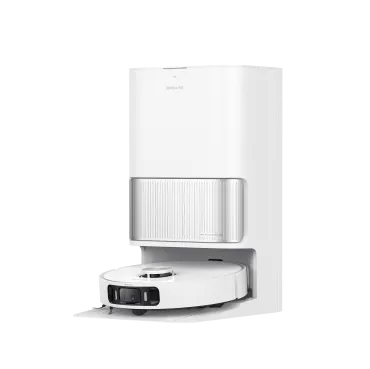
Dreame Pick: Raised thresholds and door tracks are where a lot of robot vacuums fall behind. The L60 Pro Ultra crosses them, clearing obstacles up to 8.8cm on ProLeap™ robotic legs instead of getting stuck.
For everyday clutter, its Advanced Obstacle Detection System identifies 280+ types of objects and steers around them, while VersaLift™ LiDAR raises for a full 360° map and lowers so it can slip under furniture as low as 8.9cm. At $1,899.99 CAD, it is built for split-level homes and raised thresholds.
[product handle="l60-pro-ultra-robot-vacuum" slogan="Best for Climbing"]
Also consider: Roborock comes up a lot for threshold-heavy homes, and Narwal has built a reputation at the premium end.
Best Budget Pick
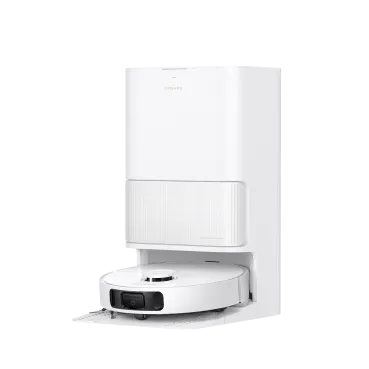
Dreame Pick: Not everyone needs a camera-led flagship, and the D20 Pro Plus keeps things simple. Single-laser 3D structured light spots objects in its path and goes around them; its LDS sensor maps your home for a tidy route, and 13,000Pa Vormax™ suction handles daily dust and pet hair without fuss.
The trade-off is the missing AI camera, so it can't tell one small object from another the way the pricier picks do. Clear cords and socks off the floor before a run, and it takes care of the rest. Landing at $749.99 CAD, it is the value pick when you want real avoidance capabilities on a smaller budget.
[product handle="d20-pro-plus-robot-vacuum" slogan="Best Value"]
Also consider: eufy is a familiar starting point for first-time buyers, and Ecovacs is another established budget-friendly option.
How Obstacle Avoidance Works
The sensors on the front of the robot vacuum do the avoiding, while the spinning LiDAR tower on top handles mapping and navigation. An AI camera positioned at the front watches the floor ahead while depth sensors work out how far away an object is.
Lighting is often what sets models apart. A camera on its own can struggle under a bed or after dark, so higher-quality models add a small built-in light that helps them with spotting objects others might miss. This how robot vacuums navigate guide breaks down how each sensor type compares and how navigation works.
LiDAR builds a fast, accurate map of your rooms, but sits too high to catch things that are low to the ground, like a phone cable or a balled-up sock, so it works best alongside the front sensors. To understand the mapping side, this guide to LiDAR navigation explains how the tower scans your home and how it manages in the dark.
The most challenging items for a vacuum to detect are flat, low objects like charging cables and soft, irregular shapes like pet messes, which a laser-only vacuum might mistake for the floor. For those situations, you want a camera paired with depth sensing, since it's designed to accurately recognize them as objects.
Pro-tip: Even the best AI vision has its limits. Before your robot vacuum does its first mapping run, it's a good idea to clear away cords and small items from the floor. This will help it learn your home's layout more effectively and make cleaning that much smoother down the line.
How to Choose a Robot Vacuum for Obstacle Avoidance
Start with the sensors
Look at what the vacuum uses to see. A model that lists an AI camera with depth sensing will steer around low clutter far better than one that only lists laser navigation.
Check how many objects it knows
A vacuum that recognizes 280+ object types knows a cable from a sock and cleans around each one properly. One that only senses something is there tends to just bump into it or get stuck.
Make sure it handles the dark
If your rooms dim during a run, check that it has a built-in light. Without one, the camera has trouble seeing once the lights go out.
Match the climbing height to your home
Measure the tallest threshold or door track the vacuum has to cross, and make sure it can clear it rather than getting stranded at the edge.
Obstacle avoidance is just one part of your decision. The robot vacuum buying guide covers the rest, from suction and mopping to which model fits your home, plus the common mistakes to skip.
Dreame Take: A vacuum should work around your life, and that includes not needing you to tidy up before it runs. Dreame builds its avoidance around that idea, so a stray cable or a dropped toy is the vacuum's problem to solve, not yours.
How Dreame Tests Robot Vacuums
The standard industry test is dust pickup in an empty square room. Your home is not empty, so Dreame's testing starts where that ends.
For hair, engineers run each robot vacuum against a blend of lengths from 3cm to 30cm, then weigh what lands in the dust box versus what wraps the brushes. That tangling rate is what matters in a home with pets or long hair, and plain cleaning scores hide it.
Durability is tested just as hard, with compression, drop, and vibration runs, plus chambers that expose units to heat, humidity, rain, and salt spray.
Obstacle avoidance gets its own test. Each robot vacuum faces more than 40 common household items, from furniture to toys, and Dreame scores it on its own dedicated system for how well it recognizes and avoids objects of different shapes, colors, and materials. The test runs across a mix of floor types and colors, including different carpet setups, with obstacles packed tightly in some zones to push it harder, so the results hold up in a real, cluttered home and not just a tidy lab.
Read the full methodology in How Dreame Tests Robot Vacuums.
Which One Is Right for You?
The right robot vacuum model depends on your floors and your budget, so make sure you have a clear picture of both those factors first. Go with the X60 Max Ultra Complete for the most capable all-round avoidance, the Aqua10 Ultra Roller for pet homes, the L60 Ultra for clutter, the L60 Pro Ultra for high thresholds, or the D20 Pro Plus if you are starting out.
Browse the full robot vacuum collection to see other models that might suit your home.
Robot Vacuums with Obstacle Avoidance FAQs
Which robot vacuum has the best obstacle avoidance?
The X60 Max Ultra Complete is the best overall pick. On top of strong suction and mopping, its OmniSight™ system pairs dual 120° AI cameras with a 280+ object library and a built-in light for dark rooms. That mix is what puts it ahead for most homes.
Will a robot vacuum avoid dog poop?
Yes, the better camera-based models usually can, though none are totally perfect on soft or wet messes. The Aqua10 Ultra Roller is your safest bet here. There's a full dog-poop guide linked back in the pet-waste pick if you want even more detail.
Do robot vacuums avoid cords and socks?
Yes, if it uses AI vision. Those models recognize and route around low things like cords and socks, while laser-only models are less reliable with them. The L60 Ultra is built for this, tuned to spot the small stuff, so with cheaper laser-only models, tidy the floor first.
Does obstacle avoidance work in the dark?
Only if the vacuum has a built-in light or laser-based depth sensing. A basic camera struggles under beds and after dark. Picks with a built-in light, like the X60 Max Ultra Complete and L60 Pro Ultra, keep spotting objects in low light.
Is LiDAR the same as obstacle avoidance?
No. LiDAR maps the room from the top of the vacuum, while obstacle avoidance uses front sensors low to the floor. A vacuum can map a home perfectly and still run over a cord it never looked for.

